


How to Select the Right Electrical Ring Main Unit for Industrial Power Systems
Choosing the right electrical ring main unit (RMU) is one of the most consequential decisions in any industrial power project. A correctly specified RMU improves supply continuity, simplifies maintenance, and keeps your medium-voltage (MV) network safe; a poorly chosen one leads to outages, costly retrofits, and compliance risk. This guide walks plant engineers, EPCs, and procurement teams through a practical, standards-based selection process—from voltage class and insulation type to protection, automation, and manufacturer evaluation—so you can specify an electrical RMU with confidence.
How To Select The Right Electrical Ring Main Unit For Industrial Power Systems
Role Of Rmu In Industrial Power Distribution
Before comparing models, it helps to be clear about what an RMU actually does. In an industrial distribution network, the RMU sits between the incoming MV feeder and your transformers or outgoing loads, providing controlled switching points arranged in a ring so power can be routed from either direction. Understanding the role of RMU in electrical distribution is the foundation for every later decision: the unit must both isolate faults and keep healthy sections energized. If you want the underlying principle first, see how an HV ring main unit works.
Determine Required Voltage Level And Rmu Classification
The first hard constraint is system voltage. Industrial sites most commonly use 10 kV, 12 kV, 24 kV, or 35 kV (40.5 kV) networks. Your HV ring main unit or high voltage ring main unit must be rated for the system’s highest voltage (Um) and the expected short-time withstand current. Classify the RMU by:
- Rated voltage (Ur): 12 kV, 24 kV, or 40.5 kV to match your network.
- Earthing configuration: effectively earthed vs. non-effectively earthed systems demand different switch and earthing arrangements.
- Indoor vs. outdoor: IP rating and enclosure type follow from the installation location (see 2.8).
Confirm the network’s neutral grounding method early—this single parameter drives the choice of load break switch, earthing switch, and protection scheme.
Select Right Rmu Configuration Based On Application Needs
RMUs are built from standardized functional units—incomer, transformer feeder, bus-section, and metering—combined into 2 to 6 modules. Match the configuration to the load:
| Application | Recommended configuration |
|---|---|
| Single transformer substation | 2-unit: incomer + transformer feeder (with switch-fuse combination) |
| Ring network with two sources | 3–4 unit: two incomers + bus-section + outgoing feeders |
| Critical process plant | 4–6 unit: redundant incomers, bus-coupler, multiple feeders, metering |
Over-specifying adds cost; under-specifying creates bottlenecks. Size the number of modules to current load plus a realistic 5–10 year expansion margin.
Evaluate Insulation Type: Gis Vs Ais Ring Main Unit
Insulation defines the RMU’s footprint, safety, and maintenance profile. The main families are SF6 gas-insulated (GIS), solid-insulated, and air-insulated (AIS).
| Insulation type | Best for | Key trade-off |
|---|---|---|
| SF6 GIS | Space-limited, indoor substations | Compact, but SF6 is a greenhouse gas |
| Solid-insulated | SF6-free, eco-conscious sites | Higher material cost |
| Air-insulated (AIS) | Outdoor, ventilated rooms | Larger footprint |
For an SF6-free, space-saving option, the GTXGH Series Solid Insulated Ring Main Unit uses epoxy-resin insulation for a compact, maintenance-light enclosure.
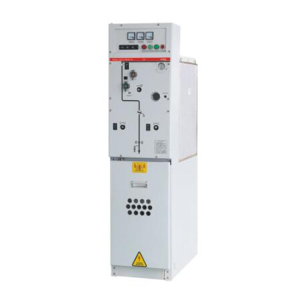
If you prefer dry-air insulation, the SHAir-12 Dry Air Fully Insulated Ring Main Unit delivers a genuinely SF6-free design. Where SF6 GIS is preferred for density, the SH-SRM-12 Series SF6 Gas Insulated Switchgear remains a proven, compact choice.
Check Electrical Specifications And Performance Parameters
Verify the datasheet against your network’s extremes, not just nominal values:
- Rated current (Ir): 630 A is typical; confirm against peak load and derating for ambient temperature.
- Short-time withstand (Ik): 20–25 kA for 3s is common in industrial networks.
- Peak withstand current (Ip): usually 2.5 × Ik.
- Mechanical/electrical endurance: number of operations before maintenance.
- Dielectric levels: power-frequency and lightning impulse withstand per IEC 62271-200 / GB 3906.
Consider Protection And Switching Requirements
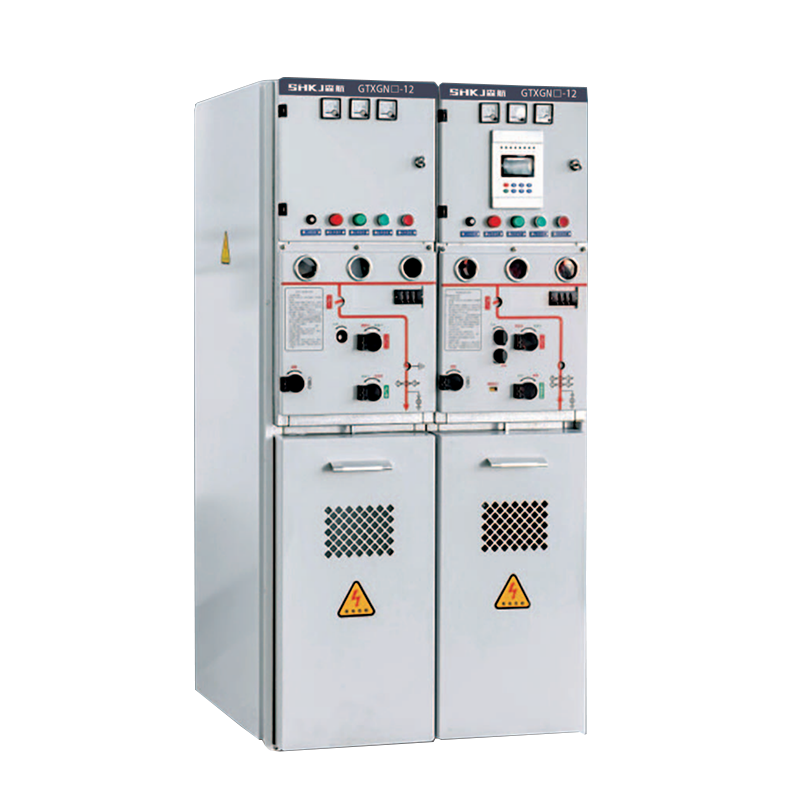
Decide between a switch-fuse combination and circuit-breaker protection per outgoing feeder. Switch-fuse is cost-effective for transformer feeders; a vacuum circuit breaker (VCB) gives repeat fault interruption and is better for cables and critical loads. Also specify the earthing switch (maintenance earthing) and padlock/key-interlock scheme to meet lockout-tagout (LOTO) safety procedures.
Evaluate Smart Rmu Features And Automation Capabilities
Modern RMUs support sensors and communications that turn a passive switchboard into a monitored asset. Look for:
- Integrated current/voltage sensors and temperature monitoring.
- IEC 61850 / Modbus communication for substation integration.
- Motorized switches with remote control and condition alarms.
- Arc-fault protection (pressure relief, arc detection).
These features let the RMU feed your SCADA and predictive-maintenance programs—directly supporting the “smart” selection criteria in 2.7 and the automation questions in the FAQ.
Consider Installation Environment And Safety Requirements
Match the enclosure to the site:
- Indoor: IP3X–IP4X, climate-controlled room, seismic consideration.
- Outdoor: IP54+, corrosion-resistant coating, UV-stable enclosures.
- Hazardous areas: verify Ex rating and ventilation.
- Safety: arc-resistant design, visible isolation, interlocks, and certified earthing.
Need Help Selecting the Right Electrical RMU?
Our engineers will review your voltage level, load profile, and site conditions—then recommend the right electrical ring main unit configuration and send a technical proposal.
Common Mistakes When Choosing An Electrical Rmu
- Undersizing short-circuit rating—using network nominal instead of maximum fault level.
- Ignoring neutral grounding—wrong switch/earthing type for the system.
- Over-specifying automation—paying for IEC 61850 you cannot integrate yet.
- Overlooking footprint—AIS chosen for a space that only fits GIS.
- Weak Warranty/Spares—no local service or type-test proof.
Electrical Rmu Vs Traditional Switchgear: Which One Is Better?
An RMU is a compact, modular form of MV switchgear optimized for ring or radial distribution with load break switches and switch-fuse protection. Traditional metal-clad switchgear (e.g., KYN28) uses VCBs and is built for higher fault duties and complex single-line diagrams. Neither is “better” universally: choose an RMU for space-saving distribution and an RMU-friendly network; choose metal-clad switchgear for heavy fault levels and central substations. For a side-by-side view, read our ring main unit vs switchgear guide.
How To Choose Reliable Electrical Ring Main Unit Manufacturer
- Certifications: ISO 9001 and type-test reports from an authorized laboratory (IEC/GB).
- Track record: proven utility or industrial references (e.g., CSG, SGCC-class projects).
- Engineering support: selection help, drawings, and commissioning.
- Spares & lead time: local stock and clear warranty terms.
- OEM/ODM flexibility: ability to match your panelboard and labeling.
Talk to a Beiye RMU Specialist
Get an independent selection checklist and a configured bill of materials for your project—no obligation.
Why Choose Beiye Electric For Electrical Ring Main Unit Solutions
Zhejiang Beiye Electric Co., Ltd is a high-tech manufacturer focused on 10–35 kV MV/HV switchgear and RMU, with 15+ years of engineering experience and a technical team well-versed in IEC and GB standards. All products are type-tested by authorized institutions, and we supply utility-grade customers with strict quality control from raw material to final delivery. We offer OEM/ODM service and a full range—solid-insulated, dry-air, and SF6 GIS RMUs—so you get the configuration that fits your network rather than a forced standard model.
Get Your RMU Specification Sheet
Send us your single-line diagram and load data—we will return a matched electrical ring main unit proposal within 2 working days.
FAQ
Can An Rmu Be Integrated With Scada Systems?
Yes. Most modern RMUs support IEC 61850 or Modbus via integrated sensors and motorized switches, allowing remote monitoring, control, and alarm reporting into your SCADA or EMS platform.
What Is An Electrical Ring Main Unit Used For?
An electrical RMU provides controlled switching and protection points in an MV ring or radial network, isolating faults while keeping healthy sections supplied—commonly feeding transformers and outgoing feeders in industrial plants, commercial buildings, and utilities.
What Standards Should An Electrical Rmu Comply With?
Key standards are IEC 62271-200 (AC switchgear for rated voltages above 1 kV) and IEC 62271-100/102 for switches and earthing, plus national equivalents such as GB 3906 and GB/T 11022. Type-test reports from an authorized laboratory are the proof.
What Are The Main Types Of Ring Main Unit Configurations?
Configurations combine functional units—incomer, transformer feeder (often switch-fuse), bus-section/coupler, and metering—typically in 2 to 6 modules, arranged for ring or radial operation.
How Does An Rmu Work In An Electrical Distribution System?
The RMU connects incoming MV feeders through load break switches and protects outgoing feeders (commonly with a switch-fuse combination). In a ring, either source can feed a load; if a section faults, the RMU isolates it and restores supply from the alternate direction.
How Long Is The Service Life Of Electrical Ring Main Unit?
Properly specified and maintained RMUs typically last 20–30 years. Solid-insulated and SF6 GIS units need less maintenance; lifespan depends on switching frequency, environment, and adherence to inspection intervals.
Should I Choose Gis Or Ais For An Electrical Ring Main Unit?
Choose GIS/SF6 or solid-insulated when space is limited or the site is indoor; choose AIS when footprint is available and lowest first cost matters. For an eco-friendly, SF6-free path, solid-insulated or dry-air RMUs are increasingly preferred.
What Factors Affect The Cost Of High Voltage Ring Main Unit?
Cost scales with voltage rating, short-circuit rating, number of modules, insulation type (SF6 vs solid vs air), protection (switch-fuse vs VCB), automation (sensors/IEC 61850), and enclosure/IP grade. Right-sizing each factor avoids overspend.
What Is The Difference Between Electrical Rmu And Switchgear?
An RMU is a compact, modular subset of MV switchgear built around load break switches and switch-fuse protection for distribution rings. Traditional metal-clad switchgear uses VCBs for higher fault duties and more complex single-line arrangements. See our RMU vs switchgear comparison for details.
How Do I Choose The Right Voltage Rating For Hv Ring Main Unit?
Match the RMU’s rated voltage (Ur) and highest voltage (Um) to your network—commonly 12 kV, 24 kV, or 40.5 kV—and confirm the neutral grounding method, since it determines the switch and earthing arrangement.
Conclusion
Selecting the right electrical ring main unit is a structured exercise: fix the voltage and grounding, choose a configuration that fits today’s load with room to grow, pick insulation (GIS, solid, or AIS) for your space and sustainability goals, verify the electrical ratings, define protection and automation, and partner with a manufacturer that can prove compliance and support you long-term. Use the checklist above, and when your single-line diagram is ready, contact Beiye Electric for a configured, standards-compliant proposal.
Written & technically reviewed by the Beiye Electric Engineering Team
Our team has 15+ years of experience designing 10–35 kV MV/HV switchgear and RMU. Products are type-tested by authorized institutions and supplied to utility-grade customers. This guide reflects IEC 62271-200 and GB 3906 practice; always confirm selections against your local codes and a professional engineering review.
Related Resources
- What Is an HV Ring Main Unit and How It Works
- Ring Main Unit (RMU): Definition, Advantages, Working Principle and Application
- China Ring Main Unit vs European RMU: Key Differences
- How RMU Reduces Installation Costs
- High Voltage RMU vs Low Voltage Power Distribution Cabinet
- Compact Substation Buying Guide


