


High Voltage RMU VS Low Voltage Power Distribution Cabinet
When planning a power distribution project, choosing between a high voltage RMU and a low voltage power distribution cabinet can significantly impact safety, reliability, project costs, and future expansion. Although both devices are essential components of electrical distribution systems, they serve different functions and operate at different voltage levels. This guide helps you understand the differences, applications, costs, and selection criteria to make the right purchasing decision.
High Voltage RMU VS Low Voltage Power Distribution Cabinet
Selecting the proper electrical distribution equipment is not simply about voltage ratings. As a buyer, you need to evaluate protection requirements, installation environments, maintenance expectations, and long-term operating costs.
Definition
High Voltage RMU (Ring Main Unit) is a compact medium-voltage switchgear system designed for power distribution networks. It is commonly used in secondary distribution systems to control, protect, and isolate electrical circuits.
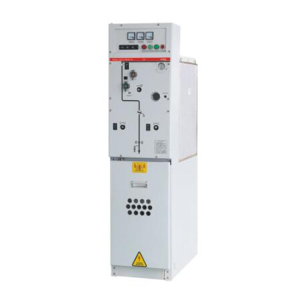
HV RMU typically consists of load break switches, circuit breakers, busbars, protection relays, and cable compartments integrated into a sealed enclosure.
A Low Voltage Power Distribution Cabinet is an electrical assembly that distributes electrical power from transformers to end-use loads. It contains low-voltage circuit breakers, contactors, meters, and protection devices operating below 1kV.
Main Function
The primary role of an RMU Ring Main Unit is to manage medium-voltage distribution and ensure uninterrupted power supply through ring network configurations.
The primary function of a Low Voltage Distribution Cabinet is to distribute electrical energy safely to machinery, lighting systems, HVAC systems, and other end-use equipment.
Voltage Range
| Feature | High Voltage RMU | Low Voltage Power Distribution Cabinet |
|---|---|---|
| Operating Voltage | 3.3kV–40.5kV | 220V–1000V |
| Typical Network | Medium Voltage | Low Voltage |
| Main Purpose | Distribution Protection | Power Distribution |
| Installation Area | Utility Network | End User Facilities |
| Typical Users | Utilities & Industries | Factories & Buildings |
Installation Location
An Electrical RMU is usually installed:
- Utility substations
- Industrial parks
- Commercial complexes
- Renewable energy projects
- Underground cable networks
A Cable Distribution Cabinet or low-voltage cabinet is generally installed:
- Transformer secondary side
- Factory workshops
- Commercial buildings
- Data centers
- Residential complexes
Equipment Type
An RMU belongs to the medium-voltage switchgear category.
A low-voltage distribution cabinet belongs to the low-voltage power distribution equipment category.
Although both control electrical energy, their engineering design philosophies are entirely different.
Protection Level
One of the biggest advantages of modern RMU Electrical Equipment is its advanced protection capability.
Typical RMU protections include:
- Short-circuit protection
- Overcurrent protection
- Earth fault protection
- Isolation switching
- Remote monitoring support
Low-voltage cabinets typically provide:
- Overload protection
- Short-circuit protection
- Leakage protection
- Motor protection
- Power quality monitoring
Footprint
Space limitations often influence purchasing decisions.
A compact High Voltage RMU may occupy only a few square meters while integrating multiple feeder functions.
Traditional low-voltage cabinets often require larger switch rooms depending on the number of outgoing circuits.
For urban substations where land costs are high, RMUs often provide a significant advantage.
Maintenance
Modern sealed RMUs require relatively little maintenance.
Especially with solid-insulated designs, maintenance intervals can extend for years.
Low-voltage cabinets generally require more frequent inspections because of:
- Mechanical wear
- Dust accumulation
- Thermal stress
- Connection tightening
Typical Users
Common RMU users include:
- Utility companies
- Renewable energy developers
- Mining companies
- Railway operators
- Industrial parks
Common low-voltage cabinet users include:
- Manufacturing plants
- Shopping malls
- Hospitals
- Data centers
- Commercial buildings
Operational Differences
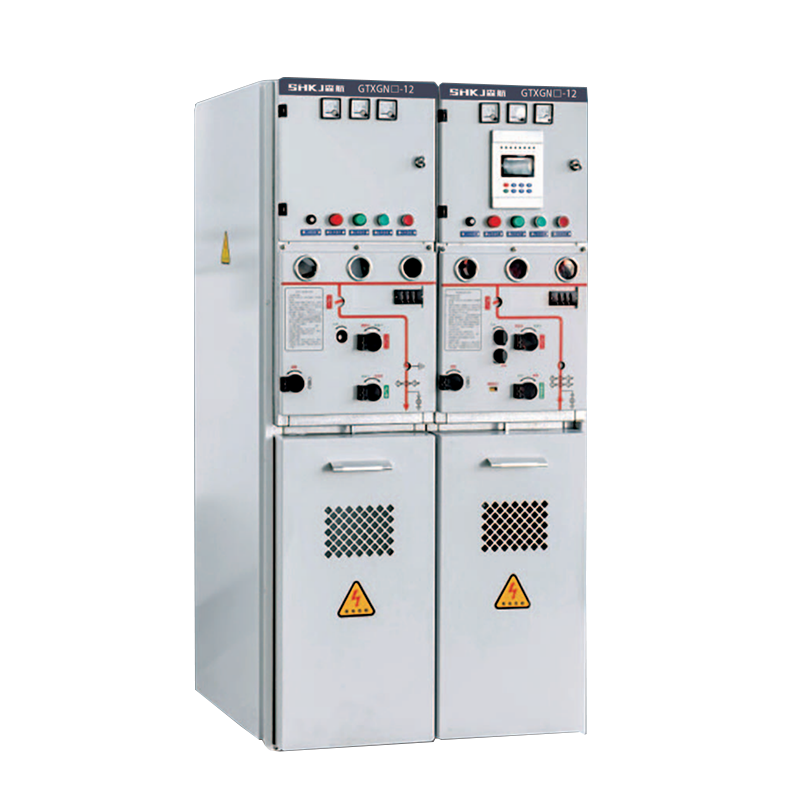
An RMU controls medium-voltage power before transformation.
A low-voltage cabinet distributes power after voltage transformation.
In simple terms, the RMU operates “upstream” while the low-voltage cabinet operates “downstream” within the electrical network.
Application Scenarios: When Should You Choose Each Solution?
Understanding real-world applications can help you avoid costly procurement mistakes.
Ideal Applications For High Voltage RMU
You should consider an HV RMU when your project requires:
- Medium-voltage cable network management
- High reliability power supply
- Compact substation design
- Renewable energy integration
- Smart grid compatibility
Case Example
A solar farm project in East Africa required reliable 33kV distribution with minimal maintenance. The project owner selected solid-insulated RMUs instead of conventional switchgear. The result was lower maintenance requirements and improved network reliability under harsh environmental conditions.
Another example involves an industrial park in Southeast Asia where multiple manufacturing facilities required uninterrupted power. A ring network utilizing RMUs allowed maintenance on one feeder without interrupting service to the remaining facilities.
Ideal Applications For Low Voltage Power Distribution Cabinets
You should choose a Low Voltage Power Distribution Cabinet when you need:
- Final-stage power distribution
- Equipment-level protection
- Motor control integration
- Building electrical systems
- Factory power management
Case Example
A food processing plant required distribution to dozens of production lines. The engineering team installed low-voltage distribution cabinets with intelligent monitoring functions, enabling real-time energy management and reduced downtime.
Cost Analysis: Which Option Delivers Better Value?
Cost is often a major factor in purchasing decisions.
However, focusing solely on purchase price can be misleading.
Initial Investment Comparison
Generally speaking, a High Voltage RMU costs more than a low-voltage cabinet due to:
- Higher insulation requirements
- Advanced protection systems
- Medium-voltage components
- Testing and certification requirements
Typical factors affecting RMU pricing include:
- Voltage level
- Number of feeders
- SF6 or solid insulation
- Automation functions
- Protection relay configuration
Low-voltage cabinet costs are typically influenced by:
- Number of outgoing circuits
- Circuit breaker brands
- Metering systems
- Enclosure materials
- Intelligent monitoring features
Long-Term Ownership Costs
This is where the comparison becomes interesting.
Many buyers initially focus on purchase price but later discover that lifecycle costs matter more.
RMUs often deliver lower long-term costs because:
- Reduced maintenance
- Improved reliability
- Lower outage risk
- Longer service life
- Reduced labor requirements
Low-voltage cabinets may involve:
- More frequent inspections
- Replacement of protective devices
- Higher maintenance labor costs
- Component upgrades over time
From a total cost of ownership perspective, modern RMUs often provide excellent value in medium-voltage distribution networks.
How To Select The Right Equipment For Your Project
Before contacting suppliers, consider the following questions.
What Is Your Network Voltage?
The first question is simple.
If your distribution system operates above 1kV, an RMU is typically required.
If the equipment distributes power below 1kV, a low-voltage cabinet is usually the correct solution.
What Are Your Reliability Requirements?
Projects that cannot tolerate power interruptions often benefit from ring network configurations using RMUs.
Examples include:
- Hospitals
- Airports
- Data centers
- Industrial parks
How Much Installation Space Is Available?
Compact urban projects often favor RMUs because of their smaller footprint.
Do You Need Future Expansion?
Modern modular RMUs make future feeder additions easier.
This flexibility can reduce future capital expenditures.
Are Remote Monitoring Functions Required?
Smart grid projects increasingly require:
- SCADA integration
- Remote switching
- Fault location
- Predictive maintenance
Many advanced RMUs support these functions natively.
Industry Standards And Certifications
Compliance with international standards is critical when evaluating suppliers.
You should always verify test reports and certifications before purchasing.
Standards For High Voltage RMU
Important standards include:
- IEC 62271 Series
- IEC 62271-200
- IEC 62271-202
- IEC 60044
- IEC 60529
For detailed information, refer to IEC standards published by the International Electrotechnical Commission (IEC).
Standards For Low Voltage Cabinets
Common standards include:
- IEC 61439
- IEC 60947
- IEC 60529
- IEC 60204
- ISO 9001 Manufacturing Systems
When sourcing internationally, always request:
- Type Test Reports
- Routine Test Reports
- ISO Certifications
- Third-Party Inspection Reports
- Factory Audit Records
Reliable Chinese manufacturers routinely provide these documents for export projects.
FAQ
Which Equipment Is Safer?
Both can be extremely safe when properly designed and installed. Modern RMUs provide enclosed medium-voltage protection systems, while low-voltage cabinets use advanced protective devices to minimize electrical hazards.
Can An RMU Replace A Transformer?
No. An RMU controls and protects medium-voltage circuits, while a transformer changes voltage levels. They serve different functions and are often installed together.
Is An HV RMU The Same As Switchgear?
An HV RMU is a type of medium-voltage switchgear, but not all switchgear is an RMU. RMUs are specifically designed for ring network applications.
Which Equipment Occupies Less Space?
For medium-voltage applications, RMUs generally provide a smaller footprint than conventional switchgear systems.
Are Chinese RMU Manufacturers Reliable?
Many Chinese manufacturers have become globally recognized suppliers, offering IEC-compliant products, international certifications, and successful installations across Africa, Asia, the Middle East, and Latin America.
Which Is Better For Industrial Projects?
It depends on the distribution level. RMUs are suitable for medium-voltage distribution, while low-voltage cabinets distribute power to equipment and production lines.
Which Industries Use RMUs Most Frequently?
Utilities, renewable energy projects, mining operations, transportation systems, industrial parks, and commercial infrastructure projects commonly use RMUs.
Can HV RMU Replace Low Voltage Power Distribution Cabinet?
No. They operate at different voltage levels and serve different functions within the power distribution system.
What Is The Difference Between SF6 And Solid-Insulated RMUs?
SF6 RMUs use sulfur hexafluoride gas for insulation. Solid-insulated RMUs use environmentally friendly solid dielectric materials and eliminate SF6-related environmental concerns.
How Much Does HV RMU Cost Compared To Traditional Switchgear?
RMUs typically have a higher unit cost than basic switchgear but may reduce total project costs through compact design, lower maintenance, and improved reliability.
What Certifications Should You Request Before Purchasing RMU?
You should request IEC test reports, ISO certifications, factory acceptance test records, routine test reports, and third-party inspection documentation.
What Is The Difference Between Cable Distribution Cabinet And RMU?
A cable distribution cabinet mainly distributes cables and connections, while an RMU performs switching, protection, isolation, and network management functions.
What Are The Advantages Of Electrical RMU Over Traditional Switchgear?
RMUs offer compact design, easier installation, lower maintenance, enhanced reliability, and superior suitability for ring network distribution systems.
What International Standards Apply To HV RMUs And LV Distribution Cabinets?
HV RMUs commonly follow IEC 62271 standards, while low-voltage cabinets typically comply with IEC 61439 and IEC 60947 standards.
Conclusion
Choosing between a High Voltage RMU and a Low Voltage Power Distribution Cabinet ultimately depends on your project’s voltage level, reliability requirements, available installation space, and long-term operational goals. While an HV RMU excels in medium-voltage distribution networks by providing compact design, advanced protection, and high reliability, a Low Voltage Distribution Cabinet remains essential for safely distributing power to end-use equipment. In many projects, both solutions work together to create a complete and efficient power distribution system.
If you are evaluating RMU Ring Main Unit solutions, RMU Electrical Equipment, or customized low-voltage distribution systems for your next project, contact Beiye Electric today. Our engineering team can help you select the most reliable and cost-effective solution tailored to your application requirements.


