


What Is A Low Voltage Switchgear Cabinet? Complete Overview
In this guide, we’ll explore what is a low voltage switchgear cabinet? Their functions, key components, and how they operate in modern power distribution systems.
What Is a Low Voltage Switchgear Cabinet?
What is low voltage switchgear cabinet?Low Voltage Switchgear Cabinet is a specialized enclosure designed to house electrical switching, protection, and control equipment for low-voltage power distribution systems. Typically rated below 1,000 volts, these cabinets provide centralized management for electricity flowing to motors, lighting, machinery, and other critical devices in industrial and commercial setups.
Key Highlights:
- Designed for safe distribution of electrical power
- Houses circuit breakers, switches, relays, and busbars
- Supports automation and monitoring systems
- Complies with standards such as GB7251.12-2013, IEC, and UL
Low Voltage Switchgear Cabinet Functions
Low Voltage Switchgear Cabinets serve multiple crucial functions in a facility’s electrical network:
- Power Distribution – Directs electrical power from main supply to various circuits efficiently
- Protection – Houses breakers and fuses to protect against overloads, short circuits, and faults
- Motor Control – Facilitates motor operation via integrated MCC units
- Monitoring & Control – Supports interfaces for automated control, alarms, and energy management
- System Reliability – Ensures that a fault in one unit does not affect the entire distribution system
- Maintenance Efficiency – Modular and draw-out designs allow quick replacement and servicing
Table: Key Functions Comparison
| Function | Description | Example Application | Benefits | Automation Compatibility | Maintenance Ease |
|---|---|---|---|---|---|
| Power Distribution | Directs electrical flow to circuits | Factory machinery | Optimized load | Medium | Easy |
| Protection | Prevents overloads, short circuits | Motor panels | Safety, reduces downtime | Medium | Moderate |
| Motor Control | Centralized operation of motors | Conveyor belts | Efficient start/stop | High | Easy |
| Monitoring & Control | Energy monitoring and fault detection | Data centers | Real-time alerts | High | Moderate |
| System Reliability | Limits impact of faults | Industrial plants | Continuity | High | Easy |
| Maintenance Efficiency | Quick unit replacement | High-rise buildings | Reduced downtime | Medium | High |
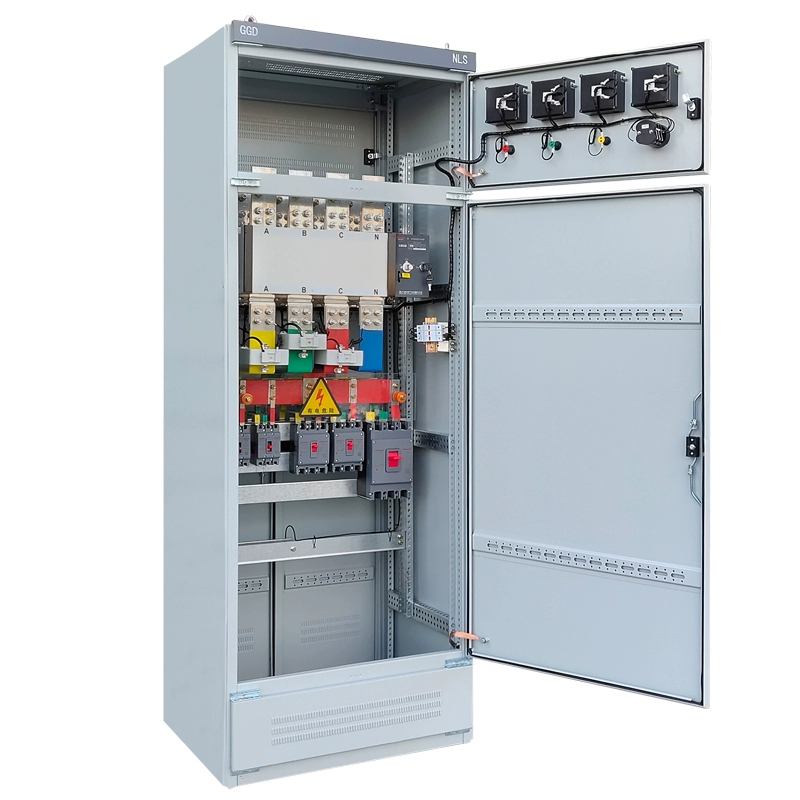
Components Inside Explained
A Low Voltage Switchgear Cabinet consists of several critical components, each contributing to system safety, efficiency, and control:
- Circuit Breakers – Interrupt overcurrent and protect circuits
- Busbars – Conduct and distribute electricity between devices
- Relays and Protection Devices – Detect faults and trigger protective actions
- Control Panels and Meters – Monitor power flow, voltage, and current
- Cable Compartments – Organize incoming and outgoing power cables
- Draw-out Units – Allow individual components to be removed for maintenance
Key Points:
- Components are modular for easy upgrades
- Horizontal and vertical busbar layouts enhance thermal and dynamic stability
- Secondary connections support automation interfaces
- Interlock mechanisms ensure safety during maintenance
- Component quality and spacing ensure long-term reliability
Case Example: In a textile manufacturing plant, modular draw-out units allowed technicians to replace faulty breakers without shutting down production, reducing potential revenue loss.
How Low Voltage Switchgear Work in Power Distribution
How low voltage switchgear cabinets work in power distribution?Low Voltage Switchgear Cabinets function as centralized hubs for electrical distribution:
- Incoming Power – Main power enters the cabinet through busbars
- Distribution – Electricity is routed to individual circuits for motors, lighting, and machinery
- Protection – Circuit breakers and relays monitor and interrupt dangerous conditions
- Control & Automation – Cabinets interface with building management systems or industrial SCADA systems
- Maintenance & Monitoring – Draw-out units and meters allow easy inspection and preventive maintenance
Visualizing the Workflow:
- Power enters the incoming section, passes through protection devices, moves via busbars, and exits to outgoing circuits
- Draw-out switchgear ensures minimal downtime during unit replacement
- Integrated automation allows real-time monitoring, energy optimization, and alerts for faults
Benefits for Procurement Professionals:
- Reduced operational risk
- Simplified maintenance planning
- Enhanced system reliability
- Scalable modular design
- Support for future automation upgrades
FAQ
How does a draw-out switchgear cabinet differ from fixed type?
A: Draw-out units can be removed individually for maintenance without shutting down the entire system, minimizing downtime.
Can Low Voltage Switchgear Cabinets handle high current loads?
A: Yes, modern cabinets are rated up to 4000A depending on the design and application.
Are they suitable for industrial and commercial facilities?
A: Absolutely, from factories to high-rise buildings, they are versatile and reliable.
How do these cabinets improve safety?
A: Through interlocks, compartment separation, and protective devices that prevent faults from affecting the entire system.
Can Low Voltage Switchgear Cabinets integrate with automation systems?
A: Yes, they can interface with SCADA and other monitoring systems for energy management.
How often should maintenance be performed?
A: Typically every 6–12 months, depending on usage and environmental conditions.
Are they compliant with safety standards?
A: Yes, most comply with GB7251.12-2013, IEC, and UL standards.
What is the typical operating voltage?
A: Usually 380V, 400V, or 660V for low voltage applications.
How does a cabinet handle short-circuit conditions?
A: Circuit breakers and protection relays immediately interrupt power to prevent damage.
Can they be customized?
A: Yes, OEM and ODM solutions are available for specific project requirements.
Are Low Voltage Switchgear Cabinets suitable for outdoor use?
A: Typically they are indoor-rated, but some models can be adapted for outdoor environments.
What are the advantages of modular design?
A: Easy expansion, flexible configuration, simplified maintenance, and space-saving.
How many circuits can a cabinet typically handle?
A: Depending on size, up to 22 circuits per MCC cabinet in GCS designs.
Are there temperature limitations?
A: Designed for industrial ambient conditions, usually -5°C to 40°C.
What is the difference between LV switchgear and MCC?
A: MCC is primarily for motor control, while LV switchgear manages broader power distribution and protection.
How do you choose the right cabinet for your facility?
A: Consider voltage, current rating, application, space, maintenance needs, and vendor reliability.
Conclusion
A Low Voltage Switchgear Cabinet is an essential component for safe, reliable, and efficient power distribution. By understanding its functions, components, and operational workflow, you can select the right solution to fit your facility’s needs. Whether you prioritize high automation, modularity, or maintenance efficiency, choosing the proper cabinet ensures system reliability, safety, and long-term operational success.
Contact Beiye Electric today to explore customizable low voltage switchgear solutions, request technical guidance, or get a quote for your next project. Your power distribution deserves the best!


