


How To Extend The Service Life Of Outdoor Vacuum Circuit Breakers
Why Service Life Matters for Outdoor Vacuum Circuit Breakers
An outdoor vacuum circuit breaker is a long-term asset, not a consumable. Most units are rated for 10,000–30,000 mechanical operations and a service life of 20–30 years when maintained correctly. For utilities, EPC contractors, and industrial power users, extending that lifespan directly reduces replacement cost, spare-parts inventory, and unplanned outage risk. The good news: vacuum interruption technology is inherently low-wear, so most life-limiting failures come from the operating mechanism, environmental exposure, and poor maintenance discipline — all of which you can control.
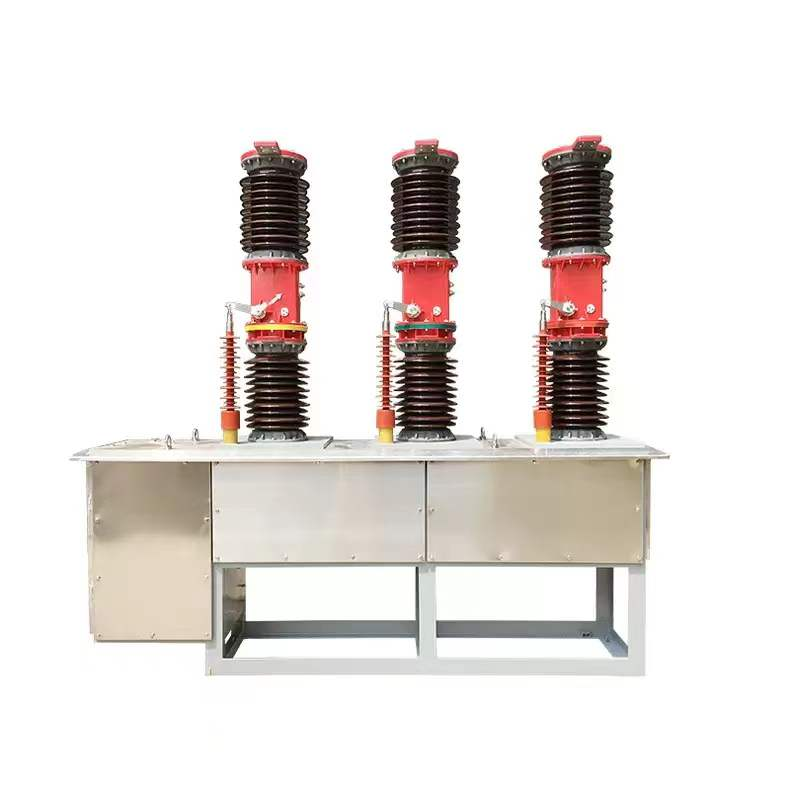
What Actually Limits the Life of an Outdoor VCB
Before extending service life, you need to know where it is lost. A vacuum interrupter itself is extremely durable; CIGRé data shows the majority of replaced VCBs are still electrically sound, with failure driven by mechanism aging rather than vacuum loss. The three real enemies are:
- Mechanical wear — spring fatigue, linkage stiffness, and lubrication breakdown in the operating mechanism after decades of duty cycles.
- Environmental stress — moisture, salt fog, temperature swings, and dust contamination degrading insulation and metal enclosures.
- Electrical abuse — repeated fault interruption beyond rated duty, overload operation, and closing onto unresolved faults.
Choosing the right hardware helps. A ZW32-12 outdoor vacuum circuit breaker rated for −15°C to +40°C, wind speed up to 34 m/s, and altitude up to 1000 m already carries a weather-resistant foundation — but only a disciplined maintenance program turns that design margin into decades of reliable service.
7 Proven Ways to Extend the Service Life of Outdoor Vacuum Circuit Breakers
1. Follow a Scheduled Preventive Maintenance Plan
Do not wait for a failure. Build a plan based on the manufacturer’s manual plus your own duty cycle, fault history, and site environment. A practical baseline for outdoor units is a visual inspection every month and a professional performance test at least once a year. Record every inspection so wear trends become visible before they become outages.
2. Protect Against Moisture, Salt, and Corrosion
Outdoor enclosures face rain, condensation, and — in coastal or industrial zones — salt and chemical contamination. Apply anti-corrosion coating to metal housings, keep drainage paths clear, and clean insulator sheds with a dry or mild-soapy lint-free cloth. In high-humidity sites, verify any enclosure heater or dehumidifier is working, because trapped moisture is the fastest route to tracking and internal corrosion.
3. Avoid Overloading and Unnecessary Switching
Operate the breaker inside its rated load and breaking capacity. Plan load adjustments to reduce needless open/close cycles, and never re-close onto a fault you have not cleared — repeated tripping on an unresolved fault is a leading cause of premature mechanism and contact wear. Where available, use the microcomputer protection functions (overload and overcurrent alarm) to catch abnormal loading early. For 35kV/40.5kV class networks, specify a 40.5kV outdoor vacuum circuit breaker with the correct breaking rating rather than stretching a lower-class unit.
4. Keep the Operating Mechanism Properly Lubricated
The operating mechanism — springs, linkages, and bearings — is where most mechanical life is won or lost. Lubricate moving parts annually with a manufacturer-approved, high-temperature, dielectric-rated grease. Avoid over-lubrication, which attracts dust and forms conductive sludge. If the mechanism feels stiff or shows binding, investigate before it escalates into a refusing or mis-operating breaker.
5. Monitor With Intelligent Controllers and Sensors
Modern outdoor VCBs integrate measurement, control, communication, and remote monitoring. Real-time data on temperature, current, switching count, and trip events enables predictive maintenance — you fix the weak component before it fails. Intelligent controllers also support three-stage protection (instantaneous, delayed instantaneous, overcurrent) and configurable auto-reclosing, which reduces unnecessary operations. If you are comparing technologies, see our guide on indoor vs outdoor VCB selection.
6. Inspect Vacuum Interrupters and Insulation Regularly
You should not disassemble a vacuum interrupter during routine maintenance. Instead, verify vacuum integrity with a vacuum tester or power-frequency withstand test per the manufacturer’s schedule, and watch for visible arcing or abnormal opening/closing times. Separately, inspect bushings and sheds for cracks, contamination, and surface discharge. A clean, crack-free insulation surface is the single best defense against weather-driven failure.
7. Ensure Correct Installation and Commissioning
Many life-limiting problems start on day one. Install strictly to the manufacturer’s instructions: level and firm base, tight and standardized primary/secondary wiring, correct interlock settings, and commissioned opening/closing/trip times. For critical or complex networks, have the supplier’s engineers perform on-site commissioning so the breaker enters service in its optimal state.
A Practical Maintenance Checklist
Use this table as a starting reference and adapt it to your duty cycle and environment. It is a general guide, not a substitute for the specific manufacturer maintenance manual.
| Task | Recommended Frequency | Why It Protects Lifespan |
|---|---|---|
| Visual inspection (corrosion, loose bolts, seals) | Monthly | Catches loose connections and moisture ingress early |
| Clean insulator sheds and enclosures | Every 6 months | Prevents contamination tracking and flashover |
| Lubricate operating mechanism | Annually | Reduces friction wear on springs and linkages |
| Verify opening/closing/trip timing | Annually | Confirms mechanism stays within rated range |
| Insulation resistance & vacuum integrity test | Annual / per manual | Detects dielectric and interrupter degradation |
| Review maintenance & fault records | Each inspection | Turns data into predictive maintenance |
Need a maintenance-focused configuration?
Tell us your voltage class, duty cycle, and site environment. Our engineering team will recommend the right outdoor VCB model and a maintenance-compatible configuration with type-test documentation.
Early Warning Signs Your Outdoor VCB Needs Attention
- Abnormal heating at primary terminals — loose connections or contact erosion.
- Stiff or slow mechanism — lubrication loss or spring fatigue.
- Position mismatch between mechanical indicator and remote signal — auxiliary contact or communication issue.
- Surface discharge or cracking on bushings — insulation degradation from contamination.
- Frequent unwanted trips — protection setting or load problem, not the breaker.
When any of these appear, follow the operating chain — command, auxiliary power, secondary circuit, controller, mechanism, primary action, feedback — before concluding the breaker body is defective. This avoids replacing a healthy primary device.
Frequently Asked Questions
How long does an outdoor vacuum circuit breaker last?
Properly maintained outdoor VCBs typically deliver 20–30 years of service and 10,000–30,000 mechanical operations. The vacuum interrupter is the most durable part; lifespan is usually limited by the operating mechanism and environment, both of which good maintenance controls.
How often should I inspect an outdoor vacuum circuit breaker?
A monthly visual inspection (corrosion, bolts, seals, insulation) plus an annual professional test (timing, insulation resistance, vacuum integrity) is a sound baseline for outdoor units. Harsher environments or higher duty may require more frequent checks.
Do vacuum interrupters need regular replacement?
No. Replacement should follow condition, not a fixed calendar date. Verify vacuum integrity with the manufacturer’s recommended test; replace only when test results approach the critical threshold or after an exceptional fault duty.
What causes outdoor VCBs to fail prematurely?
The main causes are poor installation, operation beyond rated load or switching duty, control-mechanism fatigue, and unchecked environmental corrosion. None of these are inherent to vacuum technology — all are manageable through correct specification and maintenance.
Can I extend VCB life in coastal or salt-fog environments?
Yes. Use anti-corrosion coatings on metal housings, clean insulator surfaces on a tighter schedule, ensure sealed mechanisms, and consider stainless-steel or silicone-rubber insulated enclosures. These measures significantly slow environmental degradation.
Does intelligent monitoring really help extend service life?
Yes. Controllers that track temperature, current, switching count, and trip events turn maintenance from calendar-based to condition-based, catching wear before failure and reducing unnecessary operations — directly extending usable life.
What maintenance does the operating mechanism need?
Annual lubrication with approved dielectric grease, inspection for stiffness or binding, and verification of spring condition and operating travel. The mechanism is where most mechanical life is decided, so it deserves the strictest attention.
Conclusion
Extending the service life of an outdoor vacuum circuit breaker is less about the interrupter and more about discipline: scheduled preventive maintenance, environmental protection, load control, mechanism care, intelligent monitoring, and correct commissioning. Done consistently, these steps push a unit comfortably toward its 20–30 year design life and cut total cost of ownership. If you are still deciding between mounting styles, our comparison of pole-mounted vs ground-mounted outdoor vacuum circuit breakers can help you specify the right unit from the start.
Talk to a Beiye VCB Engineer
Share your single-line diagram and duty cycle. We will validate the selection and return a quote with IEC 62271 / GB-compliant type-test documentation and OEM or ODM support.
Related Resources
- What Is an Outdoor Vacuum Circuit Breaker? Outdoor VCB vs Indoor VCB
- What Is an Outdoor Vacuum Circuit Breaker and Do You Really Need One?
- Why Outdoor Vacuum Circuit Breakers Are Essential for Grids
- Choosing Between Pole-Mounted and Ground-Mounted Outdoor Vacuum Circuit Breakers
- Different Types of Vacuum Circuit Breakers
About the author: This guide was written and technically reviewed by the Beiye Electric engineering team — specialists with 15+ years in 10–35kV medium- and high-voltage switchgear. Zhejiang Beiye Electric Co., Ltd supplies utilities (State Grid, Southern Grid), EPCs, and industrial clients worldwide with IEC 62271 and GB-certified equipment and OEM / ODM service.


