



Product Description:
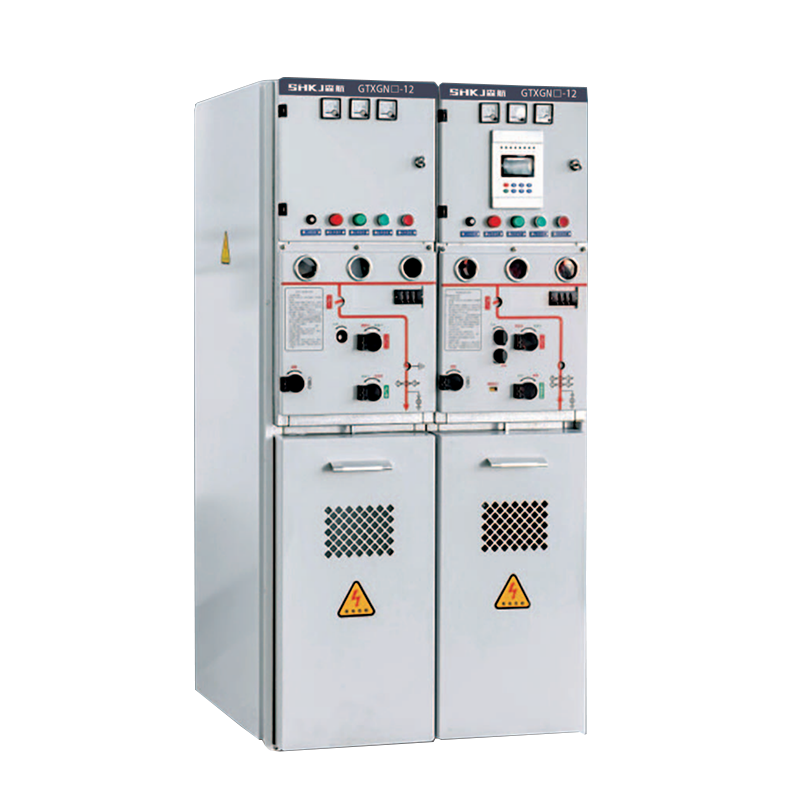
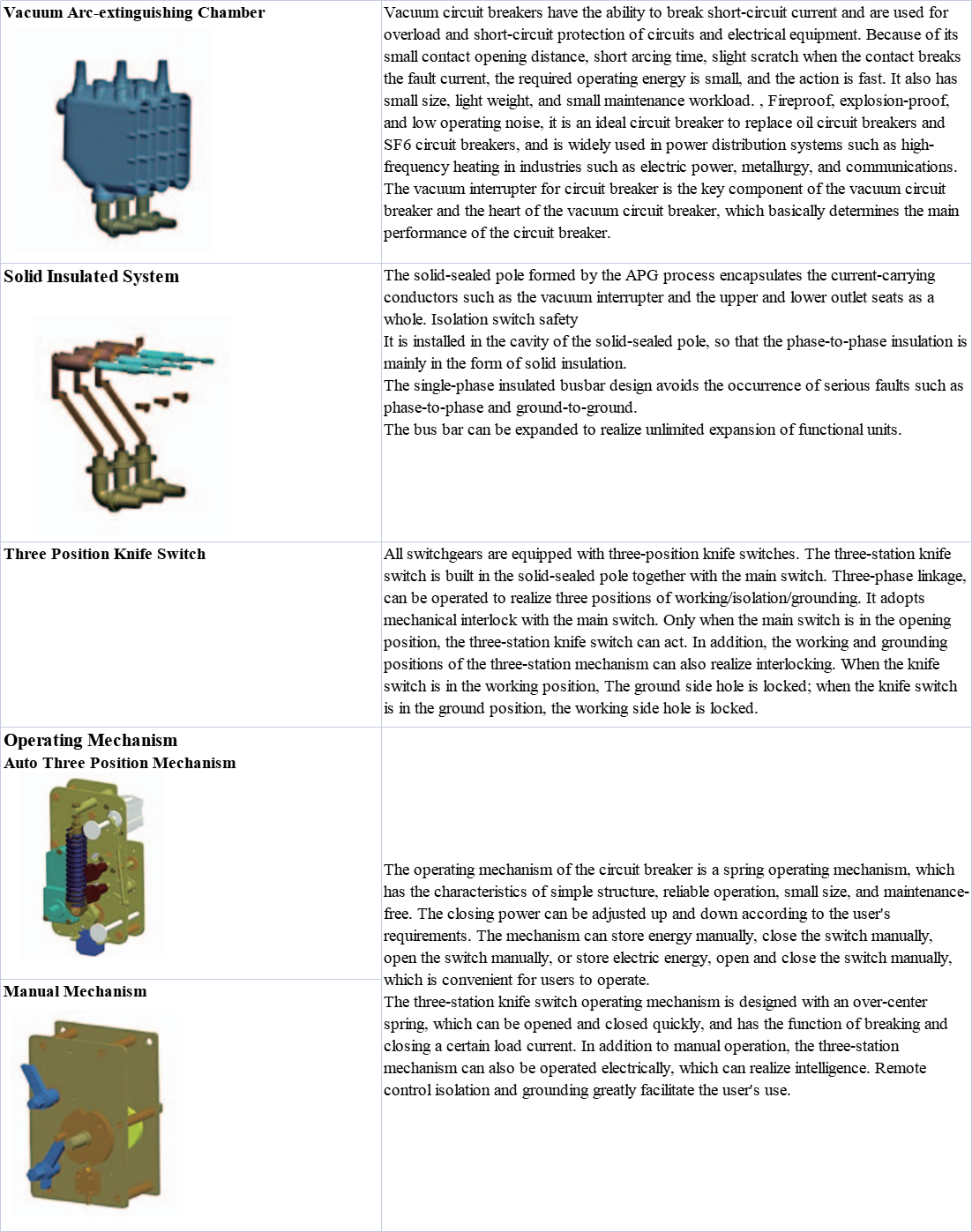
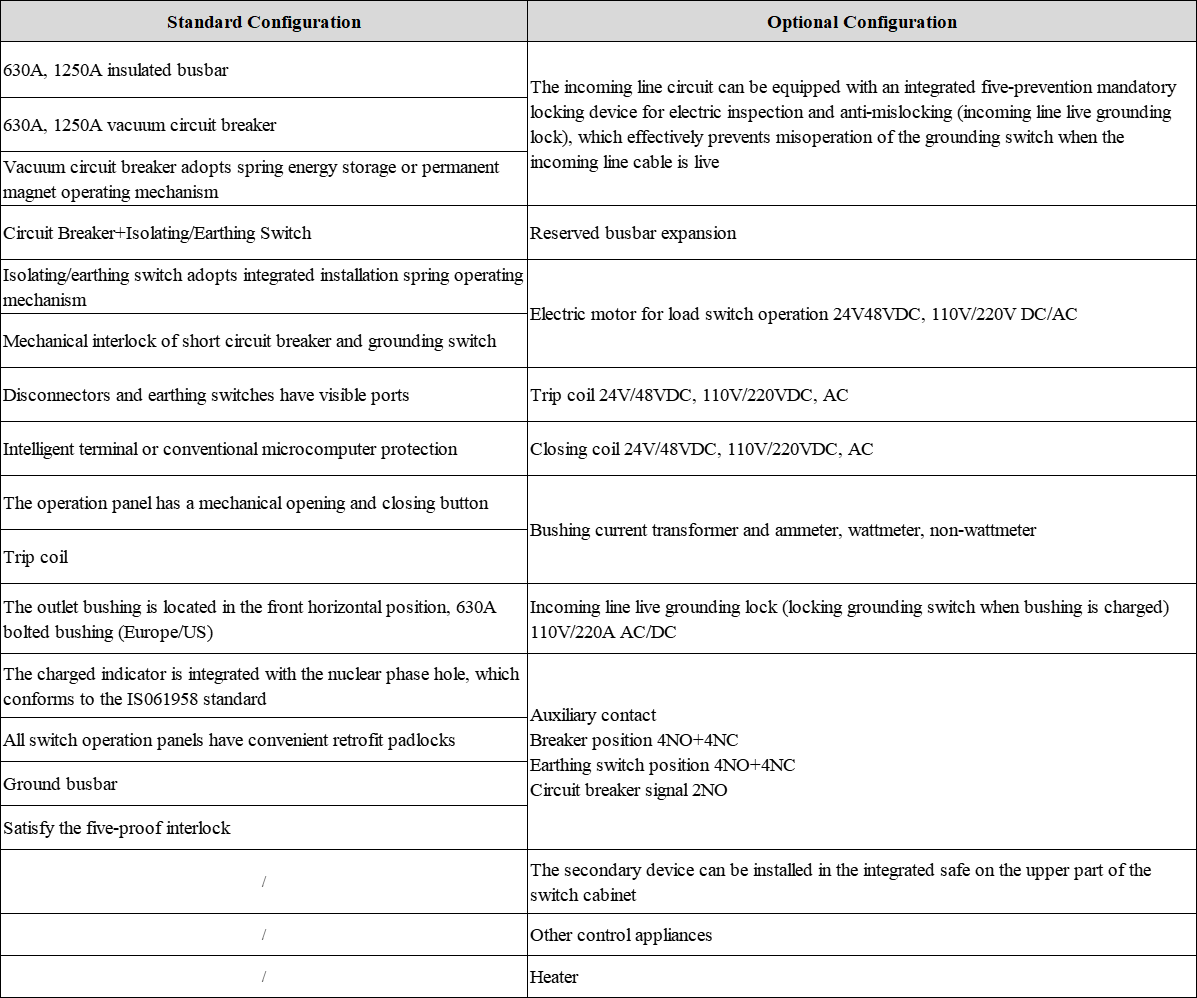
GTXGH series solid insulated switchgear is a new generation products developed by our company. It contains three parts: Unit V (circuit breaker), Unit C (load switch) and Unit F (load switch-fuse combination) , and each unit can be used individually or extensively. It includes intelligent control instrument room (can be equipped with microcomputer protection), operating mechanism (specialized spring operating mechanism) and primary part (AP6 auto gel process to fully seal isolation switch and arc interrupter in epoxy resin, specialized terminal connecting to busbar). The switch in arc interrupter uses special copper chromium contact materials, R type AMP contact and total one-time sealing and discharging process. Compared with the previous arc interrupter, the short-circuit current capability and stability, electrical life, temperature rise and insulation level of this arc extinguishing chamber have been significantly improved. Operating mechanism uses the spring operating mechanism integrated with switch, which means isolation switch and main switch spring operating mechanism as a whole unit, easy to interlock. It’s with less mechanism parts to reduce the unnecessary intermediate links and increase the reliability. It also can be installed electric operators including customer’s requirement.
GTXGH Series solid insulated ring main unit uses solid insulating material as main insulating medium. It is one or several modules with certain functions, which can be recombined or extended with fully insulated and fully sealed properties, combining conductive connection, isolation switch, earthing switch, main busbar, branch busbar. etc main circuit. Three position mechanism is on top of spring, which has function of breaking and making load current, and it can be operated by manual or dynamoelectric.
Item Meaning:

Executive Standard:
Technical Parameters:


Application Scheme:


| Feature | AIS – Air Insulated Switchgear | GIS – Gas Insulated Switchgear |
| insulating medium | Atmosphere (air) | SF6、 Gases such as nitrogen and dry air |
| structure | Each component (circuit breaker, isolating switch, transformer, etc.) is arranged open in the air and insulated through air gaps. | All high-voltage components are sealed in metal containers (chambers) filled with insulating gas. |
| floor area | Very large. A huge safety insulation distance is required. | Extremely small (usually only 10% -30% of AIS). |
| environmental impact | It is greatly affected by external factors such as humidity, pollution, salt spray, altitude, and small animals. | It is basically unaffected by external environment and has high reliability. |
| Installation and Construction | On site installation and debugging require a large amount of work and a long cycle (measured in months). | Factory prefabrication, high degree of modularity, fast on-site installation, and short cycle (in weeks). |
| maintenance | Easy to visually inspect, but requires regular cleaning and maintenance of the external insulation. | The maintenance free cycle is long, but gas density monitoring is required, and troubleshooting is complex. |
| Typical application scenarios | Outdoor substations (especially in areas where land resources are not scarce) and traditional power plants. | City center substations, underground substations, hydroelectric/wind/photovoltaic booster stations, islands, high pollution/high altitude and other harsh environments. |
| Type | Air insulated switchgear | Gas insulated switchgear |
| insulating medium | air | SF6、 Environmentally friendly gas |
| Main Features | Simple structure, low cost, good visibility, and large volume. | Compact size, high reliability, and unaffected by environmental factors. Traditionally, SF6 is used. |
| advantage | Low initial investment, intuitive maintenance, and mature technology. | Extremely small footprint, high reliability, and strong environmental adaptability. |
| shortcoming | Easy to be affected by the environment (condensation, pollution), occupying a large area. | SF6 has greenhouse effect (which can be solved by environmentally friendly GIS), high cost, and complex fault repair. |
| market positioning | Traditional applications that are insensitive to cost and space. | Traditional solutions for urban power distribution, limited space, and high reliability requirements are facing environmental transformation. |


 Optimized by Seraphinite Accelerator


