


Outdoor Vacuum Circuit Breaker Buying Guide For Electrical Contractors
Choosing the right outdoor vacuum circuit breaker (outdoor VCB) is one of the highest-stakes decisions an electrical contractor makes on a distribution project. Specify the wrong voltage class, operating mechanism, or mounting type and you risk costly rework, failed inspections, and downtime for your client. This buying guide walks contractors through the ratings, types, and a practical selection checklist so you can specify with confidence — and avoid the mistakes that delay energization.
What an Outdoor Vacuum Circuit Breaker Does
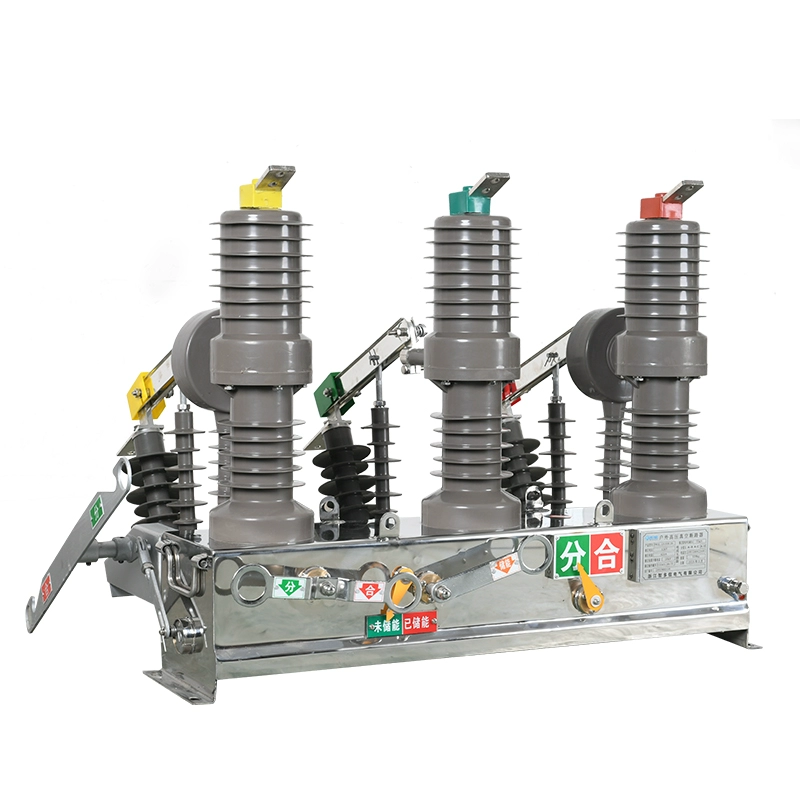
An outdoor vacuum circuit breaker interrupts fault current using a vacuum interrupter sealed inside a weatherproof enclosure built for pole- or pad-mounted service. Unlike indoor units, it is rated to handle the temperature swings, humidity, wind, altitude, and pollution class found on real distribution lines. Contractors specify outdoor VCBs on 10kV–35kV overhead and substation feeders where space, cost, and maintenance access all matter.
Key Specifications to Verify Before You Buy
Before you issue a purchase requisition, confirm these ratings against the project single-line diagram. The table below is the contractor’s pre-order checklist.
| Specification | What contractors should verify |
|---|---|
| Rated voltage | 12kV, 24kV, or 40.5kV — must match the line voltage class of the feeder. |
| Rated normal current | Typically 630A or 1250A; size for peak load plus a growth margin. |
| Rated short-circuit breaking current | 20kA or 25kA; match the available fault level at the installation point. |
| Operating mechanism | Spring or permanent magnet. Permanent magnet units (e.g. ZW32-12YG) have fewer parts and longer mechanical life. |
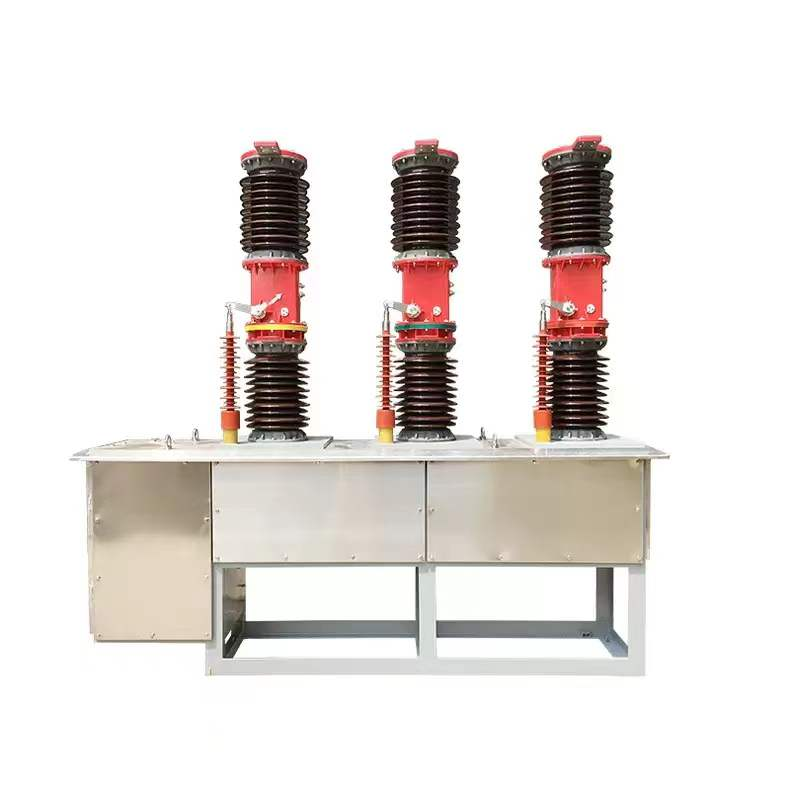
| Mounting type | Pole-mounted (fast install on existing poles) vs ground-/pad-mounted (easier maintenance access). |
| Ambient temperature | Standard units cover −15°C to +40°C; cold-region models reach −40°C to +45°C. |
| Altitude & pollution | Confirm ≤1000m or ≤3000m altitude and pollution class IV for harsh sites. |
| Standards & certification | Verify third-party type testing to IEC 62271-100 and the local utility’s approval list. |
| Control & protection | Intelligent controller with overcurrent, reclosing, and communication for distribution automation. |
Match the Voltage Class to the Project
Most contractor specs land in three voltage classes. For a side-by-side comparison, read our guide on 11kV vs 33kV vs 40.5kV outdoor vacuum circuit breakers.
- 12kV (11kV class) — urban and rural distribution, oil-field and mine feeders, industrial 10kV switching stations, and railway trunk lines.
- 24kV — denser urban networks and industrial campuses where 12kV loading has maxed out.
- 40.5kV — subtransmission taps, wind and solar farms, and large industrial substations. See our notes on selecting HV switchgear for renewable farms.
Pole-Mounted vs Ground-Mounted
Mounting drives install cost and ongoing maintenance. Our detailed comparison of pole-mounted and ground-mounted outdoor VCBs covers labor, safety, and access trade-offs. In short: pole-mounted units clip onto existing structures for fast deployment; ground-mounted (pad/pedestal) units give technicians safer, faster access for inspection and parts replacement.
Permanent Magnet vs Spring Mechanism
The operating mechanism decides reliability and life-cycle cost. Spring mechanisms are familiar and serviceable, but carry more moving parts. Permanent magnet mechanisms — used on the ZW32-12YG/630 outdoor permanent magnet VCB — hold open/closed state with a permanent magnet, so the mechanical chain is short and the rated mechanical life is higher. For lines that switch frequently, permanent magnet is the lower-risk spec.
Step-by-Step Selection Checklist for Contractors
- Read the single-line diagram and confirm the line voltage class (12 / 24 / 40.5kV).
- Calculate peak load current and add a growth margin to size rated current (630A / 1250A).
- Obtain the utility’s available fault level and match short-circuit breaking current (20kA / 25kA).
- Choose mounting from site access: pole-mounted for speed, ground-mounted for serviceability.
- Pick the mechanism: permanent magnet for frequent switching, spring where preferred by the utility.
- List site environment: temperature range, altitude, pollution class, and wind speed.
- Require third-party type testing to IEC 62271-100 and the local approvals list.
- Confirm controller functions: protection, reclosing, and remote communication.
Send Us Your Project Spec — Get a Typed Quote in 24h
Share your rated voltage, current, mounting, and environment. Our 15+ year engineering team returns a project-ready specification with OEM/ODM options for contractors.
Common Specification Mistakes Contractors Make
- Sizing only for today’s load. An undersized current rating forces premature replacement — add a margin.
- Matching voltage but not fault level. A 12kV unit can still fail if breaking capacity is below the available fault current.
- Ignoring site climate. A standard −15°C unit will not survive cold-region substations; specify the extended-range model.
- Forgetting automation. Modern grids expect reclosing and communication; specify the intelligent controller up front.
- Weak ordering docs. Missing mechanism voltage or spare-part quantity causes factory delays.
Why Specify Beiye Electric Outdoor VCBs
Zhejiang Beiye Electric Co., Ltd is a high-tech manufacturer focused on 10kV–35kV medium- and high-voltage switchgear, with a technical team of 15+ years’ field experience and a track record supplying CSG and SGCC. All products are type-tested by authorized institutions, and the company offers OEM/ODM for contractors and EPCs. Explore the full vacuum circuit breaker range, including the ZW32-12 outdoor vacuum circuit breaker and the ZW7-40.5 high-voltage outdoor VCB for 40.5kV subtransmission taps.
Frequently Asked Questions
What is the difference between an outdoor and indoor vacuum circuit breaker?
An outdoor VCB sits in a weatherproof, pole- or pad-mounted enclosure rated for temperature, humidity, wind, and pollution; an indoor VCB lives in a climate-controlled switchgear room. Specifying outdoor protects the interrupter and mechanism from the elements on live distribution lines.
How do I choose the right voltage rating — 11kV, 33kV, or 40.5kV?
Match the breaker to the line voltage on the single-line diagram: 12kV for standard distribution, 24kV for dense urban/industrial networks, and 40.5kV for subtransmission and renewable farms. Never size by habit — confirm the actual feeder class first.
Pole-mounted or ground-mounted — which should I specify?
Pole-mounted units install fast on existing structures and cost less in materials; ground-mounted units give safer, faster technician access for inspection and parts replacement. Choose pole-mounted for speed and ground-mounted where serviceability drives life-cycle cost.
What is a permanent magnet operating mechanism and why does it matter?
A permanent magnet mechanism holds the open/closed position with a magnet instead of springs, so it has fewer moving parts and a longer mechanical life. For feeders that switch often, it reduces wear and the chance of mechanism failure in the field.
Which certifications should an outdoor VCB have for international projects?
Require third-party type testing to IEC 62271-100 (the VCB product standard) plus the local utility’s approval list. For export, confirm the testing institute is recognized in the destination market before you commit to the order.
How long does an outdoor vacuum circuit breaker last?
Vacuum interrupters have no consumable arc medium, so service life is driven by mechanical operations and environment rather than contact wear. With correct rating and a permanent magnet mechanism, outdoor VCBs typically run 10,000+ mechanical operations and 20+ years of field life.
Can an outdoor VCB integrate with an auto recloser and distribution automation?
Yes. Outdoor VCBs pair with an electrical recloser for self-healing distribution, and our units support intelligent controllers with reclosing, measurement, and communication functions for grid automation.
What should I include in the ordering specification to avoid delays?
List breaker name, model, quantity, rated current, rated short-circuit breaking current, operating mechanism model and voltage, release type, spare-part quantities, and any special requirements. Complete docs let the factory build and ship without clarification rounds.
Ready to Specify Your Outdoor VCB?
Get a project-ready specification, datasheet, and OEM/ODM quote from Beiye Electric’s engineering team. Trusted by CSG and SGCC, type-tested, and built for harsh outdoor duty.
Related Resources
- Why Outdoor Vacuum Circuit Breakers Are Essential for Grids
- 11kV vs 33kV vs 40.5kV Outdoor Vacuum Circuit Breakers: Which One Is Best
- What Is an Outdoor Vacuum Circuit Breaker (Outdoor VCB vs Indoor VCB)
- Choosing Between Pole-Mounted and Ground-Mounted Outdoor Vacuum Circuit Breakers
- A Complete Guide to Vacuum Circuit Breaker (VCB)
- 10 Warning Signs of a Bad Circuit Breaker and When to Replace It


