


11KV VS 33KV VS 40.5KV Outdoor Vacuum Circuit Breakers: Which One Is Best?
When you are planning a medium or high-voltage power distribution project, choosing the right Outdoor Vacuum Circuit Breaker directly affects system reliability, safety, and long-term cost control. Different voltage levels like 11KV, 33KV, and 40.5KV are not just numbers—they define insulation design, breaking capacity, and application boundaries. In this guide, you will compare these options from a practical procurement perspective so you can make a technically sound and cost-efficient decision for your grid or industrial project.
11KV VS 33KV VS 40.5KV Outdoor Vacuum Circuit Breakers
When comparing a High Voltage Outdoor Vacuum Circuit Breaker, you are essentially evaluating three core system tiers used in global distribution networks. Each voltage level serves a different grid architecture and fault level requirement.
Technical Specifications Comparison
Below is a simplified engineering comparison for procurement reference:
| Parameter | 11KV Outdoor Vacuum Circuit Breaker | 33KV Outdoor Vacuum Circuit Breaker | 40.5KV Outdoor Vacuum Circuit Breaker |
|---|---|---|---|
| Rated Voltage | 11kV | 33kV | 40.5kV |
| Typical Current | 630–1250A | 630–2000A | 1250–2500A |
| Breaking Capacity | 20–31.5kA | 25–31.5kA | 31.5–40kA |
| Insulation Level | Medium | High | Very High |
| Installation Use | Urban distribution | Substations / rural grids | Heavy industrial / grid backbone |
| Investment Cost | Low | Medium | High |
From a buyer’s perspective, your choice is mostly driven by system voltage level and fault current design margin rather than just price.
Differences in Insulation Requirements
The insulation design is one of the biggest engineering gaps between these three systems.
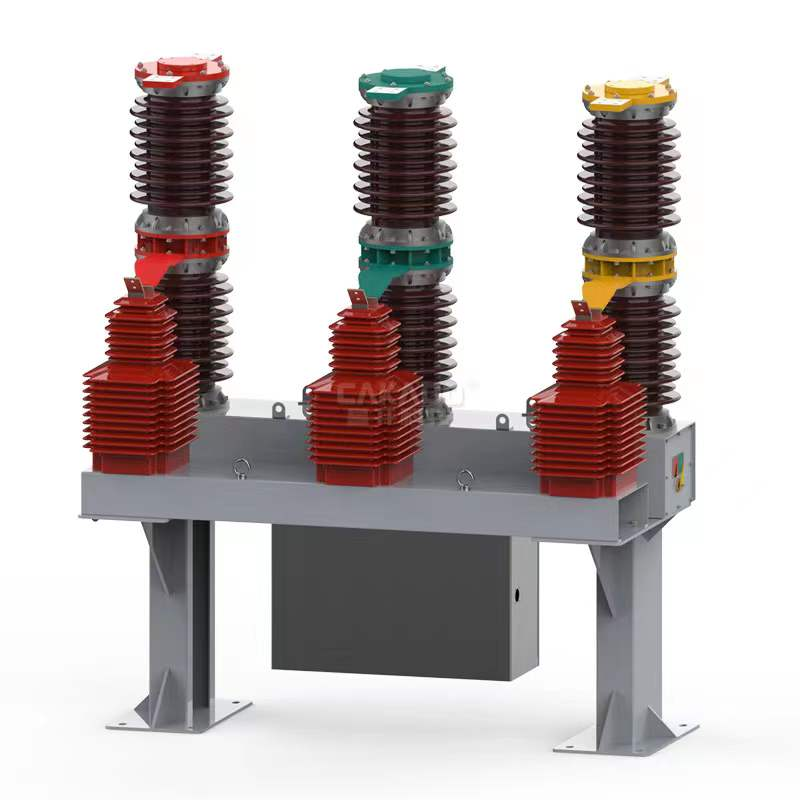
An 11 KV Outdoor Vacuum Circuit Breaker usually operates in compact distribution networks with relatively lower insulation stress. In contrast, a 33KV and especially a 40.5KV system requires significantly reinforced insulation coordination, including longer creepage distance and higher impulse withstand voltage.
According to IEC insulation coordination principles published by the International Electrotechnical Commission, higher voltage classes must ensure stronger dielectric strength under transient overvoltage conditions.
In real projects, you will notice that 40.5KV systems often require larger pole spacing and more robust composite insulators.
Differences in Short-Circuit Interrupting Capacity
Fault current handling is where the real performance gap appears.
A typical 33 KV Outdoor Vacuum Circuit Breaker is often selected for systems with moderate to high short-circuit levels, especially in industrial substations. Meanwhile, a 40.5KV unit is engineered for extreme fault conditions, such as grid interconnection points or large renewable energy hubs.
The higher the voltage class, the more energy the breaker must safely extinguish during arc interruption. Vacuum interrupter technology plays a critical role here, providing fast arc extinction and reduced maintenance compared to SF₆-based systems.
Differences in Physical Size and Structure
You will also notice a clear difference in mechanical design.
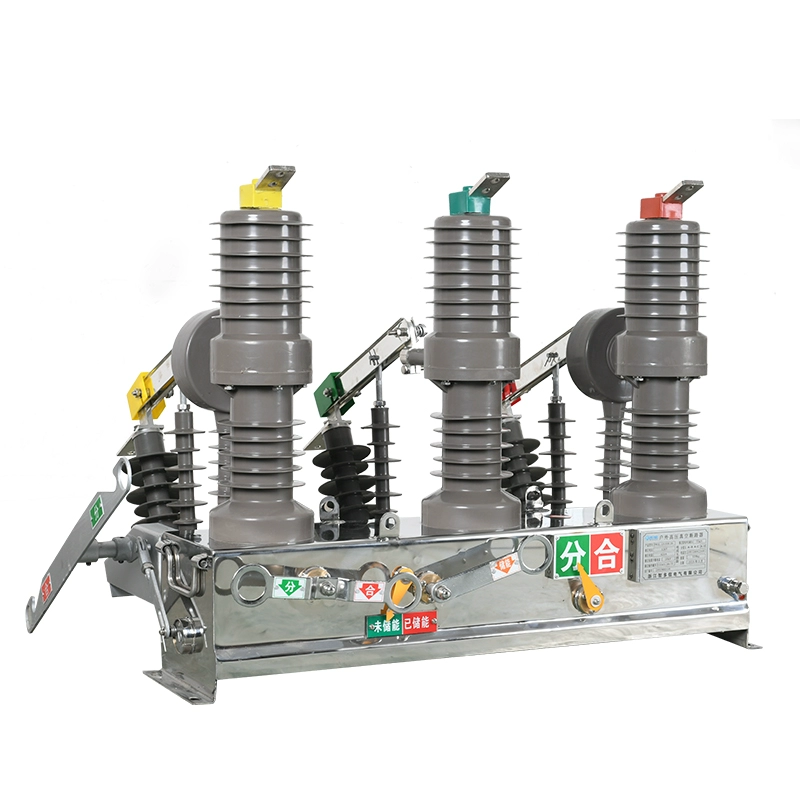
- 11KV units are compact and pole-mounted in many cases
- 33KV systems require more clearance and reinforced frames
- 40.5KV breakers are typically substation-grade with larger structural spacing
In field deployment, this affects foundation cost, land usage, and installation complexity. For EPC contractors, this is often underestimated during early design stages.
Cost Comparison Among Voltage Classes
Cost is not linear—it increases exponentially with voltage class.
A High Voltage Outdoor Vacuum Circuit Breaker at 40.5KV can cost significantly more than an 11KV system due to insulation, materials, and testing requirements. However, selecting a lower voltage class incorrectly can lead to catastrophic failure under fault conditions, which is far more expensive in the long run.
Applications
Each voltage class fits a very specific engineering scenario:
- 11KV systems: urban distribution networks, commercial complexes, small industrial plants
- 33KV systems: regional substations, mining operations, wind farm collectors
- 40.5KV systems: grid backbone nodes, large solar farms, heavy industrial transmission interfaces
For example, in African distribution projects, 33KV is widely used due to its balance between transmission efficiency and infrastructure cost.
How to Choose
Choosing the right Outdoor Vacuum Circuit Breaker is not just a technical decision—it is a lifecycle investment decision.
Evaluate Your System Voltage Level
Your system design voltage determines everything. If your network is 11KV, you should not overdesign into 33KV unless future expansion is expected.
Calculate Fault Current Requirements
You must evaluate short-circuit levels based on transformer capacity and grid impedance. Underestimating this leads to breaker failure risk.
Consider Future Grid Expansion
If you expect load growth or renewable integration, selecting a higher voltage class like 33KV or 40.5KV may be more economical long-term.
Analyze Installation Environment
Harsh environments (humidity, dust, coastal corrosion) require higher insulation margins and better housing design.
Compare Total Life Cycle Costs
Do not focus only on purchase price. Maintenance, outage risk, and replacement cost matter more over 10–20 years.
FAQ
11kV VCB vs 33 kV Outdoor Vacuum Circuit Breaker
11KV systems are used for local distribution, while 33KV is used for regional and industrial substations with higher power demand and fault levels.
Can 33 kV Outdoor Vacuum Circuit Breaker Replace 11kV VCB?
No. They are designed for different insulation levels and system architectures. Over-specification can cause coordination issues and unnecessary cost.
Which Outdoor Vacuum Circuit Breaker Is Best For Solar Power Plants?
Typically 33KV or 40.5KV systems are used depending on plant size and grid connection voltage.
Which Voltage Level Is Most Common In African Distribution Networks?
33KV is widely adopted due to its balance between infrastructure cost and transmission efficiency.
How Do I Select The Right Outdoor Vacuum Circuit Breaker Manufacturer?
You should evaluate IEC compliance, type test reports, production capability, and long-term service support.
Are High Voltage Outdoor Vacuum Circuit Breakers Better Than SF6 Circuit Breakers?
Vacuum technology is increasingly preferred due to environmental concerns and lower maintenance, especially in medium voltage systems.
Conclusion
Selecting between 11KV, 33KV, and 40.5KV systems is ultimately about matching engineering reality with project economics. A correctly chosen 11 KV Outdoor Vacuum Circuit Breaker, 33 KV Outdoor Vacuum Circuit Breaker, or 40.5 KV Outdoor Vacuum Circuit Breaker ensures stable operation, reduced downtime, and optimized lifecycle cost. If you are planning a new substation or upgrading an existing distribution system, you should not treat voltage selection as a simple catalog choice—it is a strategic infrastructure decision.
If you are evaluating suppliers, now is the right time to compare technical datasheets, request type test reports, and discuss customization options. A well-designed breaker system today will save you significant operational cost and risk tomorrow.


