


HV Switchgears Maintenance vs Replacement: When Should You Upgrade?
High-voltage switchgear is a long-life capital asset, but it is not immortal. Every panel, breaker, and relay ages under thermal, electrical, and environmental stress. The maintain-or-replace decision should never be made on gut feel; it should be driven by condition data, cost trends, and compliance requirements. In the sections below, we walk through the role of HV switchgears, the warning signs that signal replacement, a practical cost comparison, and how to select a manufacturing partner you can trust for the next 20–30 years.
2. HV Switchgears Maintenance Vs Replacement: When Should You Upgrade?
Understanding The Role And Importance Of HV Switchgears
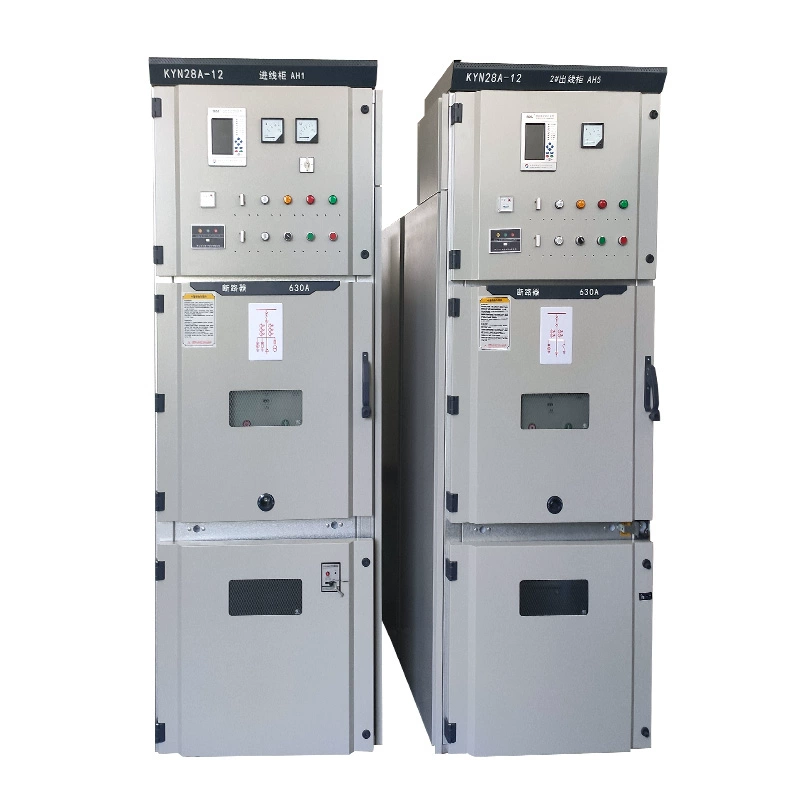
High-voltage switchgear is the control center of any medium- and high-voltage network. It isolates faulty sections, protects transformers and feeders, and keeps personnel safe during faults. When high voltage switchgear products perform reliably, outages are contained and arc-flash risks stay low. Because these assets sit between the source and every downstream load, even a single undetected defect can cascade into a plant-wide failure. That centrality is why the maintain-or-replace decision deserves a structured, evidence-based approach rather than a reactive one.
 When Regular Maintenance Is Enough For HV Switchgears
Not every aging panel needs replacement. If your switchgear is within its design life, passes diagnostic tests, and operates in a controlled environment, a disciplined maintenance regime is usually sufficient. Tell-tale signs that maintenance is enough include stable insulation-resistance trends, no unexplained trips, available spare parts, and compliance with IEC 62271 / IEEE C37 series. Periodic thermographic surveys, contact-resistance testing, and SF6 density checks catch most issues before they escalate. In these cases, the smartest investment is a documented preventive-maintenance plan—not capital expenditure on new equipment.
Signs That Your HV Switchgears Need Replacement
Maintenance stops making sense when the asset itself becomes the liability. Watch for these five red flags.
Frequent Failures And Unexpected Shutdowns
Recurring breaker trips, spurious protective-relay operations, or unplanned shutdowns signal that core components have degraded beyond economical repair. If downtime now exceeds the cost of planned replacement, the equipment is telling you to upgrade.
Aging Components And Insulation Deterioration
Switchgear insulation—whether air, SF6, or solid—ages with thermal and electrical stress. Cracked bushings, discolored barriers, or falling dielectric strength measured during tests mean the safety margin is gone. Upgrading to a modern SF6 gas insulated switchgear (GIS) or a solid-insulated unit restores that margin in a much smaller footprint.
 Increasing Maintenance Costs
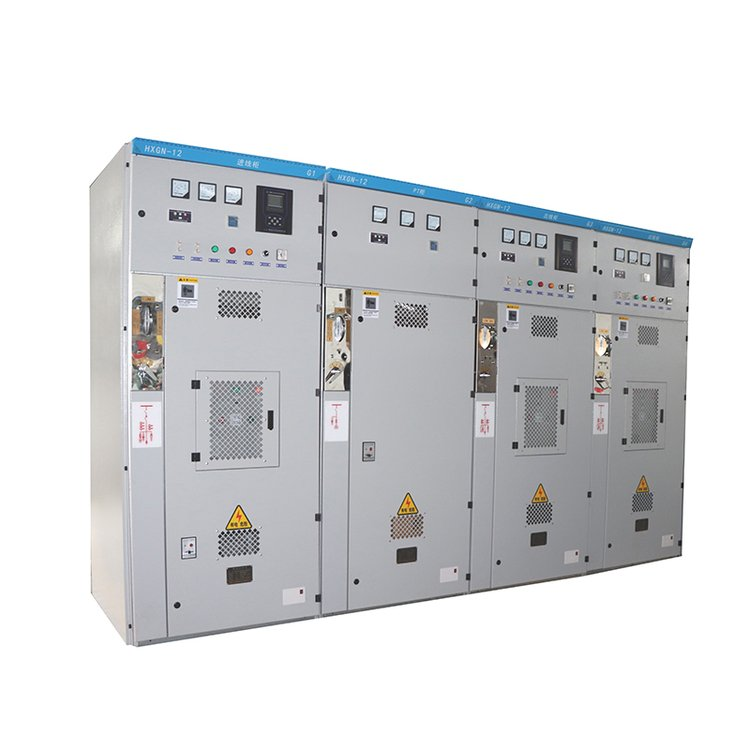
When annual maintenance spend trends upward year after year—more frequent call-outs, specialized labor, custom fabrication—you are paying a rising rent on a depreciating asset. At a certain crossover point, replacement delivers a lower total cost of ownership.
Lack Of Spare Parts Availability
Obsolete breakers, discontinued relays, or orphaned control systems make repairs slow and expensive. If a single failed part can idle your entire line for weeks, the risk alone justifies replacement with a supported platform.
Unable To Meet Modern Safety Standards
Legacy panels built to older editions of IEC 62271 or lacking arc-fault containment may no longer satisfy current site, insurer, or utility requirements. Non-compliance is a legal and safety exposure you cannot maintain away. This is the clearest trigger to replace.
Is your HV switchgear showing failure signs?
If you are seeing frequent trips, rising maintenance costs, or obsolete components, our engineers can assess your lineup and recommend a cost-effective, standards-compliant replacement.
Comparing Costs Of HV Switchgear Maintenance Vs Replacement
Frame the decision as total cost of ownership over a 10–15 year horizon. Maintenance costs are predictable but recurring: labor, testing, spare parts, and lost production during outages. Replacement is a larger upfront capital cost but resets the clock, typically lowers annual upkeep, improves efficiency, and reduces arc-flash risk. As a practical rule, if projected cumulative maintenance cost over the remaining deferral period approaches 40–60% of a new, equivalent lineup—and the asset shows any of the red-flag symptoms above—replacement wins. Always factor hidden costs: extended downtime, insurance premiums, and energy or carbon penalties. Upgrading to a proven metal-clad switchgear platform often pays back faster than a repair-only strategy on a degraded asset.
How To Choose The Right HV Switchgear Manufacturer For Projects
Selecting a partner matters as much as selecting the product. Prioritize manufacturers with proven medium-/high-voltage experience, third-party type-test certifications (IEC/ISO), and transparent OEM/ODM capability for project-specific configurations. Evaluate their testing infrastructure, spare-parts policy, and reference projects with utilities or EPCs. A credible HV switchgear manufacturer also supplies clear documentation, training, and responsive after-sales support—because the cheapest bid often becomes the most expensive asset over its lifetime. For bulk or project procurement, sourcing wholesale high voltage switchgear directly from a qualified factory controls cost without sacrificing compliance. Our range spans metal-enclosed switchgear, GIS, and ring main units engineered to international standards. See how established suppliers compare in our overview of leading HV switchgear manufacturers.
Planning a switchgear upgrade or new project?
Talk to our engineering team about ratings, configuration, and lead time. We support OEM/ODM and provide IEC/ISO-certified documentation for tender submissions.
3. Maintenance Strategies To Extend HV Switchgear Lifespan
Whether you maintain or plan a future replacement, these strategies maximize asset life and safety:
- Adopt condition-based maintenance. Use thermography, partial-discharge monitoring, and contact-resistance tests on a fixed schedule instead of time-based guesses.
- Keep a digital asset register. Store every test result so trend analysis—not intuition—drives decisions. Our guide on HV switchgear lifecycle and maintenance tips expands on this approach.
- Train operators on safe intervention. Most failures trace back to human error during isolation or switching; arc-flash procedures save lives.
- Control the environment. Manage humidity, dust, and ventilation to slow insulation aging and reduce corrosion.
- Stock critical spares only for supported platforms. Another reason to avoid obsolete designs that no longer have a supply chain.
4. FAQ
How Long Do HV Switchgears Usually Last?
Depending on type and environment, air-insulated switchgear typically lasts 25–35 years, while GIS often exceeds 30–40 years with proper maintenance. Lifespan is driven by load, ambient conditions, and maintenance discipline rather than the nameplate alone.
How Often Should High Voltage Switchgear Be Inspected?
Most standards and utilities recommend a visual and thermographic inspection every 1–3 years, with deeper testing (contact resistance, insulation, protection relays) every 3–6 years, or after any major fault.
How Much Does It Cost To Replace High Voltage Switchgear?
Replacement cost varies widely with voltage class, configuration, and site work, typically ranging from tens of thousands to several hundred thousand USD per lineup. A lifecycle cost comparison against cumulative maintenance is the right way to size the investment.
Can Regular Maintenance Extend The Life Of HV Switchgears?
Yes. A disciplined, condition-based maintenance program can add 5–10+ years to service life and significantly reduce failure probability—provided the core insulation and mechanisms have not already degraded beyond safe limits.
What Factors Should Be Considered When Choosing HV Switchgear Products?
Key factors include voltage/class ratings, short-circuit withstand, insulation type (AIS/GIS/solid), footprint, environmental rating, certifications, spares availability, and the manufacturer’s engineering and after-sales support.
What Is the Difference Between AIS and GIS High Voltage Switchgear Products?
AIS (Air-Insulated Switchgear) uses air as the insulating medium—lower cost and easier maintenance, but larger footprint. GIS (Gas-Insulated Switchgear) uses SF6 or an alternative gas in a sealed enclosure—compact, sealed, and ideal for space- or pollution-constrained sites, at a higher initial cost.
5. Conclusion
Deciding between HV switchgear maintenance and replacement is fundamentally a risk-and-cost calculation. Maintain when the asset is healthy, tested, and standards-compliant; replace when failures, obsolete parts, or non-compliance put your operation at risk. Whichever path you choose, partner with an experienced, certified manufacturer and keep a documented maintenance record. If you are weighing an upgrade on your site, our engineering team can help you compare options and build a defensible business case.
Ready to evaluate your HV switchgear?
Send us your lineup details, age, and symptoms. We will return a plain-English recommendation—maintain, retrofit, or replace—backed by lifecycle cost math.
About Beiye Electric
Zhejiang Beiye Electric Co., Ltd (BYYOU) is a 10–35kV medium- and high-voltage switchgear manufacturer with 15+ years of engineering experience, OEM/ODM capability, and IEC/ISO-certified production. Our technical team supports utility, industrial, and renewable-energy projects worldwide.
Related Resources
- How Long Does High Voltage Switchgear Last? Lifecycle and Maintenance Tips
- 10 Warning Signs of a Bad Circuit Breaker and When to Replace It
- Metal-Clad vs Gas-Insulated Switchgear (GIS): Key Differences
- How to Select High Voltage Switchgear for Power Grid Projects
- High Voltage Switchgear Trip Fault Analysis and Treatment Guide
- Top 10 High Voltage Switchgear Manufacturers in 2026


