

7 Main Types Of High Voltage Switchgear Used In Power Systems
The reliability of a power grid hinges on its ability to control, protect, and isolate electrical equipment. This is where high voltage electrical switchgear comes into play. As a critical nexus in power distribution and transmission, selecting the right switchgear is essential for operational safety and efficiency.
In this guide, we will explore the seven primary types of high voltage switchgear, their unique components, and how to choose the right solution for your infrastructure.
7 Main Types of High Voltage Switchgear Used in Power Systems
High voltage switchgear is generally classified by its insulating medium and its physical construction. Here are the industry standards used by leading High Voltage Switchgear Manufacturers worldwide.
Gas Insulated Switchgears (GIS)
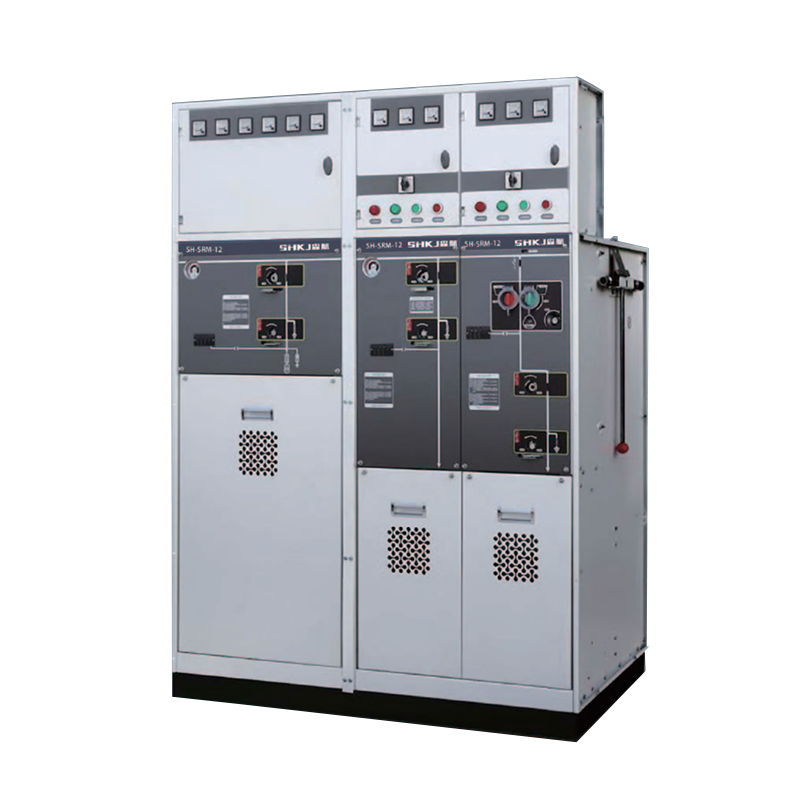
GIS is a compact, multi-component assembly enclosed in a metallic structure, where Sulfur Hexafluoride gas acts as the primary insulator.
- Best for: Urban areas or environments with limited space.
- Advantage: Extremely high reliability and protection against environmental factors like salt or moisture.
SF6 Gas Insulated Switchgear offers a fully insulated and sealed modular design, ensuring maximum reliability and maintenance-free operation in harsh environments like high-altitude or flood-prone areas. Its flexible, extensible architecture allows for arbitrary combinations of modules, providing a highly customizable and cost-effective solution for modern urban and industrial power distribution.
Air Insulated Switchgears(AIS)
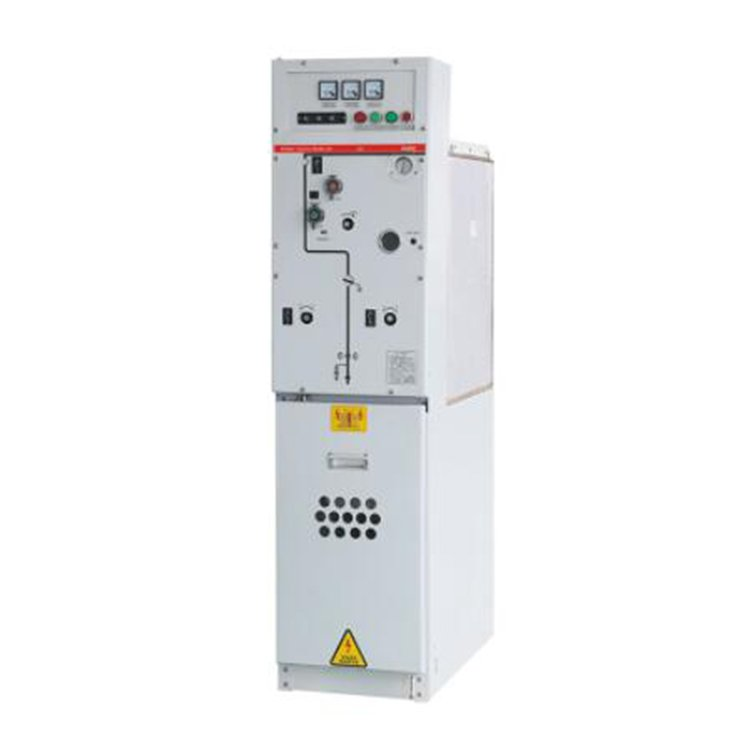
AIS uses atmospheric air as the phase-to-ground insulation. It is the most traditional form of switchgear.
- Best for: Large outdoor substations where space is not a constraint.
- Advantage: Lower initial cost and easier visual inspection of components.
Hybrid Switchgear
Hybrid models combine the best of AIS and GIS. They typically use SF6 for circuit breakers and encapsulated components while using air-insulated busbars.
- Best for: Retrofitting existing AIS substations to increase capacity without expanding the footprint.
Metal Clad Switchgear
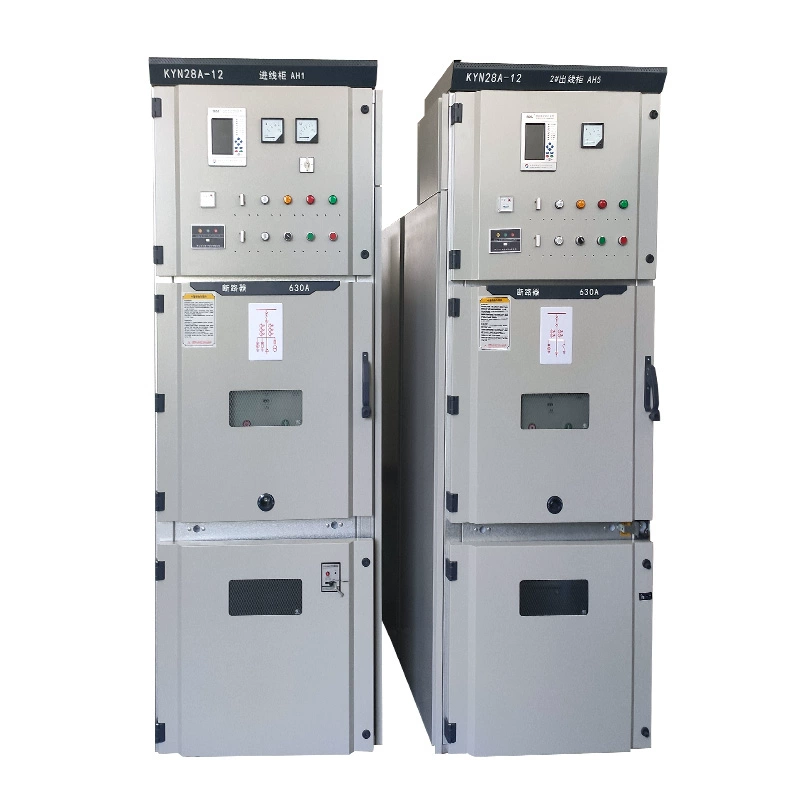
In Metal-Clad units, all High Voltage Switchgear Components (circuit breakers, busbars, and transformers) are housed in separate, earthed metal compartments.
Advantage: High safety levels; if one compartment fails, the damage is contained.
Designed for 3.6-12kV three-phase AC grids, our metal-clad removable switchgear excels in power distribution and circuit protection. It is compatible with various schemes, including single and double bus systems. Built to international standards (IEC/DIN/GB), this switchgear incorporates advanced anti-misoperation functions, making it a safe and dependable choice for modern power infrastructure.
Metal-Enclosed Switchgear
Similar to metal-clad, but the internal components are not necessarily in separate compartments. It is often used in industrial applications where the voltage requirements are on the lower end of the “high voltage” spectrum.
Vacuum Circuit Breaker Switchgear (VCB)
VCB switchgear utilizes a vacuum as the arc-quenching medium.
- Best for: Medium to high voltage applications (up to 36kV-40.5kV).
- Advantage: Virtually maintenance-free arc interruption and environmentally friendly compared to SF6.
Hybrid/Compact Substation Switchgear
Often referred to as “Integrated Switchgear,” these units pre-assemble several functions (disconnecting, breaking, and sensing) into a single module. This significantly reduces the High Voltage Switchgear Installation time and site work.
Table: Comparison of 7 Switchgear Types
| Type | Insulating Medium | Space Requirement | Maintenance Needs | Ideal Environment |
| GIS | SF6 Gas | Very Low | Low | Indoor/Urban |
| AIS | Air | Very High | Medium | Outdoor/Rural |
| Hybrid | Gas & Air | Medium | Medium | Substation Upgrades |
| Metal-Clad | Air/Solid | Medium | Medium | Industrial Plants |
| Metal-Enclosed | Air | Medium | Medium | Power Distribution |
| VCB | Vacuum | Low/Medium | Very Low | Indoor/Medium Voltage |
| Compact | Various | Low | Low | Remote/Rapid Deploy |
High Voltage Switchgear Installation
Proper High Voltage Switchgear Installation is a high-precision task. At Beiye Electric, we emphasize a three-step protocol:
- Foundation Check: Ensuring the floor levelness is within 1mm per meter to prevent mechanical stress on the busbars.
- Environmental Sealing: For GIS and indoor units, maintaining a dust-free environment during assembly is critical to prevent partial discharge.
- Dielectric Testing: Performing “Hi-Pot” testing post-installation to ensure the insulation integrity hasn’t been compromised during transit.
High Voltage Switchgear Maintenance
To extend the lifespan of your equipment, a proactive High Voltage Switchgear Maintenance schedule is vital. Key activities include:
- Thermal Imaging: Using infrared cameras to detect “hot spots” in connections.
- Gas Pressure Monitoring: For GIS, tracking SF6 levels to prevent insulation breakdown.
- Mechanism Lubrication: Ensuring circuit breaker linkages operate within millisecond tolerances.
- Partial Discharge (PD) Testing: Non-invasive monitoring to catch insulation failure before it causes a blackout.
How to Choose the Right Switchgear
Selecting the right equipment depends on your specific project constraints:
- Footprint: If land is expensive, go with China High Voltage Switchgear in GIS format.
- Budget: For large-scale rural projects, AIS remains the most cost-effective solution.
- Safety Requirements: For high-occupancy industrial sites, Metal-Clad switchgear offers superior personnel protection.
FAQ
Why is China High Voltage Switchgear popular globally?
China has become a hub for high-end manufacturing, offering a balance of advanced SF6 and vacuum technology at competitive price points, backed by rigorous international certifications (IEC/IEEE).
How long does high voltage switchgear last?
With proper maintenance, high-quality switchgear can operate efficiently for 30 to 50 years.
Is SF6 gas dangerous?
SF6 is a potent greenhouse gas. However, modern GIS units are designed with sealed-for-life technology to prevent leaks, making them safe and environmentally manageable.
What is the primary function of high voltage switchgear in modern power grids?
The primary function is to control and protect electrical power systems. It safely connects or disconnects circuits under normal load conditions and automatically isolates faulted sections by interrupting short-circuit currents, thereby preventing equipment damage and widespread blackouts.
AIS vs GIS: What are the main differences between air-insulated and gas-insulated switchgear?
AIS uses air as insulation, offering lower cost and simpler construction but requires more space and is affected by pollution, humidity, and altitude. GIS uses SF6 gas, providing compact size, high reliability, and minimal environmental impact, making it ideal for urban areas and harsh conditions.
What are the standard voltage ratings and classifications for HV switchgear?
According to IEC 62271-1, HV switchgear is typically classified for rated voltages of 3.6 kV, 7.2 kV, 12 kV, 17.5 kV, 24 kV, 36 kV, 52 kV, and up to 245 kV. These correspond to system voltages from 3 kV to 220 kV, with insulation levels defined by rated lightning impulse withstand voltage (e.g., 75 kV for 12 kV equipment).
What is the significance of IP67 protection grade in gas-insulated units?
IP67 means complete dust-tight protection (6) and protection against temporary immersion in water up to 1 meter for 30 minutes (7). For GIS, this ensures reliable operation in flooded basements, dusty industrial sites, or outdoor cabinets, preventing moisture ingress that could cause internal flashovers.
How does high altitude impact high voltage switchgear performance?
At high altitudes (above 1000m), lower air density reduces dielectric strength and cooling capacity. Consequently, switchgear may experience increased risk of external flashover and temperature rise. Derating or using GIS (which is less affected) is recommended above 2000m.
What are anti-misoperation safety interlocks in AC metal-enclosed units?
These are mechanical or electrical interlocks that enforce a correct operating sequence, typically “five-proof” functions: prevent closing with earthing switch on, prevent closing when live, prevent opening of earthing switch when live, prevent access to live compartments, and prevent operation beyond rated parameters.
How to test insulation integrity for newly installed switchgear?
Perform power-frequency withstand voltage test (e.g., 28 kV for 1 minute on 12 kV switchgear) and insulation resistance measurement (typically >1000 MΩ). For GIS, additionally conduct a partial discharge test and SF6 gas leakage check to verify no assembly defects exist.
What are the sealing and insulation advantages of fully enclosed GIS designs?
Full enclosure isolates all live parts inside a sealed SF6-filled metal housing. This eliminates external contamination (salt, dust, moisture), prevents animal intrusion, reduces partial discharge risks, and allows installation in compact, weatherproof, or explosion-resistant enclosures.
How often should high voltage switchgear undergo maintenance?
For AIS, visual and operational checks every 1–2 years; major servicing every 4–6 years. For modern GIS (e.g., SH-SRM-12 series), maintenance intervals can extend to 10–15 years, depending on operating conditions, with only periodic gas pressure checks recommended.
What maintenance tips help extend high voltage switchgear lifetime?
Keep enclosures clean and dry, tighten all electrical connections periodically, check operating mechanism lubrication, test auxiliary contacts, monitor SF6 gas density (for GIS), perform thermal imaging during load cycles, and always verify interlock functionality before re-energizing.
How do extensible RMU units enable flexible cable distribution solutions?
Extensible Ring Main Units (RMUs) feature side connection bushings that allow multiple units to be bolted together mechanically and electrically. This permits stepwise expansion of distribution networks, easy addition of feeder modules, and adaptation to changing load demands without site modification.
Conclusion
Understanding the various Types Of High Voltage Switchgear is the first step toward building a resilient power system. Whether you prioritize the space-saving benefits of GIS or the cost-efficiency of AIS, partnering with experienced High Voltage Switchgear Manufacturers ensures your grid is built for the future.
Looking for reliable power solutions? Beiye Electric specializes in high-performance switchgear tailored to global standards. Contact us today for a technical consultation.


