


What Is Outdoor Vacuum Circuit Breaker?Outdoor VCB VS Indoor VCB
In modern electrical infrastructure, reliability and safety are everything. Whether you are building a new substation or upgrading an aging distribution network, choosing the right High Voltage Circuit Breaker becomes critical. Among various technologies, the outdoor vacuum circuit breaker has become a preferred solution for utilities and industrial power systems. Designed for harsh environments, an Outdoor VCB offers reliable fault interruption, long service life, and minimal maintenance requirements in outdoor power distribution networks.
What Is An Outdoor Vacuum Circuit Breaker?
If you work in electrical procurement or infrastructure development, you will encounter many types of switching equipment. But the Outdoor Vacuum Circuit Breaker stands out because of its reliability and operational simplicity.
A vacuum circuit breaker (VCB) interrupts electrical current by extinguishing the arc inside a sealed vacuum chamber called a vacuum interrupter. When the breaker contacts separate, an arc forms momentarily, but because the vacuum has extremely low ionization, the arc disappears rapidly once the current reaches zero.
An Outdoor VCB is essentially a vacuum circuit breaker designed specifically for outdoor environments. It includes additional insulation, weather protection, and structural reinforcements that allow the equipment to operate safely in open-air installations.
Typical components of an outdoor vacuum circuit breaker include:
- Vacuum interrupter units
- Insulated pole assemblies
- Operating mechanism (spring or motor charged)
- Outdoor-rated insulation (silicone rubber or porcelain)
- Weatherproof control cabinet
- Remote monitoring and protection system
Unlike oil circuit breakers, vacuum technology eliminates fire risks and fluid maintenance. Compared with gas-insulated breakers, vacuum interrupters do not rely on greenhouse gases such as SF₆.
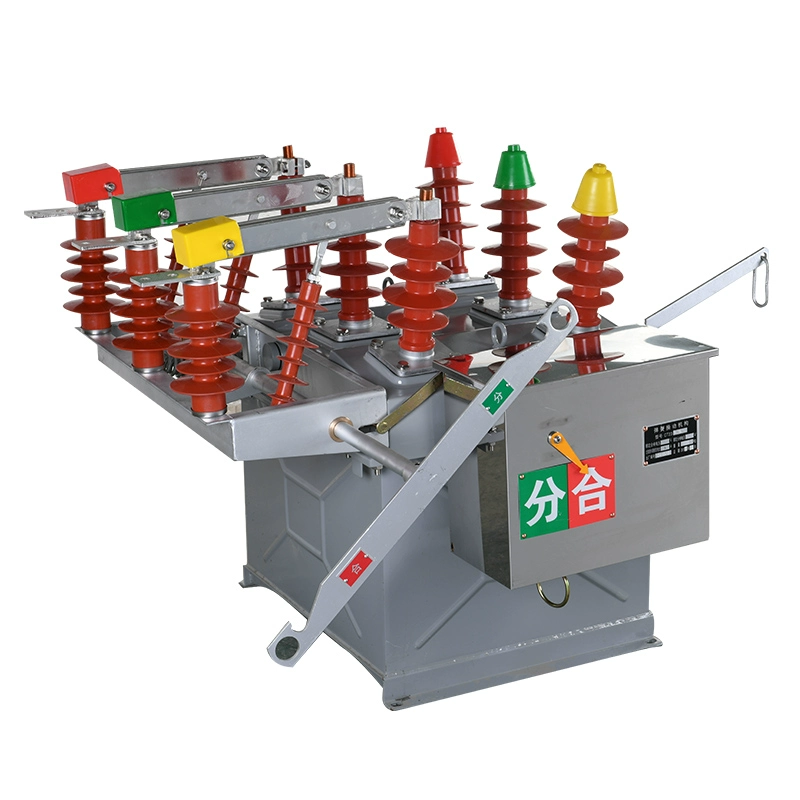
In practice, utilities use Outdoor Vacuum Circuit Breakers for medium-voltage systems ranging from 11kV to 40.5kV.
If you are responsible for sourcing equipment, this technology often becomes the logical choice for modern distribution systems.
Advantages Of Outdoor Vacuum Circuit Breakers
When evaluating electrical switching equipment, you probably consider reliability, maintenance requirements, operational safety, and long-term cost.
An Outdoor Vacuum Circuit Breaker performs well across all these factors.
High Capacity For Load Interruption
One of the primary strengths of an Outdoor VCB is its ability to interrupt large fault currents.
When contacts separate inside the vacuum interrupter, the arc extinguishes extremely quickly due to the lack of ionizable medium. The dielectric strength of the vacuum recovers almost instantly, allowing the breaker to safely interrupt high short-circuit currents.
For example, a power utility upgrading its 15kV distribution feeders replaced aging oil circuit breakers with Outdoor Vacuum Circuit Breakers. The new breakers reduced fault clearing time significantly, preventing equipment damage during transient faults.
This capability is especially important in overhead distribution networks where temporary faults frequently occur.
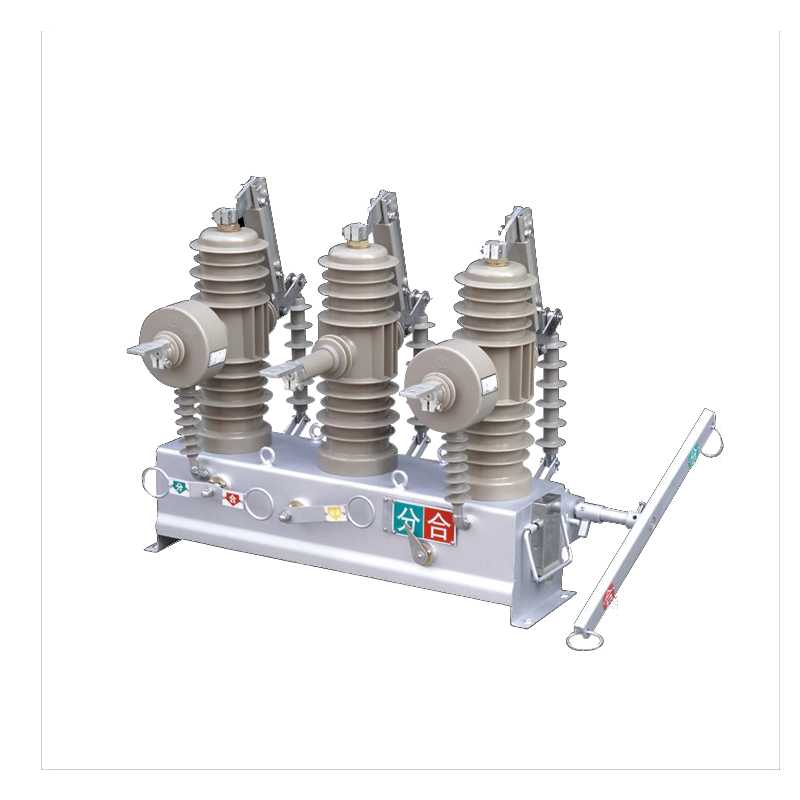
Weather-Resistant And Durable Construction
Unlike indoor switchgear, an Outdoor VCB must withstand harsh environmental conditions.
Manufacturers design these breakers with materials that resist environmental stress, including:
- UV-resistant insulation materials
- Corrosion-resistant metal structures
- Sealed vacuum interrupters
- High creepage distance insulation
- Weatherproof operating cabinets
In coastal regions, salt contamination can severely impact electrical insulation. Silicone rubber insulation used in modern Outdoor Vacuum Circuit Breakers maintains hydrophobic properties, preventing surface leakage currents and insulation failure.
These design features allow the breaker to operate reliably for many years even under extreme weather conditions.
Lower Maintenance And Longer Lifespan
Maintenance costs are often overlooked during procurement—but they become significant over the lifetime of electrical equipment.
Traditional oil circuit breakers require periodic oil replacement, inspection, and potential leakage management. Gas breakers may require monitoring of gas pressure and environmental compliance procedures.
In contrast, Outdoor Vacuum Circuit Breakers require very little routine maintenance.
Because the arc is extinguished in a sealed vacuum chamber, contact erosion is minimal. Many vacuum interrupters can perform tens of thousands of switching operations before replacement is needed.
For utilities managing hundreds of substations, this translates into substantial operational savings.
Safety And Reliability For High-Voltage Systems
Safety is always a priority in high-voltage electrical systems.
Oil circuit breakers carry fire risks, while SF₆ gas breakers involve greenhouse gas handling and leakage concerns. Vacuum technology avoids both issues.
A properly designed Outdoor VCB offers:
- Sealed arc interruption chamber
- No flammable liquids
- No greenhouse gas emissions
- High mechanical reliability
For system operators and maintenance teams, these characteristics provide peace of mind and regulatory compliance advantages.
Key Benefits At A Glance
If you are comparing switching technologies, the advantages of Outdoor Vacuum Circuit Breakers become clear:
- Fast arc extinction and strong fault interruption capability
- Excellent resistance to outdoor environmental conditions
- Minimal maintenance requirements over long service periods
- Improved operational safety compared with oil or gas breakers
- Reliable performance in modern smart grid systems
These factors explain why utilities worldwide are transitioning toward vacuum switching technology.
Outdoor VCB Vs Indoor VCB
Both indoor and outdoor vacuum circuit breakers use the same arc-extinguishing technology, but their applications and designs differ significantly.
Understanding these differences helps you select the right equipment for your project.
| Feature | Outdoor VCB | Indoor VCB | Typical Voltage Range | Installation Environment | Operational Control |
|---|---|---|---|---|---|
| Installation | Outdoor substations | Indoor switchgear panels | Medium voltage | Exposed to weather | Remote or SCADA |
| Design | Rugged, weatherproof | Compact metal-clad | 11kV–40.5kV | Indoor controlled | Local control |
| Insulation | High creepage distance | Standard insulation | Medium voltage | Protected environment | Manual/automatic |
| Maintenance | Less frequent | Easy indoor access | Medium voltage | Clean environment | Panel-based |
This comparison highlights the structural and operational differences between the two designs.
Ruggedness Vs Compact Design
An Outdoor Vacuum Circuit Breaker is engineered to survive outdoor conditions.
This means larger insulation structures, weatherproof materials, and stronger mechanical frames.
Indoor VCB systems are typically installed inside metal-clad switchgear cabinets. Because the environment is controlled, the equipment can be designed in a compact form.
For projects involving open-air substations, the Outdoor VCB is clearly the better option.
Bulk Power Handling Vs Precise Control
Outdoor breakers are commonly used in distribution feeders and substations where large electrical loads must be switched safely.
Indoor VCB systems are often installed in industrial electrical rooms where precise control and compact equipment layout are more important.
For example, a manufacturing plant might use indoor VCB switchgear to protect motors and internal power systems.
Meanwhile, the substation feeding that plant may rely on Outdoor Vacuum Circuit Breakers to manage incoming power lines.
Remote Vs Local Management
Modern Outdoor VCB equipment often integrates with remote monitoring systems such as SCADA.
This allows utility operators to open or close breakers remotely and analyze system conditions in real time.
Indoor switchgear is traditionally controlled locally through panel-mounted control systems, although advanced installations can also support remote communication.
In large electrical grids, remote operation dramatically improves system efficiency and response time.
When To Choose Each Type
If you are responsible for selecting electrical equipment, the choice between indoor and outdoor breakers usually depends on installation location.
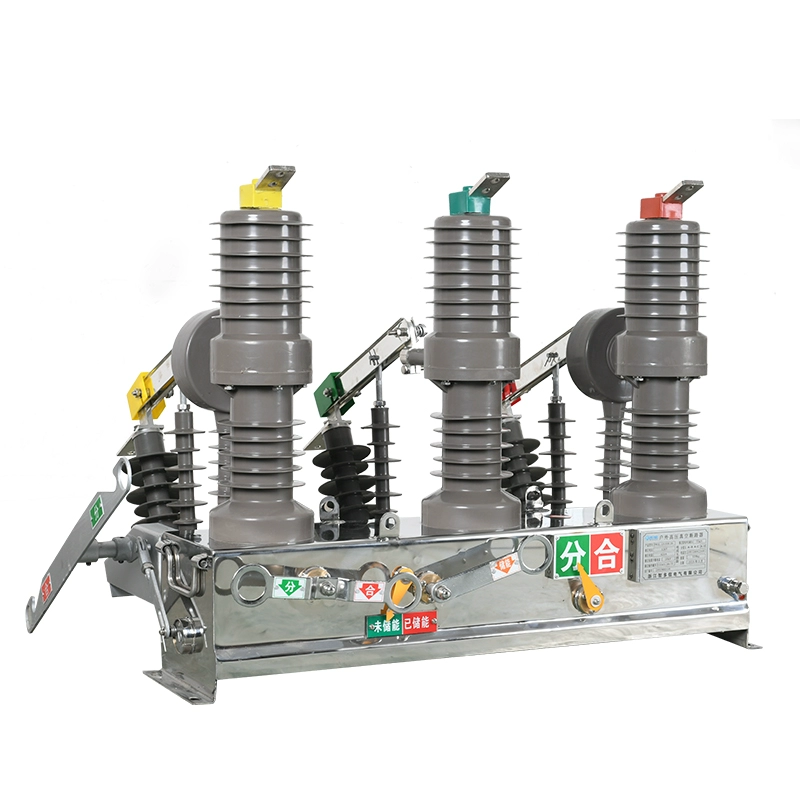
You should choose an outdoor vacuum circuit breaker when your system includes:
- Outdoor substations
- Overhead distribution lines
- Pole-mounted switching equipment
- Remote grid infrastructure
Indoor vacuum circuit breakers are more suitable for:
- Factory electrical rooms
- Data centers
- Commercial buildings
- Industrial control systems
Choosing the correct equipment type ensures system reliability and cost efficiency.
Applications In Real-World Scenarios
You may already know that outdoor vacuum circuit breakers are widely used in power systems, but their practical applications are even broader than many people realize.
Let’s look at some real-world scenarios where these breakers play a critical role.
Utility Distribution Networks
Most electrical utilities deploy Outdoor VCB equipment in distribution substations.
These breakers protect feeder lines and isolate faults automatically, preventing outages from spreading across the network.
A power company upgrading its rural network installed outdoor vacuum breakers on several 10kV feeders. After installation, fault isolation became faster and service interruptions decreased noticeably.
For procurement teams, this type of improvement demonstrates the value of reliable switching equipment.
Renewable Energy Projects
Solar and wind farms often operate in remote outdoor locations.
Because of these environmental conditions, Outdoor Vacuum Circuit Breakers are ideal for protecting the connection between renewable generation facilities and the main grid.
Their low maintenance requirements make them particularly attractive for installations where service access is limited.
Industrial Substations
Large industrial operations such as mining sites, steel plants, and chemical facilities frequently operate their own outdoor substations.
These substations require durable switching equipment capable of handling heavy loads and harsh environmental conditions.
In such settings, Outdoor VCB systems provide reliable protection and efficient switching performance.
Rural Electrification
In developing regions, overhead distribution networks are the primary method for delivering electricity.
Outdoor breakers installed along distribution feeders help isolate faults quickly, minimizing service disruption across large geographic areas.
Utilities implementing rural electrification programs often rely heavily on Outdoor Vacuum Circuit Breakers for this purpose.
Beiye Electric Outdoor Vacuum Circuit Breaker Solutions
If you are sourcing High Voltage Circuit Breaker equipment for a power distribution project, choosing a reliable manufacturer becomes just as important as selecting the right technology.
Beiye Electric specializes in the manufacturing of Outdoor Vacuum Circuit Breakers designed for modern power distribution systems.
Their solutions typically feature:
- High-performance vacuum interrupters
- Advanced insulation technology
- Reliable spring-operated mechanisms
- Smart grid communication compatibility
- Compliance with international standards
These breakers are engineered to operate reliably in demanding environments such as substations, renewable energy facilities, and industrial power networks.
For procurement teams, working with an experienced manufacturer ensures consistent product quality, technical support, and long-term operational reliability.
Many infrastructure developers prefer suppliers that can provide customization, engineering consultation, and global project experience.
FAQ
Can An Indoor VCB Be Used Outdoors?
No. Indoor vacuum circuit breakers are not designed to withstand outdoor environmental conditions such as rain, dust, UV exposure, and temperature fluctuations. Installing an indoor breaker outdoors can lead to insulation failure and equipment damage. For outdoor applications, a dedicated Outdoor Vacuum Circuit Breaker should always be used.
Can Outdoor VCBs Be Remotely Controlled?
Yes. Most modern Outdoor VCB systems support remote control through SCADA or smart grid communication systems. This allows operators to monitor breaker status, perform switching operations, and analyze system data without physically visiting the installation site.
What Is Creepage Distance And Why Is It Important?
Creepage distance refers to the shortest path along the surface of an insulating material between two conductive parts. In outdoor environments where dust, pollution, and moisture accumulate, sufficient creepage distance helps prevent electrical flashover and improves insulation reliability.
How Often Should An Outdoor VCB Be Maintained?
Maintenance intervals depend on operating conditions and switching frequency. However, Outdoor Vacuum Circuit Breakers typically require far less maintenance than oil-based breakers. Periodic inspection and testing every few years is usually sufficient.
What Are The Differences Between Outdoor VCB And SF6 Breakers?
The main difference lies in the arc-extinguishing medium. Outdoor VCB devices use vacuum interrupters, while SF₆ breakers rely on sulfur hexafluoride gas. Vacuum breakers are generally easier to maintain and avoid environmental concerns associated with greenhouse gases.
Conclusion
Choosing the right High Voltage Circuit Breaker is essential for ensuring reliable and safe power distribution. An Outdoor Vacuum Circuit Breaker offers clear advantages for outdoor installations, including high interruption capacity, excellent environmental resistance, minimal maintenance, and long operational lifespan. Compared with indoor VCB systems, Outdoor VCB equipment is specifically designed to withstand harsh environmental conditions while supporting modern grid automation.
If you are planning a power distribution project or upgrading substation equipment, selecting a trusted manufacturer is a crucial step. Beiye Electric provides high-quality Outdoor Vacuum Circuit Breaker solutions designed for reliable performance in modern electrical networks.
If you are looking for dependable outdoor switching equipment, contact Beiye Electric today to explore customized Outdoor VCB solutions for your next power infrastructure project.


