


What Is Difference Between Circuit Breaker And Isolation Switch
In electrical systems—from large-scale industrial power distribution to household electricity—circuit breakers and isolation switchs are two crucial and sometimes visually similar devices. However, their design purposes, functions, and operating principles are fundamentally different. Confusing or misusing them can lead to equipment damage, electrical fires, and even personal injury. This article aims to provide an in-depth analysis of their differences, how they work together, and their correct application scenarios.
What Is The Difference Between A Circuit Breaker And An Isolation Switch?
Differences between circuit breakers and disconnect switches: definition, core functions, main characteristics, design purpose, operating conditions and performance, structural features and electrical parameters.
Definition

Circuit Breaker: An automatic protection device that automatically cuts off current to protect lines and equipment when a short circuit, overload, or other fault occurs.
Isolation Switch: A manually operated (usually) mechanical switch whose main function is to provide reliable electrical isolation when there is no load current or very low current in the circuit, ensuring that a section of the circuit is completely disconnected from the power supply for safe maintenance.
Core Functions
Circuit breaker: Protection function. Its core function is “tripping,” responding to electrical faults.
Disconnecting switch: Isolation function. Its core function is a “visible disconnect point,” providing safety assurance.
Key Characteristics
| Feature | Circuit Breaker | Disconnecting Switch |
| Main functions | Automatically cut off the fault current | Provide visible electrical isolation points |
| Operation method | Can be manually opened and closed, automatically tripped in case of malfunction | Usually only manually operated (without automatic tripping function) |
| load operation | Designed to connect, carry, and disconnect normal and fault currents | It is strictly prohibited to disconnect or connect circuits with load (without arc extinguishing capability) |
| status indicator | Usually there is an “ON/OFF/TRIPPED” status indicator | Provide clear and visible physical disconnect gaps |
Design Purpose
Circuit breaker: Designed for arc extinguishing. It contains a sophisticated arc-extinguishing mechanism that safely extinguishes the arc generated when interrupting large currents.
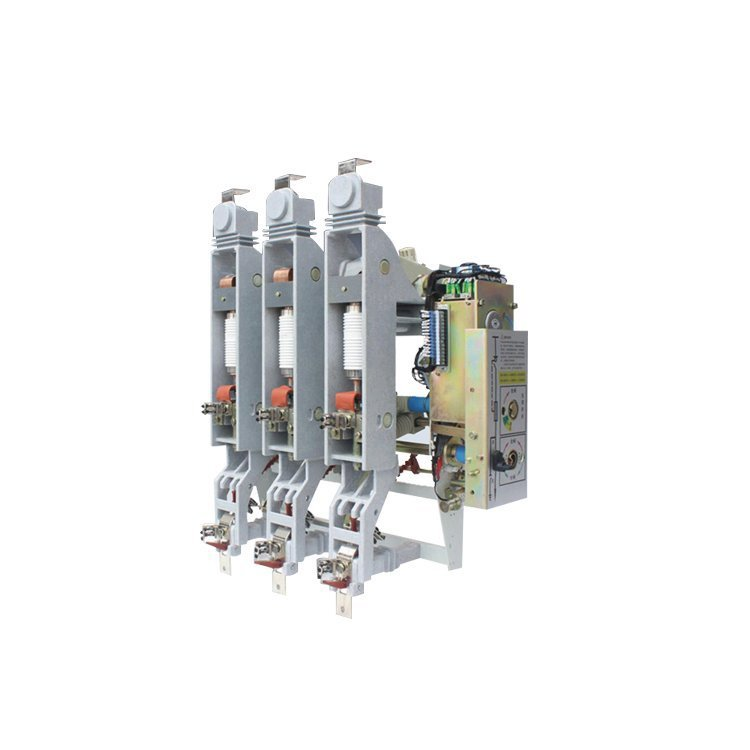
Isolation switch: Designed to ensure insulation distance. In the open position, there is sufficient safety air gap between the contacts to ensure reliable electrical isolation.
Operating Conditions And Capabilities
Circuit breaker: Can operate frequently at rated current and can interrupt short-circuit currents of up to thousands or even tens of thousands of amperes within milliseconds.
Disconnecting switch: Operates only when the current is nearly zero (usually the load is disconnected by the circuit breaker first). It does not have the ability to interrupt fault currents.
Structural Features
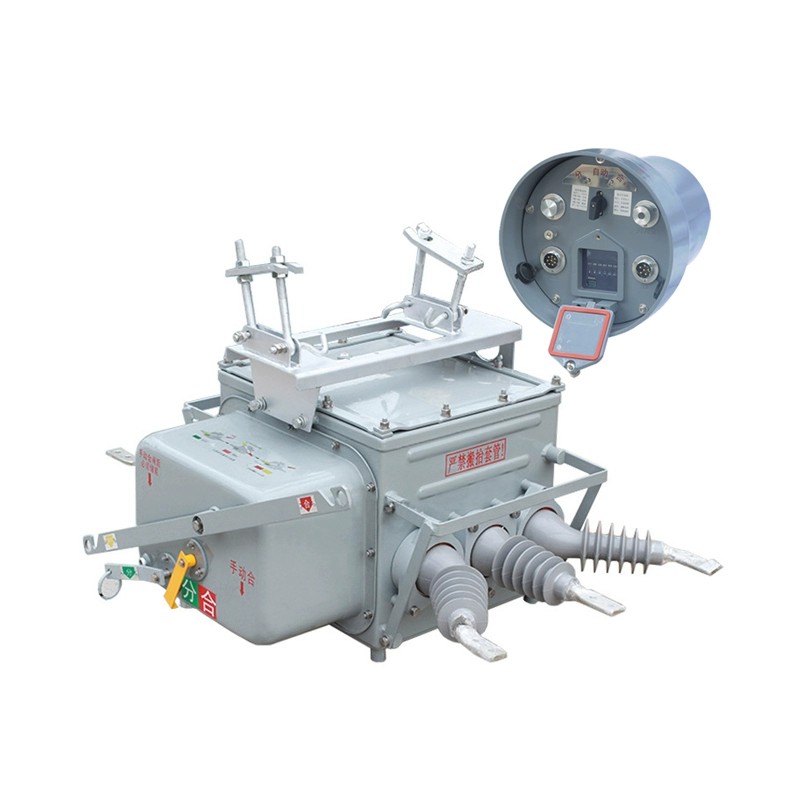
Circuit breakers: Complex in structure, including tripping mechanisms (thermomagnetic or electronic), contact systems, and arc-extinguishing chambers.
Disconnecting switches: Relatively simple in structure, mainly consisting of contact blades, stationary contact bases, and insulating bases, emphasizing mechanical stability and visibility.
Electrical Parameters
Key parameters: Both have rated voltage and rated current. However, the circuit breaker additionally possesses the crucial short-circuit breaking capacity (Icu/Ics) parameter, which the disconnecting switch does not have.
Role And Collaboration In Electrical Systems
They are not substitutes, but rather complements and collaborates.
Typical Installation Location And Sequence
In a distribution cabinet, the typical sequence is: power supply line → main disconnect switch → circuit breaker → load.
The disconnect switch is installed on the power supply side (front end) of the circuit breaker to isolate the upstream power supply, allowing for safe maintenance of downstream circuit breakers and lines.
Sometimes, the circuit breaker itself also has isolation functions (meeting isolation standards) and can be considered a circuit breaker with isolation characteristics.
Collaborative Work Scenarios
During system operation: The disconnecting switch is closed, and the circuit breaker acts as the primary operating and protective device.
During maintenance and repair:
First, operate the circuit breaker to disconnect the load current.
Then, open the disconnecting switch to create a visible disconnect point and lock and tag it (LOTO).
Only then can maintenance personnel safely work on the circuit downstream of the circuit breaker.
Application Scenarios And Selection Criteria
Residential distribution boxes: Miniature circuit breakers (MCBs) are typically used. These integrate overload/short-circuit protection and mostly meet isolation standards, so separate disconnect switches are generally not installed. The main switch may use a disconnect switch or a circuit breaker with isolation function.
Industrial/commercial power distribution:
Scenarios where circuit breakers are required: All branches requiring overload and short-circuit protection.
Scenarios where disconnect switches are required: Power supply input points, both sides of transformers, power supply front-ends of large equipment (such as motors, capacitor compensation cabinets), for maintenance isolation.
Selection criteria: Calculate the rated current based on the load, select the breaking capacity of the circuit breaker based on the expected short-circuit current of the system, and determine the location of the isolation point according to safety regulations.
Common Misconceptions Reminder
Myth 1: “Anything with a handle that can be turned is a switch, and can be operated freely.” → Incorrect. Pulling a disconnecting switch under load is a serious electrical accident.
Myth 2: “If I have a circuit breaker, I don’t need a disconnecting switch.” → Incomplete. For complex systems, disconnecting points are essential for safe maintenance.
Myth 3: “A circuit breaker opening equals safe isolation.” → Dangerous! Circuit breaker contacts are not visible internally and may pose a risk of malfunction or leakage. Truly safe maintenance relies on visible disconnecting switches or procedures to confirm isolation.
FAQ
Can Circuit Breakers Be Used As Isolation Switches?
Yes, but it must be clearly stated that it has isolation capabilities (meeting isolation requirements in standards such as IEC 60947-2). Many modern circuit breakers (such as some MCCBs, ACBs, and all compliant MCBs) are designed as “isolation circuit breakers,” combining protection and isolation functions.
Why Is It Necessary To Install Both At The Same Time In Circuit?
The main purpose is to achieve dual protection of safety and functionality. Circuit breakers are responsible for automatic protection, but cannot provide sufficiently intuitive safety isolation; disconnect switches provide reliable and visible isolation points, ensuring personal safety during maintenance, but cannot protect the circuit. Together, they form a complete safety chain of “protection + isolation”.
Which Is Circuit Breaker Or Isolating Switch In Household Distribution Box?
In household distribution boxes, the small switches controlling individual circuits (such as lighting and sockets) are typically miniature circuit breakers (MCBs), which provide both protection and isolation. The main switch entering the house may be:
A double-pole disconnect switch (used only for switching and isolation).
Or a circuit breaker with overcurrent protection (such as a residual current circuit breaker).
You can identify them by their markings: a disconnect switch only has an “I/O” mark and no current parameters; a circuit breaker is marked with alphanumeric symbols indicating current characteristics such as “Cxx” or “Bxx”.
Conclusion
In summary, circuit breakers act as “automatic bodyguards” for circuits, focusing on fault response and protection; disconnect switches act as “mechanical locks” for circuits, focusing on providing physical isolation and security. Understanding their fundamental differences and collaborative relationship is the cornerstone of proper electrical system design, safe operation, and maintenance.


