

What are the three types of switchgear?
In the vast network of the power system, switchgear is like a precise “traffic command center” and “safety guard”, silently undertaking the responsibilities of power distribution, line control, and the most critical protection and isolation. Its performance is directly related to the reliability of the power grid, the continuity of industrial production, and the stability of daily life. With the advancement of technology and the evolution of demand, the core insulation and arc extinguishing technology of switchgear has developed into three mainstream types: air-insulated switchgear, gas-insulated switchgear, and solid-insulated switchgear. They are not simply substitutes, but rather showcase their strengths in different application scenarios, jointly outlining the reliable picture of modern power transmission and distribution.
Air-insulated switchgear: classic architecture and extensive foundation
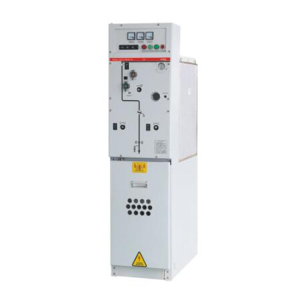
Air-insulated switchgear is the oldest and most widely used traditional form of technology.
Working principle and technical characteristics: Its core lies in using atmospheric air as the insulation medium between the main live parts such as busbars, circuit breakers, and isolating switches, as well as to the ground. Circuit breakers typically use vacuum arc extinguishing technology to achieve current interruption within sealed vacuum bubbles, while isolation and grounding switches are exposed to air for operation. This type of switchgear has an intuitive structure and is mostly metal armored, with clear compartments inside.
Advantages and Applicable Fields:
Cost Economy: The structure is relatively simple, raw materials are easily available, and manufacturing and maintenance costs are usually the lowest.
Convenient maintenance: Due to the visibility and accessibility of components, inspection, maintenance, and replacement of parts are relatively easy, and the technical threshold for maintenance personnel is relatively low.
Environmentally friendly: No special insulating gases are used.
Therefore, AIS has long been the mainstream choice for medium voltage distribution networks (such as 10kV, 35kV), industrial and mining enterprise substations, and indoor environments with less stringent space requirements.
Inherent limitations:
Large volume: In order to meet the safety distance requirements for air insulation, the equipment size is relatively large.
Vulnerable to environmental influences: Moisture, condensation, pollution, salt spray, and small animal invasion may all affect its insulation performance, requiring effective auxiliary equipment such as dehumidification and heating.
Occupying a lot of space: In the context of tight land resources in modern cities, its large footprint has become a major disadvantage.
Gas-insulated switchgear: compact revolution and high-end applications
In order to overcome the bottleneck of size and environmental sensitivity of air insulation, gas-insulated switchgear has emerged, representing a major revolution in the fields of high voltage and ultra-high voltage.
Working principle and technical characteristics: Its design concept is to completely seal all high-voltage conductive components (such as circuit breakers, isolating switches, transformers, busbars) in a grounded metal shell filled with sulfur hexafluoride gas. SF ₆ gas has excellent insulation and arc extinguishing performance, and its insulation strength is much higher than that of air under high voltage.
Core advantages and applications:
Extremely compact: Thanks to the high insulation of SF ₆, the distance between live parts can be greatly reduced, making the overall size of GIS only 10% -30% of AIS of the same voltage level. This is its most prominent advantage.
Ultra high reliability: The fully sealed structure completely isolates its internal components from the external environment (dust, humidity, salt spray, pollution), almost unaffected, and has an extremely low failure rate.
Flexible Layout: It can be designed flexibly according to the terrain and is easy to deploy in places with extremely limited space or harsh environments such as city centers, underground substations, hydropower stations, and offshore platforms.
Therefore, GIS is the preferred choice for high-voltage and ultra-high voltage transmission networks of 110kV and above, as well as high-end medium voltage distribution fields such as urban core areas and rail transit.
Challenges Faced:
High cost: The initial investment and maintenance costs are much higher than those of AIS.
SF ₆ gas environmental issues: SF ₆ is a potent greenhouse gas specified in the Kyoto Protocol, and its leak management, recycling, and search for environmentally friendly alternative gases (such as “clean air”, fluorinated ketone mixtures, etc.) have become industry research and development priorities.
Solid Insulated Switchgear: Innovative Path and Future Potential
Solid-insulated switchgear is an emerging technology route aimed at integrating the economy of traditional AIS with the compactness of GIS, while avoiding environmental issues such as SF.
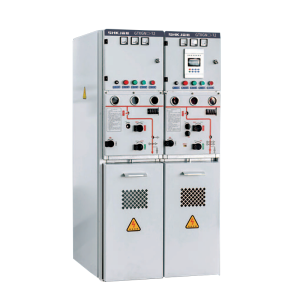
Working principle and technical characteristics: It adopts solid insulation materials such as epoxy resin, and through advanced casting technology, the core components, such as the vacuum arc extinguishing chamber, main electrical circuit, and isolation fracture, are completely sealed into one or several modules. These modules are usually coated with conductive or semiconductive shielding layers on their surfaces, forming a uniform electric field distribution.
Unique Value and Market Positioning:
Truly maintenance-free: The sealed structure completely eliminates the possibility of internal components being affected by the environment, achieving a “maintenance-free” design and significantly reducing the overall lifecycle cost.
Highly modular and miniaturized: The volume is significantly reduced compared to traditional AIS, approaching or even reaching the level of compact GIS, and the installation is flexible.
Green and environmentally friendly: completely eliminating the need for SF ₆ gas, fundamentally solving the potential leakage problem of greenhouse gases.
At present, SIS mainly targets the 12kV-40.5kV medium voltage market, which is particularly suitable for scenarios that require high reliability, limited space, and environmental protection, such as data centers, high-end commercial complexes, new energy (wind power, photovoltaic) booster stations, and temporary power supply projects that require frequent expansion or relocation.
Development stage: Its manufacturing cost is still higher than that of traditional AIS, and its history of large-scale application is relatively short. The accumulation of long-term operational data needs to be strengthened, but it has been widely regarded as an important development direction in the medium voltage field.
Summary and Prospect: Collaborative Progress, Facing the Future
In summary, the three types of switchgear constitute a clear technical spectrum:
Air-insulated switchgear is an economical and reliable “cornerstone” solution.
Gas-insulated switchgear is a revolutionary high-end solution designed to meet the demands of high voltage and compactness.
Solid insulated switchgear is an innovative potential solution for medium voltage environmental protection and maintenance-free needs.
Choosing which switchgear to use is a comprehensive consideration of factors such as voltage level, space constraints, environmental conditions, initial investment, long-term operation and maintenance costs, and environmental requirements. Looking ahead to the future, the development of switchgear technology is showing a trend of integration: the new generation of atmospheric pressure sealed air insulation technology, green GIS using environmentally friendly gases, and intelligent switchgear integrating sensing and digital technology are blurring the boundaries of traditional classification. No matter how technology evolves, its core goal remains the same: to safeguard every turn on and off of electricity in a safer, more reliable, more efficient, and environmentally friendly way, and to continuously deliver light and power to modern society.
AI-assisted content is for reference only; please verify carefully.


