


Vacuum Circuit Breakers: Functions, Principles, Applications, and Market Trends Analysis
With the global upgrading of power grids to smarter standards and the increasing demand for new energy grid integration, vacuum circuit breaker technology continues to evolve, becoming a mainstream solution in the field of medium and high voltage power protection.
This article explains the functions of vacuum circuit breakers, their working principles, their applications, standard operating procedures, and market trend analysis.
Function Of Vacuum Circuit Breaker
Vacuum circuit breaker functions include electrical isolation, rapid fault clearing, prevention of arc reignition, overload protection, short circuit protection, automatic reclosing, long lifespan, and strong adaptability.
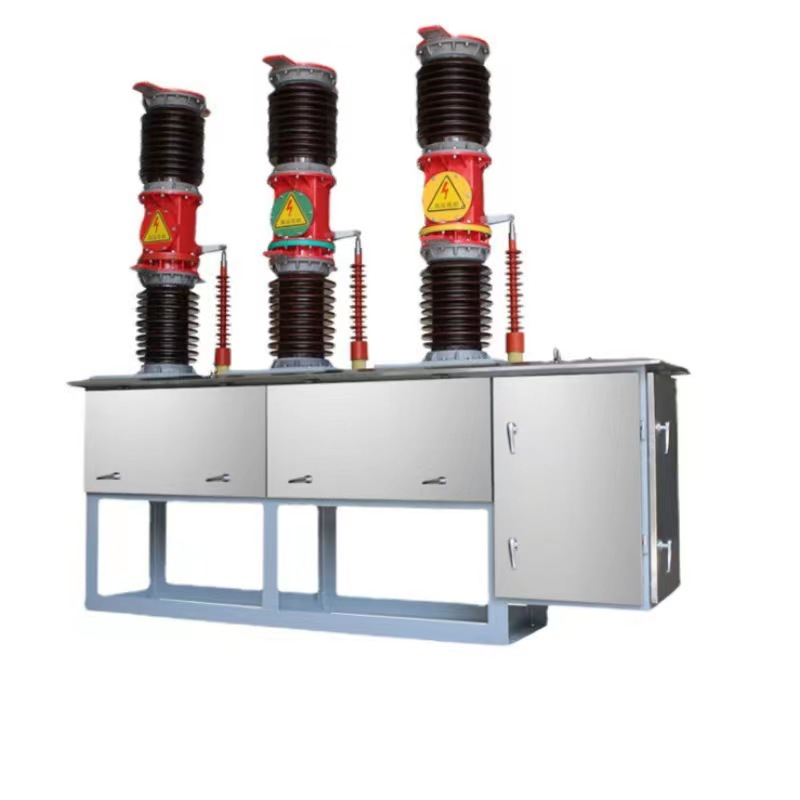
Safety Features
Electrical isolation: Establishes a reliable insulation gap in the open state, ensuring the safety of maintenance personnel.
Rapid fault clearing: Typically interrupts fault current within 20-50 milliseconds, preventing equipment damage and escalation of the accident.
Prevention of arc reignition: The high recovery strength of the vacuum medium effectively suppresses arc reignition.
System Protection Function
Overload protection: Precise overcurrent protection is achieved through thermal-magnetic tripping or electronic protection units.
Short circuit protection: Interlocks with the relay protection system to achieve selective tripping.
Automatic reclosing: Supports pre-programmed reclosing sequences to improve power supply continuity.
Performance Advantages
Long lifespan: The vacuum interrupter can withstand tens of thousands of operations, with a mechanical lifespan of 30,000-50,000 cycles.
Environmentally friendly and safe: No risk of oil leakage, meeting green power grid requirements.
High adaptability: Suitable for demanding operating conditions such as high-frequency operation and frequent switching.
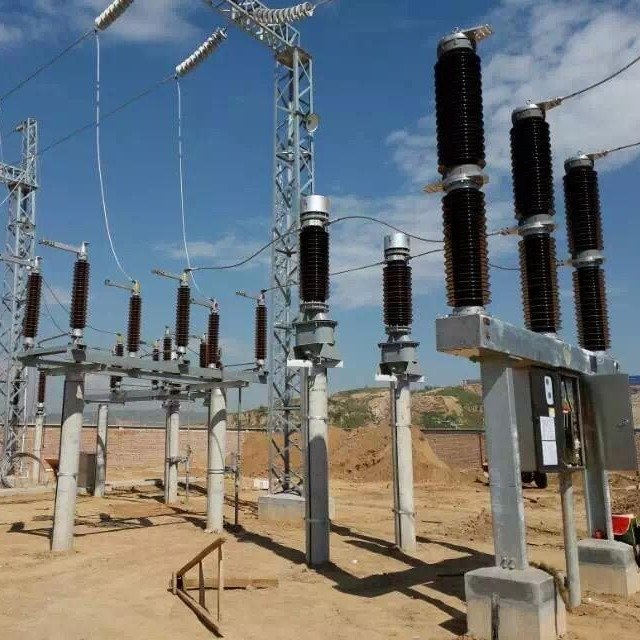
Components Of Vacuum Circuit Breaker
Vacuum Arc Extinguishing Chamber
It employs a ceramic or glass shell, maintaining an internal vacuum of over 10⁻⁴ Pa. The moving and stationary contacts are made of arc-resistant materials such as copper-chromium alloy, and a bellows system ensures vacuum-sealed movement of the moving contact. The contact structure design (such as spiral groove or cup shape) generates a longitudinal magnetic field, driving the electric arc to rotate and spread at high speed, achieving uniform ablation.
Operating Mechanism
Spring mechanism: Mainstream configuration, short energy storage time, high reliability.
Permanent magnet mechanism: Next-generation technology, 70% reduction in parts, extended lifespan.
Hydraulic/pneumatic mechanism: Used for ultra-high voltage or special environments.
Insulation Support And Framework
Epoxy resin insulating cylinder: Provides primary insulation and mechanical support.
Metal frame: Integrates grounding and mounting functions, conforming to IEC 62271 standard.
Control And Auxiliary Units
Intelligent Controller: Integrates protection, monitoring, and communication functions (supports IEC 61850).
Sensor System: Monitors mechanical characteristics, electrical parameters, and vacuum level in real time.
Position Indicator and Interlocking Device: Ensures operational safety.
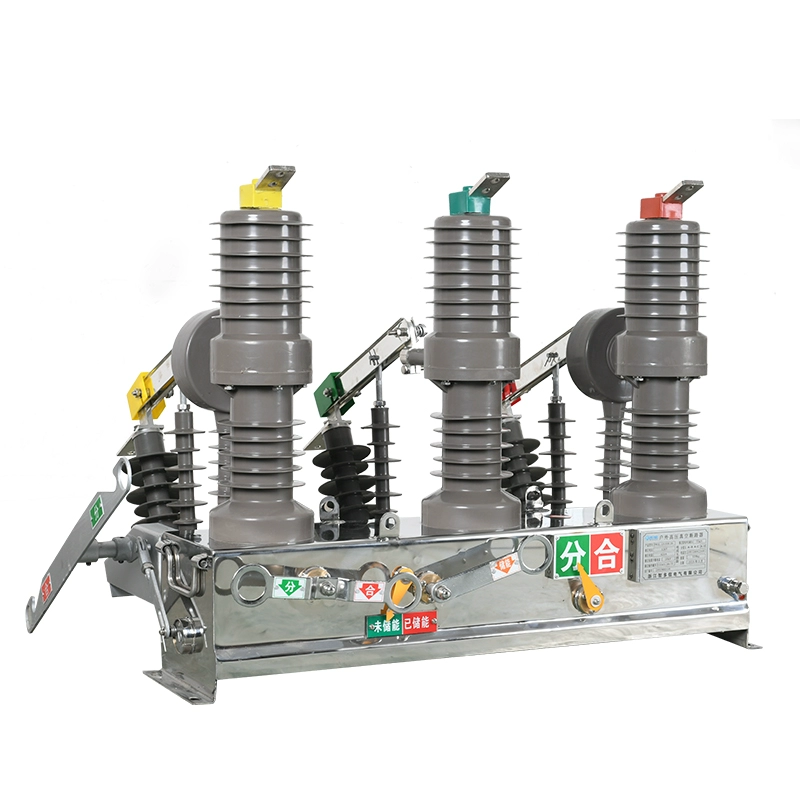
Work Principle
The three-stage process of vacuum arc extinction:
Contact separation stage: At the moment of contact separation, metal vapor ionizes to form a vacuum arc (plasma).
Arc diffusion stage: Driven by a magnetic field, the arc rotates at high speed and is evenly distributed on the contact surface.
Current zero-crossing arc extinction stage: When the current crosses zero, metal vapor rapidly condenses, and the dielectric strength recovers at a rate of 20-50 kV/μs, preventing arc reignition.
Key technical characteristics of the high voltage circuit breaker working principle: The high insulation strength of the vacuum dielectric (withstanding voltages above 40 kV with an 8 mm opening distance) and rapid dielectric recovery capability are the fundamental reasons why vacuum circuit breakers can interrupt large currents (up to 63 kA and above).
Application
Transmission And Distribution System
Substation protection: Main and sectional protection for 35kV and below distribution networks.
Ring network power supply system: An environmentally friendly alternative to SF6 ring network cabinets.
Capacitor bank switching: Dedicated vacuum contactors enable restart-free switching.
Industrial Sector
Large motor control: Soft start and protection for high-voltage motors in metallurgy and mining.
Electric arc furnace systems: Withstand frequent operation and current surges.
Data center power supply: Achieve millisecond-level switching in conjunction with UPS systems.
New Energy And New Power Systems
Grid-connected PV/Wind power: Low-voltage ride-through capability with integrated reverse power protection.
Energy storage power station: Breakthrough in DC interruption technology (hybrid vacuum circuit breaker).
Microgrid protection: Adaptable to bidirectional power flow and distributed generation integration.
Special Application Scenarios
High-altitude areas: Vacuum medium is unaffected by altitude, ensuring stable performance.
Offshore platforms: Compact structure adapts to space-constrained environments.
Rail transportation: 27.5kV electrified railway dedicated vacuum circuit breaker.
Standard Operating Procedures
Pre-operation checks: Confirm the status of the grounding switch, insulation resistance, and energy storage indicator.
Opening and closing operations: Perform via local/remote control, observing the position indicator and audible signals.
Safety interlocks: Mechanical and electrical interlocks must be engaged during maintenance.
Abnormal handling: Immediately stop operation in case of failure to operate/malfunction, and investigate the control circuit and mechanism.
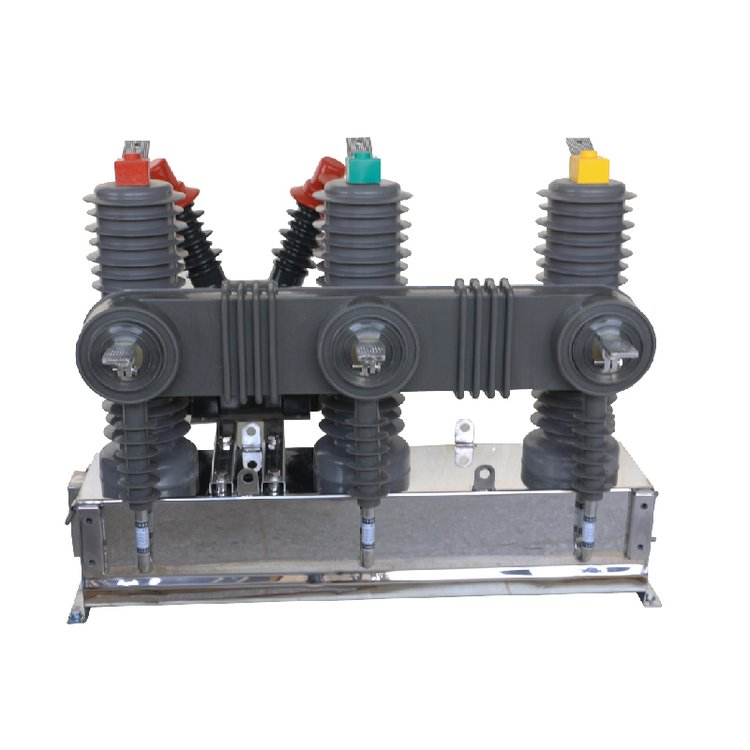
Market Trends
Technological Development Trends:
Intelligentization: Integrating IoT sensors to achieve condition-based maintenance and lifespan prediction.
Environmental friendliness: Accelerated replacement of SF6 circuit breakers globally (GWP value 23900).
High-voltage level extension: Vacuum circuit breaker technology for 72.5kV and above is maturing.
DC breaking technology: Hybrid vacuum circuit breakers overcome the bottleneck of DC arc extinguishing.
Market Size Forecast (2023-2028):
Asia-Pacific region dominates growth (China accounts for over 60% of global production).
The CAGR for the new energy sector is projected to reach 9.2%.
The market share of intelligent vacuum circuit breakers will increase to 45%.
Changes in the competitive landscape:
International brands are accelerating localization of production.
Chinese manufacturers (Zhejiang Beiye Electric Co., Ltd.) are expanding exports through cost and technological innovation.
The application of new materials is becoming a focus of differentiated competition.
FAQ
Maintenance Strategy For Vacuum Circuit Breaker
The core principle is to replace traditional periodic maintenance with “condition-based maintenance”:
1) Check mechanical characteristics (opening and closing time, speed) every 6 months;
2) Vacuum degree testing uses the withstand voltage method or magnetic field method, and the new standard requires maintenance-free operation during the lifespan;
3) Lubricate and maintain the operating mechanism every 5 years;
4) Intelligent circuit breakers develop personalized maintenance plans based on online monitoring data.
Air Circuit Breaker Vs Vacuum Circuit Breaker
Key Comparison Dimensions:
1) Voltage Rating: Air circuit breakers are mostly used for low voltage (<1kV), while vacuum circuit breakers are suitable for medium and high voltage (7.2-40.5kV mainstream);
2) Breaking Capacity: Vacuum circuit breakers can break larger short-circuit currents (up to 100kA);
3) Maintenance Requirements: Vacuum circuit breakers require no gas handling, simplifying maintenance;
4) Environmental Friendliness: Vacuum media has no greenhouse effect. Selection Criteria: Vacuum circuit breakers should be given priority, unless cost is extremely critical in low-voltage applications.
What Is Vacuum Circuit Breaker In Electrical
It assumes a triple role as the “guardian of the power system”:
1) Control function: Switching lines and equipment under normal conditions;
2) Protection function: Rapidly isolating faults to prevent cascading power outages;
3) Monitoring function: The new generation of intelligent circuit breakers uploads operational data in real time, supporting the digitalization of the power grid.
Its reliability directly determines the continuity of power supply and the stability of the system.
Conclusion
Choosing the right vacuum circuit breaker solution requires comprehensive consideration of voltage level, breaking capacity, level of intelligence, and total lifecycle cost.
Whether it’s power grid upgrades or the integration of new energy projects, selecting a proven vacuum circuit breaker solution is not only an investment in equipment reliability but also a commitment to the sustainable development of the power system.


