


Switchgear Manufacturer Guide: Ring Main Unit VS Switchgear
This guide from a switchgear manufacturer explains the differences between ring main units and traditional switchgear, focusing on the factors that truly matter in real-world projects, substations, and budgets, rather than complex theories.
Switchgear Manufacturer Guide: Ring Main Unit VS Switchgear
From a Switchgear Manufacturer perspective, RMUs and conventional switchgear are not competitors—they’re tools for different jobs. The challenge is knowing which one fits your power distribution reality.
Design And Structure
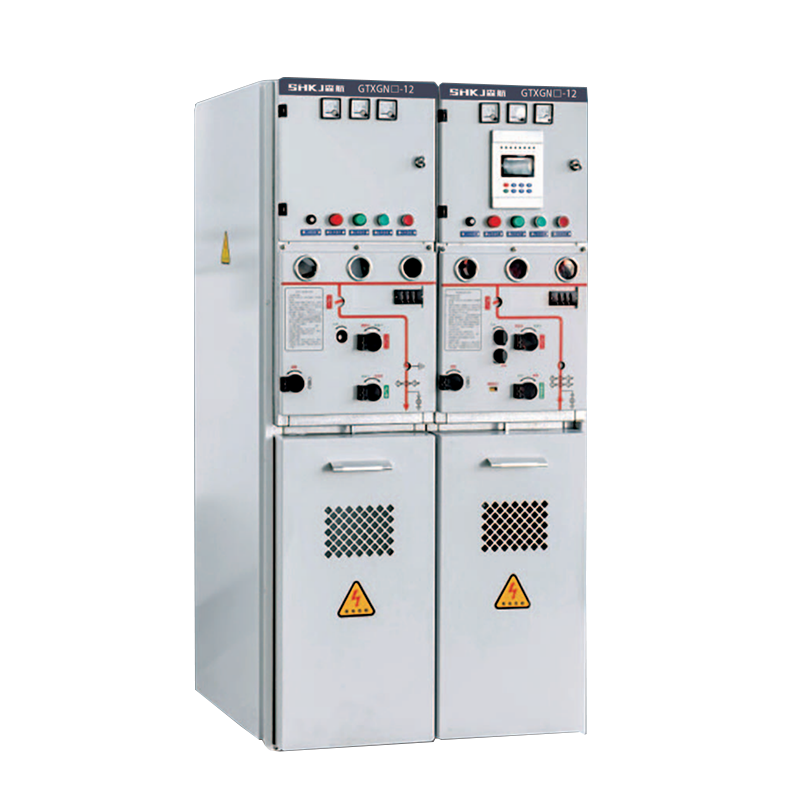
A Ring Main Unit is compact by design. You’re usually looking at a sealed, metal-enclosed system where load break switches, circuit breakers, and protection devices are integrated into a single factory-assembled unit. The philosophy is simple: minimal on-site work, maximum reliability.
Traditional Switchgear, on the other hand, is modular. Panels are assembled line by line, allowing different functional units—incoming feeders, outgoing feeders, bus couplers—to be configured according to system needs. This structure gives you design freedom, but it also means more space and more coordination during installation.
From Beiye Electric’s manufacturing practice, RMUs are typically delivered as “plug-and-play” solutions, while switchgear projects involve deeper engineering collaboration. Neither is better by default—it depends on how much customization you actually need.
Functionality And Flexibility
Here’s where the debate usually heats up.
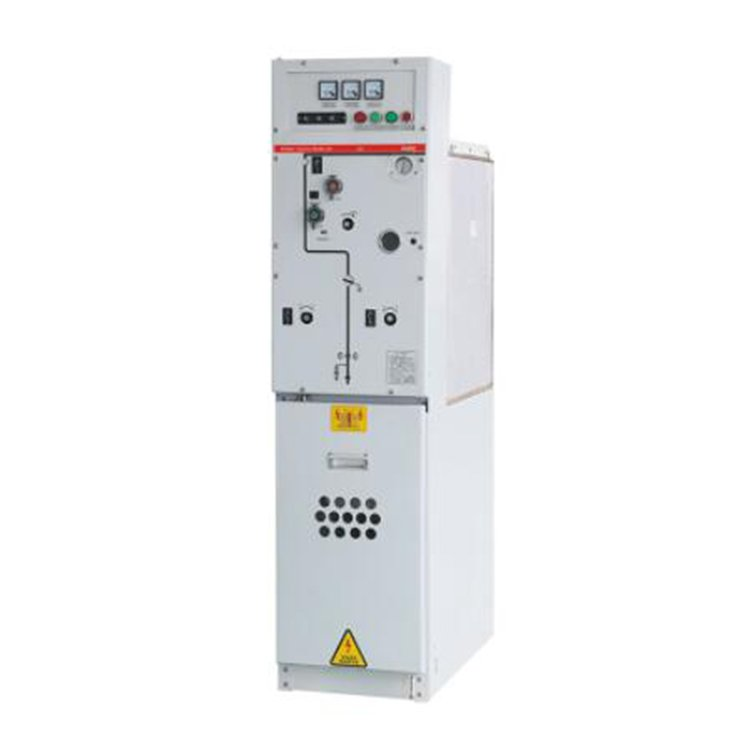
An RMU is optimized for ring or radial distribution networks. It performs switching, isolation, and protection tasks reliably, but within a defined functional envelope. Once installed, its configuration is mostly fixed.
Traditional Switchgear gives you room to breathe. Protection relays, metering schemes, automation interfaces, and expansion panels can be added or modified over time. If your power system is expected to evolve—new loads, future feeders, or advanced SCADA integration—this flexibility matters.
In one industrial park project we supported, the client initially leaned toward RMUs. After a load growth forecast review, they switched to modular switchgear to avoid costly replacements five years down the line. That’s a decision you only want to make once.
Installation And Space Requirements
If space is tight—and in urban projects, it usually is—the Ring Main Unit feels like a gift. Its compact footprint and front-access design make it ideal for kiosks, basements, and compact substations.
Switchgear rooms demand more planning. You need aisle clearances, cable trenches, and sometimes rear access. The trade-off is accessibility and scalability.
As a buyer, ask yourself this: are you paying for floor space, or are you paying for flexibility? The answer often decides the equipment type before technical specs do.
Operation And Maintenance
RMUs are designed to be low-maintenance. Sealed-for-life gas insulation, fewer moving parts, and standardized components reduce routine intervention. For utilities and commercial facilities with limited maintenance staff, this is a big advantage.
Switchgear requires more attention—periodic inspections, relay testing, mechanical checks. But here’s the flip side: maintenance is easier to plan, easier to upgrade, and easier to document.
From Beiye Electric’s service feedback, clients with in-house electrical teams often prefer switchgear, while those outsourcing O&M gravitate toward RMUs. It’s not about effort—it’s about control.
Advantages And Limitations
You’ll notice patterns emerging once you compare both solutions honestly.
RMUs shine in simplicity and reliability, but they’re less forgiving when system requirements change.
Switchgear excels in adaptability and advanced control, but demands more upfront coordination.
The mistake buyers make is assuming one solution can replace the other universally. Experienced Switchgear Manufacturers don’t think that way—and neither should you.
Cost And Investment Considerations
Initial cost comparisons can be misleading.
RMUs often appear cheaper when you look only at equipment pricing and installation labor. Switchgear may look expensive due to panel counts and auxiliary systems.
Lifecycle cost tells a different story. Expansion, retrofitting, downtime, and replacement costs all matter. In long-term infrastructure projects, switchgear can actually be the more economical choice.
A procurement manager once told us, half-jokingly, “The cheapest equipment is the one I don’t have to replace.” That mindset saves money.
How To Choose Between Ring Main Unit And Switchgear
This is where theory meets procurement reality.
Application Environment
Urban distribution networks, commercial buildings, and compact substations often favor RMUs.
Industrial plants, data centers, and utility substations usually lean toward switchgear.
Your environment sets the baseline before technical discussions even begin.
Power System Complexity
Simple ring networks don’t need over-engineering.
Complex protection schemes, multiple feeders, and automation requirements benefit from modular switchgear.
If your single-line diagram looks crowded… that’s a clue.
Budget And Lifecycle Expectations
Short-term projects with fixed demand profiles align well with RMUs.
Long-term assets with growth expectations justify switchgear investment.
Be honest about your planning horizon—it shows up in equipment choices.
Safety And Regulatory Requirements
Both solutions can meet international standards, but implementation differs.
Switchgear allows easier compliance with evolving grid codes and protection philosophies.
RMUs rely on standardized compliance—solid, but less adaptable.
A reputable Switchgear Manufacturer like Beiye Electric will guide you through these trade-offs rather than pushing a catalog.
Comparative Overview Table
| Aspect | Ring Main Unit (RMU) | Traditional Switchgear |
|---|---|---|
| Design | Compact, integrated | Modular, panel-based |
| Installation Space | Minimal | Larger footprint |
| Flexibility | Limited after installation | High, expandable |
| Maintenance | Low, sealed system | Regular, accessible |
| Lifecycle Cost | Low for fixed systems | Optimized for long-term growth |
Key Takeaways For Buyers
- Switchgear Manufacturer experience matters more than product labels
- Ring Main Unit solutions favor simplicity and space efficiency
- Switchgear supports system evolution and advanced control
- Procurement decisions should consider lifecycle, not just price
- The “right” choice depends on how your network will change over time
FAQ
Is A Ring Main Unit Considered A Type Of Switchgear?
Yes. An RMU is a compact, specialized form of Switchgear, designed primarily for medium-voltage distribution networks.
Which Is More Compact, RMU Or Traditional Switchgear?
RMUs are significantly more compact, making them ideal for space-constrained installations.
Which Solution Requires Less Installation Space?
RMUs require less space and less on-site assembly.
Which Option Offers Greater System Flexibility?
Traditional switchgear offers greater flexibility and scalability.
Which Solution Has Lower Lifecycle Cost?
It depends on system stability. Fixed systems favor RMUs; evolving systems favor switchgear.
Are Ring Main Units Expandable After Installation?
Expansion is limited and often impractical.
Which Has Higher Initial Cost, RMU Or Switchgear?
Switchgear typically has a higher upfront cost.
Which Provides Better Protection And Control Functions?
Switchgear supports more advanced protection and automation schemes.
Which Option Is Easier To Install And Commission?
RMUs are generally easier and faster to install.
Which Is Better For Urban Power Distribution Networks?
RMUs are often preferred due to space and simplicity.
Conclusion
Choosing between a Ring Main Unit (RMU) and a traditional switchgear depends on which better meets your specific operational needs. RMUs offer compact, efficient performance and predictable operation, while switchgear provides control, customization, and long-term scalability.
For a truly tailored RMU solution, partner with Beiye Electric, a professional switchgear manufacturer.


