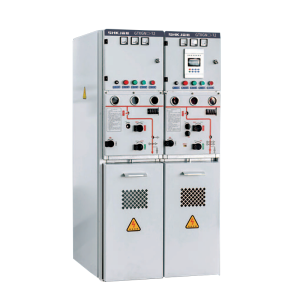
Ring Main Unit (RMU) vs Vacuum Circuit Breaker (VCB): Key Differences Explained Simply
In modern power systems, two important types of equipment ensure safe and stable electricity flow, the Ring Main Unit (RMU) and the Vacuum Circuit Breaker (VCB). Both play key roles in power distribution, control, and protection, but they serve different purposes and are designed for different voltage levels. Understanding the difference between ring main units and vacuum circuit breakers helps engineers, contractors, and industrial users choose the right solution for their systems.
What is a Ring Main Unit (RMU)?
A Ring Main Unit (RMU) is a medium-voltage switchgear used to control and protect electrical power in distribution networks. It connects different feeders in a ring structure, ensuring that power can flow from another direction if one line fails, which improves reliability and reduces power outages.
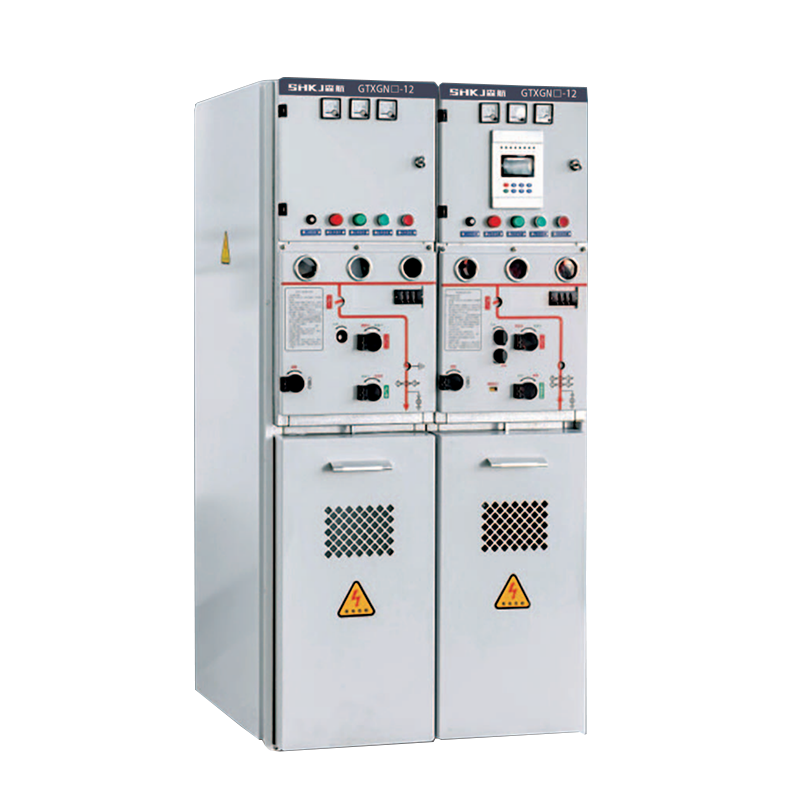
An RMU usually includes several key parts inside one metal-enclosed cabinet, such as:
- Load break switch
- Fuse switch or circuit breaker
- Busbars and isolators
Most RMUs operate at voltages up to 36 kV and are compact, safe, and easy to install. They are widely used in urban distribution networks, compact substations, and renewable energy systems. Byyou’s high voltage ring main unit series, such as the SH-SRM-12 SF₆ gas-insulated RMU and SHAir-12 dry-air insulated RMU, are designed for reliable operation, compact design, and long service life.
What is a Vacuum Circuit Breaker (VCB)?
A Vacuum Circuit Breaker (VCB) is a switching device that interrupts electric current during faults to protect power systems. It uses a vacuum interrupter to extinguish the arc when contacts open, which makes it very safe and environmentally friendly.
VCBs can be installed as indoor VCB panels or outdoor VCBs, depending on the environment. They are typically used in medium to high-voltage systems (from 11 kV up to 66 kV or more), such as industrial facilities, substations, and power transmission networks.
Byyou provides a wide range of vacuum circuit breakers, including:
- Indoor Vacuum Circuit Breakers (e.g., ZN85-40.5, NEX1-12 Series)
- Outdoor Vacuum Circuit Breakers (e.g., ZW32-12, ZW7-40.5, ZW8-12 Series)
These VCBs feature reliable performance, strong breaking capacity, and long service life for demanding applications.
Main Differences Between RMU and VCB:
| Category | Ring Main Unit (RMU) | Vacuum Circuit Breaker (VCB) |
| Function | Distributes and controls medium-voltage power within a network | Protects power systems by interrupting fault currents |
| Voltage Level | Up to 36 kV | 11 kV to 66 kV or higher |
| Design | Compact, metal-enclosed switchgear with integrated components | Stand-alone breaker or VCB panel using vacuum interrupter |
| Arc Interruption Medium | Air, SF₆ gas, or vacuum | Always vacuum |
| Breaking Capacity | Moderate fault current | High fault current |
| Operation | Performs load switching and limited fault protection | Designed mainly for fault protection |
| Installation | Usually indoor in compact substations or buildings | Available as indoor VCB or outdoor VCB |
| Maintenance | Very low; sealed and insulated | Periodic inspection of vacuum interrupter required |
| Safety | Fully insulated, arc-proof, and operator-safe | Safe but needs more clearance and handling care |
| Expandability | Modular, easy to add more units | Limited; expansion depends on panel design |
| Cost | Lower initial cost | Higher upfront cost |
| Typical Use | Medium-voltage distribution and urban networks | High-voltage industrial or utility protection |
The main difference between RMU and VCB lies in their function and application. An RMU acts as a compact switchgear unit that controls, isolates, and distributes medium-voltage power in networks. It is ideal for urban distribution systems where space is limited and reliability is critical.
A VCB, on the other hand, is mainly a protection device. It automatically cuts off fault currents using a vacuum interrupter to prevent equipment damage. It can handle much higher voltages and larger fault currents than RMUs.
In design, the ring main unit combines multiple switches inside one sealed cabinet, while a vacuum circuit breaker is typically part of a larger switchgear panel. For installation, RMUs are usually indoor units, while VCBs can be either indoor or outdoor, depending on the model.
RMUs are almost maintenance-free and safer for compact installations, whereas VCBs require periodic checking of the vacuum bottle. Cost also differs, RMUs are more affordable for medium-voltage networks, while VCBs are more expensive but necessary for high-voltage systems requiring stronger protection.
How RMU and VCB Can Work Together in Power Systems?
Although RMU and VCB serve different purposes, they often work together in the same power system. For example, in a compact substation, the VCB may act as the incoming protection device, while the RMU distributes power to outgoing feeders. This combination ensures both protection and continuous power supply, even if one feeder experiences a fault. Together, they help maintain system reliability, easy maintenance, and safety across distribution and transmission levels.
Choosing the Right Equipment: RMU or VCB?
Selecting between an RMU and a VCB depends on your system needs. If your project focuses on medium-voltage distribution, limited space, and high safety, a Ring Main Unit is the better choice. If your system involves high-voltage transmission lines or heavy industrial loads, a Vacuum Circuit Breaker panel provides stronger protection and breaking capacity.
Before making a decision, consider:
- System voltage and fault level
- Installation environment (indoor or outdoor)
- Space and maintenance availability
- Future expansion needs
For the best results, work with a reliable electrical switchgear supplier like Byyou, who can help match RMUs and VCBs for your project requirements.
Conclusion:
In summary, RMU and VCB are both vital parts of modern power systems. The Ring Main Unit offers compact size, flexibility, and safe power distribution for medium-voltage networks. The Vacuum Circuit Breaker, with its strong breaking capacity and eco-friendly vacuum technology, is ideal for high-voltage protection and heavy-duty applications. Choosing the right equipment ensures efficient operation, safety, and long-term reliability of your electrical network. Byyou is your trusted partner in power distribution solutions. We provide a full range of high-voltage ring main units, VCB panels, indoor and outdoor vacuum circuit breakers, and customized switchgear systems to meet your project needs.