


How does GIS handle fault currents?
Dec 30, 2025
How Does GIS Handle Fault Currents?
Gas-Insulated Switchgear (GIS) represents a critical advancement in high-voltage electrical substation technology, offering compact, reliable, and safe power distribution. A core challenge in any electrical network is managing fault currents—unexpected, excessive currents resulting from short circuits due to insulation failure, equipment damage, or other faults. Efficient handling of these faults is paramount to protect equipment, ensure personnel safety, and maintain grid stability. This article delves into the mechanisms and design principles that enable GIS to detect, interrupt, and isolate dangerous fault currents effectively.
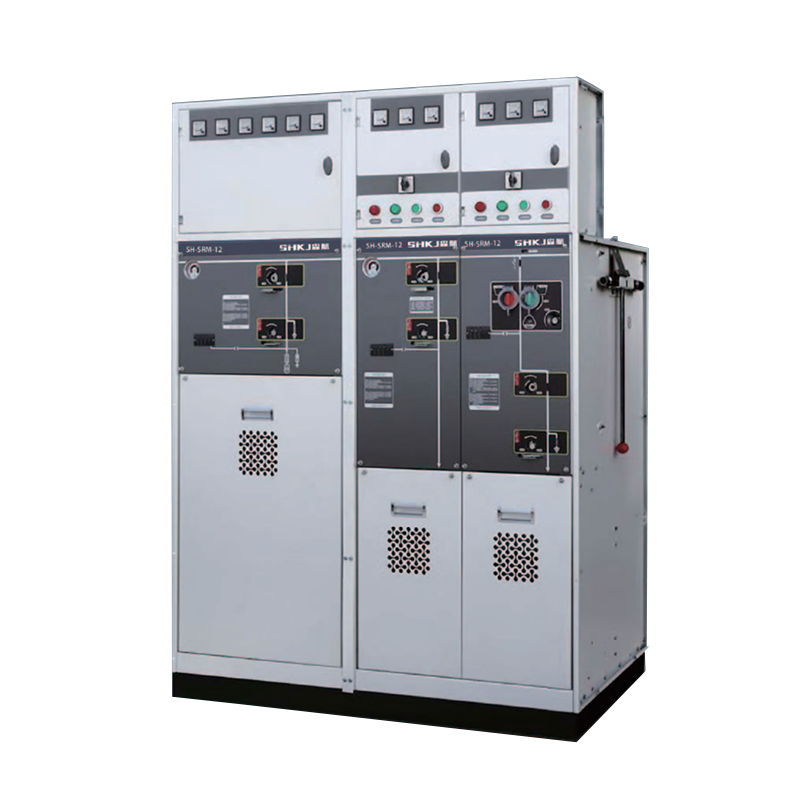
Understanding Fault Currents and the GIS Advantage
Before exploring the how, it’s essential to understand the what. A fault current is a massive, uncontrolled surge of electrical current that flows when a low-resistance path (a fault) is created between phases or to ground. Its magnitude can be tens of times higher than normal operating current, generating extreme thermal and mechanical stress.
Traditional Air-Insulated Switchgear (AIS) uses air as the insulating medium and separates components across large yards. GIS, in contrast, encloses all crucial substation components—like circuit breakers, disconnectors, earthing switches, current transformers, and busbars—in sealed, pressurized compartments filled with insulating sulfur hexafluoride (SF₆) gas. This fundamental design offers inherent advantages for fault management:
- Contained Arc Effects: The SF₆ gas is contained within robust metal enclosures.
- Enhanced Sensitivity: Integrated sensors provide precise measurements.
- Rapid, Automated Operation: Digital control systems enable swift action.
The Multi-Layer Process: How GIS Manages a Fault Current
GIS handles fault currents through a coordinated, automated sequence involving detection, interruption, and isolation.
1. Detection and Sensing
The first line of defense is accurate and rapid fault detection. GIS utilizes built-in Current Transformers (CTs) and Voltage Transformers (VTs). These sensors are often ring-type (toroidal) and are directly integrated into the GIS modules. They continuously monitor electrical parameters with high precision. When a fault occurs, these sensors detect the sudden, dramatic rise in current (and often a corresponding drop in voltage) and instantly relay this data to the Protective Relay System.
2. Decision by Protective Relays
The relay system is the “brain” of the protection scheme. It analyzes the sensor data against pre-set thresholds and characteristics (e.g., overcurrent, differential, distance protection). Within milliseconds, it determines the fault’s location and type. Once a fault is confirmed, the relay sends a definitive trip signal to the appropriate circuit breaker’s operating mechanism.
3. Interruption by the SF₆ Circuit Breaker
This is the critical action phase. The GIS circuit breaker is tasked with interrupting the massive fault current, which is especially challenging as it must extinguish the powerful electric arc that forms between its separating contacts.
- SF₆ as an Arc-Quenching Medium: SF₆ gas is exceptional for this role due to its high dielectric strength and superior arc-quenching properties. When the arc is struck, it decomposes SF₆ molecules, which absorb arc energy and create plasma.
- Puffer or Auto-Expansion Design: Most GIS breakers use a “puffer” mechanism. The physical opening of the contacts compresses a chamber of SF₆ gas, forcing it at high pressure through the arc column. This blast of cold gas efficiently de-ionizes the arc path, removes heat, and restores the dielectric strength of the contact gap, enabling successful current interruption at the next natural current zero crossing.
4. Isolation and Verification
After interruption, the system ensures the faulted section is securely isolated:
- Disconnector Operation: Once the breaker is open, downstream disconnectors (isolators) may operate to provide a visible, physical air gap for maintenance safety, though the primary isolation is already achieved by the breaker.
- Earthing Switches: For personnel safety during maintenance, earthing switches can be closed to ground and discharge any trapped residual charge in the isolated section.
- Reclosing (Optional): In some cases, typically for transient faults (like a tree branch or lightning strike), the relay system may command an automatic reclosing sequence. The breaker closes after a short delay to test if the fault has cleared. If the fault persists, it will trip again and lock out.
5. Containment and Safety
Throughout this process, the GIS design contains all byproducts. The arc and its energy are confined within the breaker’s interrupter chamber. The metal-enclosed, grounded housing ensures that no live parts are exposed, protecting personnel from arc flash hazards—a significant risk in open-air AIS designs.
Advanced Features Enhancing Fault Current Handling
Modern GIS incorporates sophisticated technologies that further improve performance:
- Digital Substation Architecture: Using IEC 61850 communication protocols, sensors can send digital sampled values directly to intelligent electronic devices (IEDs), enabling faster, more data-rich decision-making.
- Partial Discharge (PD) Monitoring: Continuous online PD monitoring can detect insulation weaknesses before they lead to a major fault, allowing for predictive maintenance.
- Differential Protection: This highly sensitive scheme compares current entering and leaving a protected zone (like a busbar). Any imbalance indicates an internal fault and triggers instantaneous tripping.
Benefits of GIS in Fault Management Compared to AIS
- Faster Arc Extinction: SF₆ quenching is more effective than air, leading to shorter arcing times and less contact wear.
- Reduced Environmental Impact: The contained arc produces no fire risk from hot gases or oil (used in some older breakers).
- Superior Reliability: Sealed compartments protect components from environmental contaminants (dust, salt, moisture, animals) that often cause faults in AIS.
- Enhanced Personnel Safety: The grounded metal enclosure virtually eliminates the risk of electric shock and significantly reduces arc flash boundary hazards.
- Compact Footprint: The dense, integrated design allows for placement in urban areas, shortening cables and potentially reducing fault levels.
Conclusion
GIS handles fault currents through a synergy of robust design, advanced materials, and intelligent control. Its sealed SF₆ environment provides an optimal medium for both insulation and rapid arc quenching, while integrated digital sensors and relays ensure fault detection and reaction occur within cycles. From initial detection by CTs to the final interruption by the SF₆ puffer breaker, every step is optimized for speed, safety, and system integrity. This makes GIS an indispensable solution for modern, reliable power transmission and distribution, especially in space-constrained or environmentally challenging locations. As grids evolve with more renewable integration, the precise and reliable fault-handling capabilities of GIS will continue to be a cornerstone of electrical system resilience.
Ready to Fortify Your Grid’s Resilience?
Understanding the robust fault-handling capabilities of GIS is the first step toward building a more reliable and safe electrical infrastructure. Whether you’re planning a new substation, upgrading aging equipment, or simply aiming to enhance your system’s protection schemes, leveraging modern GIS technology can be a transformative decision. Our team of specialists is here to provide in-depth technical consultations, tailored system design insights, and lifecycle support for your high-voltage assets. Contact us today for a personalized assessment. Discover how integrating advanced GIS solutions can minimize downtime, reduce operational risks, and future-proof your power network against evolving challenges. Let’s engineer a safer, more resilient grid together.
Understanding the robust fault-handling capabilities of GIS is the first step toward building a more reliable and safe electrical infrastructure. Whether you’re planning a new substation, upgrading aging equipment, or simply aiming to enhance your system’s protection schemes, leveraging modern GIS technology can be a transformative decision. Our team of specialists is here to provide in-depth technical consultations, tailored system design insights, and lifecycle support for your high-voltage assets. Contact us today for a personalized assessment. Discover how integrating advanced GIS solutions can minimize downtime, reduce operational risks, and future-proof your power network against evolving challenges. Let’s engineer a safer, more resilient grid together.
AI-assisted content is for reference only; please verify carefully.


