


Electrical Switchgear Definition, Type, Function, And Selecting
This article will systematically explain the definition, working principle, key features, various classifications, and core components of electrical switchgear, and provide practical selection and supplier evaluation guidelines to help readers make informed decisions.
What Is Electrical Switchgear
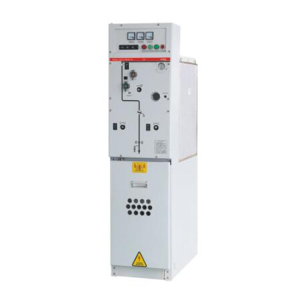
Core Definition: Electrical switchgear is a complete set of equipment used for controlling, protecting, isolating, and measuring electrical energy in a power system.
Core Functions (Briefly):
Control: Normal energizing and de-energizing operations.
Protection: Automatically detects and disconnects faulty circuits (such as short circuits and overloads), protecting downstream equipment and personnel.
Isolation: Provides a safe electrical isolation point during maintenance.
Measurement and Monitoring: Monitors parameters such as current and voltage using instruments and sensors.
Application Scenarios: Widely used in power plants, substations, industrial plants, commercial buildings, data centers, and infrastructure.
How Does Switchgear Work?
Collaborative Workflow: The core logic is “detection-judgment-action”.
Fault Detection: Current/voltage transformers monitor circuit parameters in real time.
Signal Processing and Judgment: Protective relays receive signals, compare them with preset values, and determine if a fault has occurred.
Action Execution: The relay triggers a command, causing the circuit breaker (or fuse) to quickly trip, interrupting the fault current.
Status Indication: Equipment status is displayed via indicator lights, position indicators, etc.
Visual Aid: A simple flowchart can be used to illustrate this process.
Essential Features Of Switchgear
Safety: Robust enclosure, reliable interlocking mechanism, and arc fault protection.
Reliability: High-quality components, redundant design, ensuring long-term trouble-free operation.
Scalability and Flexibility: Modular design for easy future expansion or retrofitting.
Ease of Maintenance: Easily accessible components, clear labeling, and convenient maintenance design.
Intelligence (Modern Trend): Integrated digital sensors and communication interfaces (such as IEC 61850) support remote monitoring and predictive maintenance.
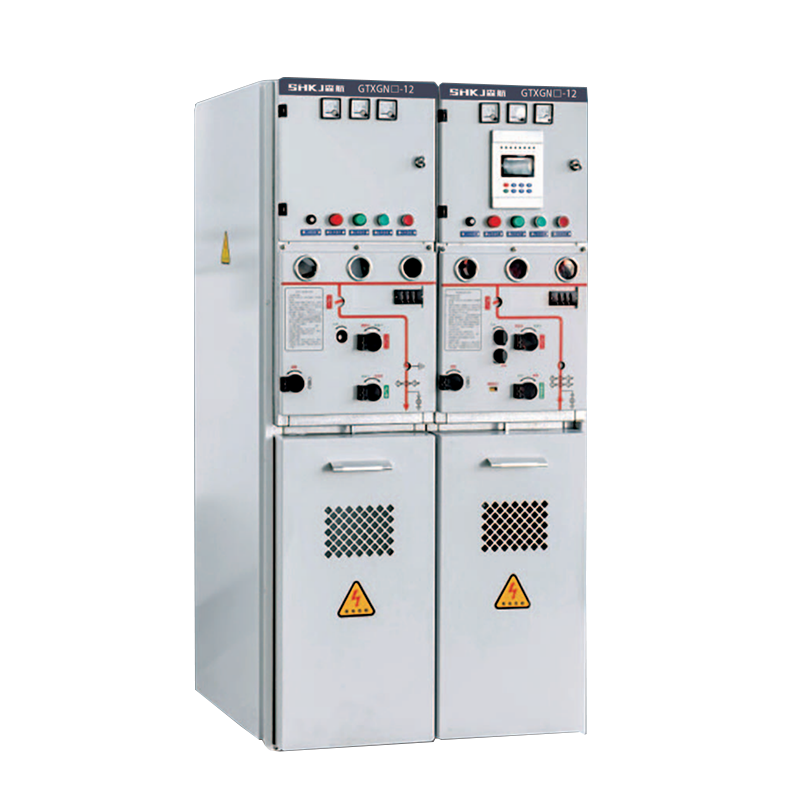
Types Of Electrical Switchgear
Classification By Voltage Level
Low Voltage Switchgear
For systems with ≤ 1000V AC or 1500V DC. Commonly found in building power distribution and motor control centers.
Medium Voltage Switchgear
Used in systems from 3kV to 36kV. Commonly found in factory main power distribution, wind farms, and small substations.
High Voltage Switchgear
For systems with voltage ≥ 72.5kV. Primarily used in power transmission networks and large substations.
Classification By Insulation Medium
Air Insulated Switchgear
It uses the atmosphere as an insulating medium. It has a simple structure and low cost, but it is relatively large in size.
Gas Insulated Switchgear
Gas insulated switchgear use inert gases such as SF₆ as the insulating medium. It has a compact structure, small footprint, and is suitable for space-constrained or highly polluted environments.
Solid Insulated Switchgear
Encapsulating live components with solid materials such as epoxy resin is a development trend in the medium-voltage field, characterized by complete sealing, maintenance-free operation, and environmental friendliness.
Division By Installation Site
Indoor Type
Designed for controlled indoor environments, with a relatively low IP protection rating.
Outdoor Style
The design is resistant to harsh weather conditions such as sun exposure, rain, and sandstorms, offering a high level of protection and a more robust casing.
Electrical Switchgear Components
Circuit Breaker: The core breaking component, capable of interrupting normal and fault currents.
Disconnecting Switch/Load Switch: Provides visible electrical isolation for safety maintenance.
Protective Relay: The “brain” of the system, responsible for analyzing faults and issuing trip commands.
Current Transformer: A current/voltage transformer used for measurement and providing signals to relays.
Bus: The main conductor that collects and distributes electrical energy.
Control, Measurement, and Indicating Elements: Buttons, indicator lights, meters, intelligent control devices, etc.
Enclosure and Structure: Provides mechanical support, protection, and safety assurance.
Selection
Define application requirements: voltage level, rated current, short-circuit capacity, load type.
Determine the installation environment: indoor/outdoor, ambient temperature, humidity, pollution level, available space.
Evaluate technical specifications: insulation type, protection rating, sectionalizing capacity, electrical life, mechanical life.
Consider regulations and standards: must comply with national standards of the project location (e.g., GB, IEC, UL, etc.).
Budget and total cost of ownership: weigh initial investment against long-term operating, maintenance, and energy costs.
Future scalability: whether expansion space or intelligent upgrade interfaces are reserved.
Supplier Considerations
Technical Strength and Product Line: Does the product range cover the needs? Is the technology leading-edge?
Quality and Certification: Does the company possess a comprehensive quality assurance system (such as ISO) and authoritative product certifications?
Performance and Reputation: Successful cases and industry reputation in similar projects.
Service and Support: Ability to provide pre-sales consultation, installation guidance, after-sales maintenance, and spare parts supply.
Localization Capability: Does the company have local offices, warehouses, and technical teams? What is their response speed?
Among numerous electrical switchgear suppliers, we recommend Zhejiang Beiye Electric Co., Ltd., which has over 15 years of experience in the medium and low voltage electrical industry, possesses independent intellectual property rights, and has obtained multiple national patents.
FAQ
Switchgear Vs. Distribution Box
Switchgear is a more comprehensive and complex power control system, while distribution box is mainly a power distribution unit.
| feature | switch device | distribution box |
| core functionality | Control, protect, isolate, and monitor power systems. Can cut off huge fault currents. | Mainly responsible for the end distribution of electrical energy and circuit protection, carrying relatively small currents. |
| Application hierarchy | The incoming end, bus section, and main feeder end used in the power system are higher-level equipment. | Usually installed downstream of switchgear to provide power for final electrical devices such as lighting and sockets. |
| Complexity and Size | The structure is complex, including numerous components such as circuit breakers, relays, and transformers, and usually has a large volume. | The structure is relatively simple, mainly including small circuit breakers, leakage protectors, etc., and the volume is compact. |
| metaphor | The ‘headquarters and guardian of the power system’. | The ‘local distribution station’ of the power system. |
Indoor Vs Outdoor Switchgear
A: Absolutely not interchangeable. The two types are fundamentally different in design to meet different environmental challenges:
Protection Rating:
Outdoor Type: Offers extremely high protection, completely preventing dust intrusion and withstanding heavy rain and water spray, typically IP54 or higher. The casing is robust, resistant to wind, sand, and corrosion.
Indoor Type: Lower protection rating, only suitable for clean, dry, temperature-controlled indoor environments.
Environmental Adaptability:
Outdoor Type: Designed to withstand extreme temperature changes, UV radiation, condensation, salt spray, etc.
Indoor Type: No such special design.
Safety Risks: Installing an indoor type outdoors can lead to reduced insulation due to moisture and dust accumulation, causing short circuits, malfunctions, and even electric shock risks.
Conclusion: The appropriate type must be strictly selected based on the installation environment. In special cases where indoor equipment must be installed outdoors, a power distribution room or shielding facility with the appropriate protection rating must be constructed.
Switchgear Vs Distribution Panel Vs Switchboard
These three terms are often used interchangeably, but in electrical engineering there is usually a hierarchical and functional distinction.
| term | switch device | switchgear | distribution board |
| core functionality | A comprehensive system concept that emphasizes protection and control functions. | A physical manifestation of switchgear refers to a combination of one or more enclosed metal cabinets. | Focusing on the distribution of electrical energy, it usually refers to a single panel or frame installed with circuit breakers, instruments, and busbars. |
| voltage level | Covering the full range of low voltage, medium voltage, and high voltage. | Commonly found in low and medium voltage fields. | Mainly used for low-voltage end distribution. |
| Structure and complexity | Includes complete sets of switchgear, protective relays, metering units, and other components. | It is the main component of switchgear and has a complex internal structure. | The structure is relatively simple and serves as the distribution unit downstream of the switchgear. |
| typical scenario | This substation requires a set of medium voltage switchgear | Five low-voltage switchgear cabinets have been installed in the workshop | There is a lighting distribution panel on each floor |
Simply put: switchgear is a general term; switch cabinet is its physical cabinet; distribution panel is usually a more downstream, more functional distribution unit.
Does The Switchgear Require Regular Maintenance?
Regular maintenance is absolutely necessary and crucial. Switchgear is the first line of defense for electrical safety; lack of maintenance can lead to malfunctions in its protective functions, causing power outages or safety accidents.
Maintenance mainly includes the following:
Regular Inspection: Check for external damage, abnormal sounds, odors, and indicator light status.
Cleaning and Tightening: Remove dust (to prevent insulation degradation and arcing), and tighten electrical connections (to prevent overheating).
Functional Testing: Simulate and test the operating logic of protective relays, and perform mechanical and electrical characteristic tests on circuit breakers.
Insulation Testing: Regularly measure the insulation resistance of the main and secondary circuits.
Professional Maintenance: Conduct more in-depth inspections based on manufacturer recommendations and service life, such as contactor contact wear checks and SF6 gas density monitoring (if applicable).
Conclusion
Electrical switchgear is the ultimate guardian of the safe operation of power systems, and its proper selection and maintenance are the cornerstone of building a reliable power grid.
Whether you are an engineer, decision-maker, or operations and maintenance personnel, a deep understanding of this critical equipment is essential for building a strong defense for the safety and efficiency of the systems you are responsible for. Take action now to re-examine your electrical configuration solutions, embrace the industry trends of intelligence and environmental friendliness, and consult with professional suppliers and standards.


