

Metal Enclosed Switchgear Definition, Types & Applications
In today’s fast-evolving electrical landscape, power systems are expected to be safer, smarter, and more reliable than ever. Whether you’re managing a factory, designing a commercial building, or sourcing equipment for infrastructure projects, one thing is certain—your power distribution system cannot afford failure.
That’s where gas insulated metal enclosed switchgear comes into play.
It may not be the most visible part of your electrical system, but it is undoubtedly one of the most critical. It ensures controlled power distribution, protects equipment from faults, and enhances operational safety. For procurement professionals and project engineers, choosing the right gas insulated switchgear manufacturer is not just a technical decision—it’s a strategic one.
Gas Insulated Metal Enclosed Switchgear Definition
gas insulated metal enclosed switchgear refers to a type of electrical distribution equipment where all components—such as circuit breakers, switches, and busbars—are housed within a grounded metal enclosure. These systems are typically designed for voltages up to 1000V.

Definition Based on Industry Standards
According to widely accepted industry concepts (such as IEEE standards), metal-enclosed switchgear is:
A fully enclosed assembly of electrical components used for switching, controlling, and protecting power circuits, with access provided through doors or removable panels.
Unlike metal-clad switchgear, which uses drawout-type breakers and compartmentalized isolation, metal-enclosed switchgear generally uses fixed-mounted devices, making it more compact and cost-effective.
Key Characteristics
- Fully enclosed metal structure for enhanced safety
- Fixed-mounted switching and protection devices
- Flexible configuration based on application needs
- Accessible design for inspection and maintenance
- Cost-efficient compared to higher-voltage alternatives
For many applications, especially in industrial and commercial settings, this type of switchgear offers the perfect balance between performance and cost.
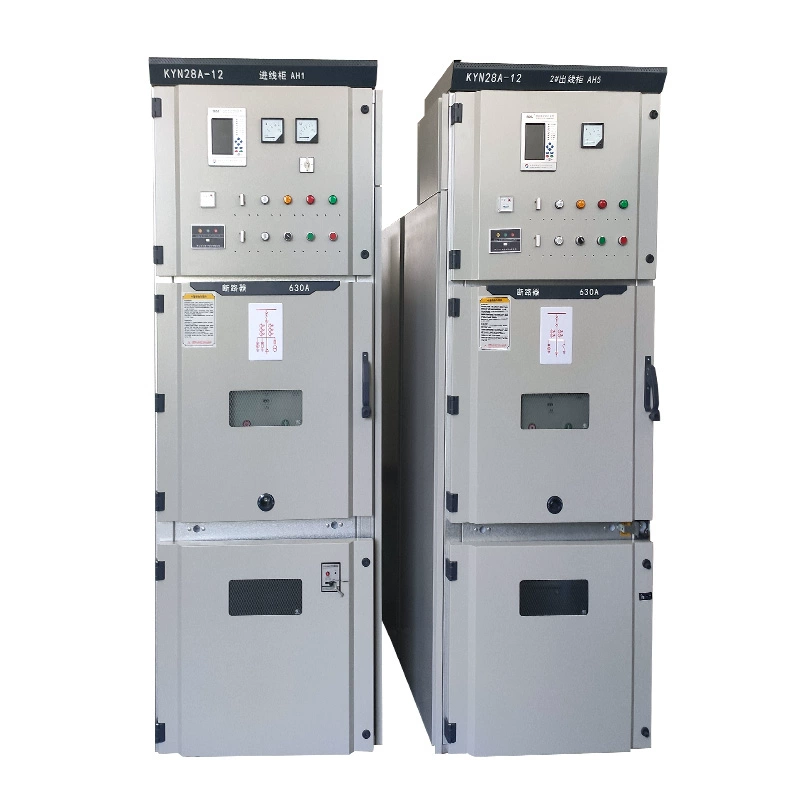
Main Components of Metal-Enclosed Switchgear
A gas insulated metal-enclosed switchgear system is built as an integrated structure, combining multiple components that work together seamlessly.
Core Components
- Air Circuit Breakers (ACB)
- Molded Case Circuit Breakers (MCCB)
- Miniature Circuit Breakers (MCB)
- Disconnect switches
- HRC fuses
- Busbar systems
- Protection relays and control devices
Each component plays a defined role. For example, ACBs are typically used at the main incoming section due to their high current capacity, while MCCBs and MCBs are used in feeder circuits for load-specific protection.
Structural Design
Most systems are divided into three main sections:
- Incoming Section: Receives power from the main source
- Busbar Section: Distributes power within the system
- Feeder Section: Supplies power to various loads
This modular structure allows for efficient power management and easier system expansion.
How gas insulated Metal-Enclosed Switchgear Works
Understanding how the system operates helps you make better purchasing decisions.
Power Flow Process
Electricity enters through the incoming circuit breaker, flows into the busbar system, and is then distributed to multiple feeder circuits. Each feeder is connected to specific loads, such as motors, lighting systems, or HVAC units.
Protection Mechanism
The system continuously monitors electrical conditions and reacts instantly in case of faults:
- Short circuit protection: Interrupts excessive current
- Overload protection: Prevents overheating and equipment damage
- Isolation function: Disconnects faulty sections without affecting the entire system
This ensures both operational continuity and safety.
Comparison: Metal-Enclosed vs Metal-Clad Switchgear
Understanding the difference between these two types is essential when selecting equipment.
| Feature | Metal-Enclosed Switchgear | Metal-Clad Switchgear |
|---|---|---|
| Voltage Level | gas insulated (≤1000V) | Medium/gas insulated |
| Structure | Fixed-mounted devices | Drawout breakers |
| Cost | Lower | Higher |
| Size | Compact | Larger |
| Maintenance | Easier | More complex |
| Safety Level | High | Very High |
While metal-clad switchgear offers higher safety levels for medium and gas insulated applications, gas insulated metal enclosed switchgear is often the more practical and economical choice for most industrial and commercial environments.
Key Benefits of gas insulated Metal-Enclosed Switchgear
When evaluating switchgear options, benefits matter just as much as specifications.
Cost Efficiency
Compared to metal-clad systems, metal-enclosed switchgear offers a significantly lower upfront investment while still delivering reliable performance. This makes it ideal for projects with budget constraints.
Flexible Design
You can customize configurations based on your project needs—whether it’s a factory, office building, or data center. This flexibility is particularly valuable for EPC contractors.
Compact Footprint
Space is often limited in electrical rooms. Metal-enclosed switchgear takes up less space, making installation easier and more efficient.
Easy Maintenance
Fixed-mounted components and accessible panels simplify maintenance tasks, reducing downtime and labor costs.
Reliable Protection
Despite being more cost-effective, these systems still provide robust protection against electrical faults, ensuring safe and stable operation.
Applications of Metal-Enclosed Switchgear
gas insulated metal-enclosed switchgear is widely used across multiple industries.
Industrial Plants
Factories rely on stable power for machinery and production lines. Switchgear ensures uninterrupted operation and equipment protection.
Commercial Buildings
Office buildings, malls, and hospitals require safe and efficient power distribution for lighting, HVAC, and other systems.
Data Centers
In environments where downtime is unacceptable, reliable switchgear is essential for continuous operation.
Infrastructure Projects
Airports, rail systems, and public utilities depend on switchgear for safe and consistent power supply.
Renewable Energy Systems
Solar and wind projects use switchgear to manage and distribute generated power efficiently.
Safety Considerations and Maintenance Tips
Safety is a top priority in any electrical system.
Safety Features
- Mechanical and electrical interlocking systems
- Insulated busbars
- Grounded metal enclosures
- Fault detection and protection devices
These features reduce the risk of arc faults and accidental contact with live components.
Maintenance Tips
- Perform regular inspections
- Use thermal imaging for hotspot detection
- Test circuit breakers periodically
- Ensure proper cleaning and tightening of connections
Proper maintenance can significantly extend the lifespan of your switchgear system.
How to Choose the Right Switchgear for Your Project
Selecting the right equipment requires careful consideration.
Based on Load Requirements
Ensure the switchgear can handle your system’s current and load capacity.
Based on Installation Environment
Indoor vs outdoor, temperature, humidity, and space constraints all matter.
Based on Budget
Balance cost with performance—don’t over-specify if not necessary.
Based on Future Expansion
Choose a system that allows for scalability as your operations grow.
Why Choose Beiye Electric
When it comes to sourcing reliable equipment, working with the right manufacturer makes all the difference.
Beiye Electric is a professional gas insulated metal enclosed switchgear manufacturer with over 15 years of experience in the electrical industry.
Company Strength
- Advanced manufacturing facilities
- ISO 9001 certified quality management system
- Strong R&D capabilities
Product Range
- gas insulated metal-enclosed switchgear
- Power distribution cabinets
- Customized electrical panels
Competitive Advantages
- OEM/ODM customization
- Strict quality control
- Global export experience
- Engineering support for project-based solutions
For many international buyers, Beiye Electric offers a balance of quality, flexibility, and cost efficiency that is hard to match.
FAQ
Is metal-enclosed switchgear safe?
Yes, it includes protective features such as interlocks and insulated enclosures.
What voltage does gas insulated switchgear handle?
Typically up to 1000V.
What are the main components?
Circuit breakers, busbars, switches, and protection devices.
How does switchgear protect electrical systems?
By interrupting faults and isolating damaged sections.
Can switchgear be customized?
Yes, especially by manufacturers like Beiye Electric.
How long does switchgear last?
Typically 20–30 years with proper maintenance.
What maintenance is required?
Inspection, cleaning, and breaker testing.
What industries use switchgear?
Manufacturing, energy, infrastructure, and commercial sectors.
Is it suitable for outdoor use?
Yes, with proper enclosure design.
What affects switchgear cost?
Capacity, configuration, and materials.
Why choose a Chinese manufacturer?
Competitive pricing and flexible customization.
What certifications are important?
ISO and relevant electrical testing certifications.
Can switchgear be expanded later?
Yes, modular designs support expansion.
How to request a quote?
Contact the manufacturer with your technical requirements.
Conclusion
gas insulated metal-enclosed switchgear is a cornerstone of modern electrical distribution systems. It offers a reliable, cost-effective, and flexible solution for controlling and protecting power in a wide range of applications.
For buyers and project planners, the key lies in selecting the right configuration—and the right manufacturer. A well-designed system not only improves operational efficiency but also ensures long-term safety and stability.
Beiye Electric stands out as a trusted partner, offering customized solutions, consistent quality, and strong technical support tailored to your project needs.
👉 Looking for a reliable gas insulated switchgear solution? Contact Beiye Electric today to get a customized quote and expert support for your next project.


