


What Is a Ring Main Unit in Electrical Distribution Systems?
Reliable power distribution is essential for modern cities, industries, and renewable energy systems. As electrical networks become more complex, traditional radial distribution systems often struggle to maintain continuous power during equipment faults or maintenance operations.
To solve this problem, engineers widely use Ring Main Units RMU in medium-voltage distribution networks. RMUs provide improved reliability, flexible network configuration, and safer power control compared with conventional distribution equipment.
In this guide, we explain everything you need to know about Ring Main Units, including their working principle, key components, advantages, and typical applications in modern power systems.
What Is a Ring Main Unit in Electrical Distribution Systems?
Ring Main Unit (RMU) is a compact medium-voltage switchgear used in electrical distribution networks. It connects multiple feeders in a ring configuration, allowing electricity to flow from two directions. This design improves power reliability by isolating faults while maintaining supply to other parts of the network.
In simple terms, an RMU is designed to control, protect, and isolate distribution feeders in a loop power network.
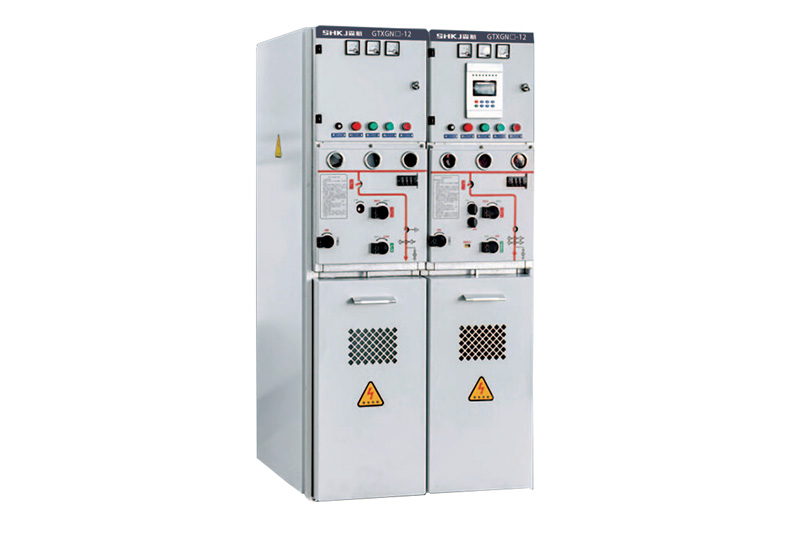
Typical RMU Voltage Levels
Most Ring Main Units operate in medium-voltage ranges, including:
- 11 kV
- 24 kV
- 33 kV
Because of their compact and sealed design, RMUs are widely used in:
- Urban distribution networks
- Industrial facilities
- Renewable energy plants
- Commercial infrastructure
Overview of a Power Distribution System
To understand the importance of a Ring Main Unit, it is useful to look at how electrical power systems are structured.
A typical power system consists of three main stages.
Power Generation
Electricity is generated at power plants such as:
- Thermal power plants
- Hydropower stations
- Solar power plants
- Wind farms
Power Transmission
High-voltage transmission lines transport electricity from power plants to substations over long distances.
Transmission voltages often range from 110 kV to 765 kV.
Power Distribution
At substations, the voltage is reduced and electricity is delivered to consumers through distribution networks.
Distribution systems include:
Feeder
Conductors that carry electricity from the substation to distribution areas.
Distributor
Lines from which electricity is tapped to supply different loads.
Service mains
Cables that connect distributors directly to consumers.
The Ring Main Unit operates mainly within the distribution stage.
Types of Electrical Distribution Networks
Distribution networks can be designed in different configurations depending on reliability and infrastructure requirements.
Radial Distribution System
A radial system is the simplest distribution structure.
Characteristics include:
- Each feeder is connected to a single substation
- Power flows in only one direction
- Simple and inexpensive design
However, a fault in the feeder can interrupt supply to all connected loads.
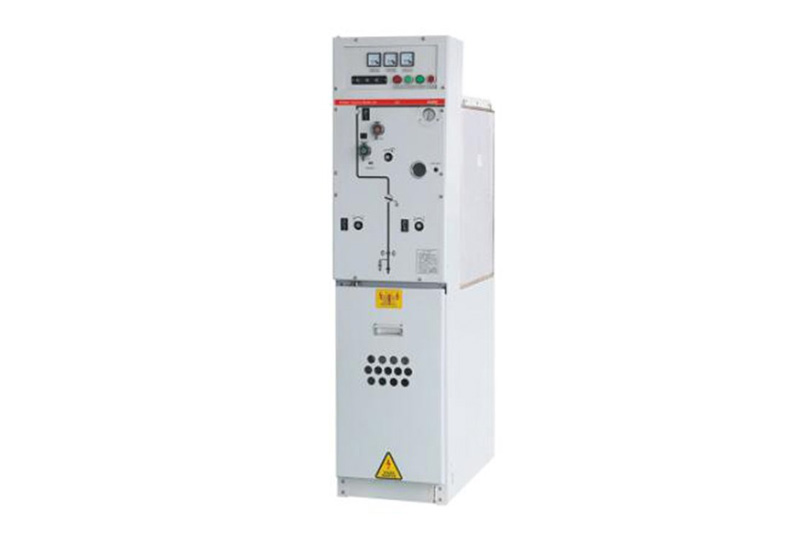
Ring Main Distribution System
A ring main distribution system connects feeders in a closed loop network.
Advantages include:
- Power can flow in two directions
- Higher reliability than radial systems
- Fault isolation without full power interruption
Ring Main Units are essential components in this type of distribution network.
Interconnected Distribution System
In an interconnected system, multiple substations supply the same distribution network.
Benefits include:
- Very high reliability
- Multiple power sources
However, this system is more complex and expensive to build.
How Does a Ring Main Unit Work?
Ring main unit working principle:Ring main unit operates by maintaining a loop power distribution system. The basic operation process includes:
- Electricity enters the distribution network through two feeders.
- The feeders form a closed ring connection.
- RMU switches control power flow in the loop.
- Protection relays detect faults or abnormal current.
- The faulty feeder section is isolated automatically.
- Electricity continues to flow from the opposite side of the ring.
Because of this design, only the faulty section is disconnected while the rest of the network remains energized.
This ensures continuous power supply for critical loads.
Main Components of a Ring Main Unit
Ring main unit components:
- Load Break Switch
- Circuit Breaker
- Current Transformer (CT)
- Voltage Transformer (VT)
- Protection Relay
- Gas Insulated Tank
- Voltage Presence Indicator
- Cable Testing Compartment
These components work together to ensure safe operation and reliable power distribution.
Load Break Switch
A load break switch allows operators to connect or disconnect feeders under normal load conditions.
It is commonly used for:
- Switching distribution lines
- Isolating feeders for maintenance
- Disconnecting faulty sections
Circuit Breaker
Circuit breakers provide protection during abnormal conditions such as:
- Short circuits
- Overcurrent faults
- Equipment failures
They automatically open when protection relays detect a fault.
Current Transformer (CT) and Voltage Transformer (VT)
These measuring devices monitor electrical parameters.
Functions include:
- Measuring current and voltage
- Providing signals to protection relays
- Supporting system monitoring and control
Protection Relays
Protection relays detect abnormal operating conditions and send trip signals to circuit breakers.
Common protection functions include:
- Overcurrent protection
- Earth fault protection
- Overvoltage protection
Gas Insulation System
Most modern RMUs use SF6 gas insulation or solid insulation technology.
Advantages include:
- High dielectric strength
- Compact equipment size
- Reduced maintenance requirements
Voltage Presence Indicator
The voltage presence indication system (VPIS) allows operators to verify whether voltage exists in the cable compartment.
This improves safety during maintenance operations.
Cable Testing Compartment
RMUs often include a cable testing compartment that allows technicians to test cables safely without shutting down the entire network.
Key Advantages of Ring Main Units
The main advantages of a Ring Main Unit include:
- Reliable power supply through loop distribution
- Compact design for limited installation space
- Minimal maintenance requirements
- Fast fault isolation capability
- High operational safety
- Compatibility with smart grid systems
These benefits make RMUs a preferred solution for modern medium-voltage distribution networks.
Applications of Ring Main Units
Ring Main Units are commonly used in:
- Urban power distribution networks
- Industrial electrical systems
- Solar power plants
- Wind power farms
- Airports and metro systems
- Hospitals and data centers
These applications require high reliability and continuous power supply, making RMUs essential infrastructure components.
Difference Between RMU and VCB Switchgear
| Feature | Ring Main Unit | VCB Switchgear |
|---|---|---|
| Insulation | SF6 Gas / Solid | Vacuum |
| Size | Compact | Larger |
| Maintenance | Low | Moderate |
| Application | Distribution networks | Substations |
| Installation | Easier | More complex |
RMUs are generally used in compact distribution systems, while VCB switchgear is more common in large substations.
How to Choose a Reliable Ring Main Unit Manufacturer
Selecting a reliable RMU manufacturer is essential for ensuring long-term electrical system performance.
Key factors to consider include:
Manufacturing Capability
Manufacturers should have advanced production facilities and experienced engineering teams.
Compliance with International Standards
High-quality RMUs should comply with international standards such as IEC medium-voltage switchgear standards.
Customization Options
Power distribution networks often require customized RMU configurations based on voltage level, switching scheme, and protection requirements.
Technical Support
A reliable manufacturer should provide engineering support, technical documentation, and after-sales service.
Companies such as Beiye, which specialize in medium-voltage power distribution equipment, provide customized RMU solutions designed for modern electrical networks.
Conclusion
As electrical infrastructure continues to expand worldwide, the demand for reliable and efficient power distribution equipment is increasing.
The Ring Main Unit (RMU) plays a critical role in modern distribution networks by improving power reliability, enabling fault isolation, and supporting flexible network configurations.
With their compact design, advanced protection systems, and compatibility with smart grid technologies, RMUs are becoming an essential component in urban power grids, industrial facilities, and renewable energy systems.
FAQ
What is a Ring Main Unit used for?
A Ring Main Unit is used to control, protect, and isolate electrical feeders in medium-voltage distribution networks.
How does a Ring Main Unit improve power reliability?
It allows electricity to flow from multiple directions, ensuring continuous supply even when one feeder experiences a fault.
What voltage levels are used in RMU systems?
Most RMUs operate at medium-voltage levels such as 11 kV, 24 kV, and 33 kV.
What are the main components of an RMU?
Key components include load break switches, circuit breakers, protection relays, current transformers, voltage transformers, and insulation systems.
Why is SF6 gas used in Ring Main Units?
SF6 gas provides excellent insulation and arc-quenching properties, enabling compact and reliable switchgear design.
Where are Ring Main Units installed?
RMUs are commonly installed in urban distribution networks, industrial plants, renewable energy projects, and critical infrastructure facilities.
What is the difference between extensible and non-extensible RMU?
Extensible RMUs allow additional modules to be connected later, while non-extensible RMUs have a fixed configuration.
Can RMUs be used in renewable energy systems?
Yes, they are widely used in solar and wind power plants to connect distributed energy sources to the grid.
How long does a Ring Main Unit last?
With proper maintenance, RMUs typically have a service life of 20 to 30 years.
Can RMUs be integrated with smart grid systems?
Yes, modern RMUs can integrate with SCADA and distribution automation systems.
Tag:Ring Main Unit Market,What Is Ring Main Unit,Ring Main Unit Function


