

What is GlS in switchgear?
In today’s power system, switchgear plays a key role in “traffic control, responsible for the distribution, control, and protection of electrical energy. Gas-insulated metal-enclosed switchgear, as a high-end technological representative in the field of switchgear, is increasingly becoming the preferred choice for urban power grids, large power stations, and key power nodes. This article will explore the concept, structure, advantages, and core role of GIS in modern power systems.
What is GlS in switchgear?
Gas-insulated metal-enclosed switchgear (GIS), abbreviated as GIS, is a high-voltage electrical equipment that encapsulates all primary equipment in a substation, except for transformers, within a metal grounding body filled with insulating gas.
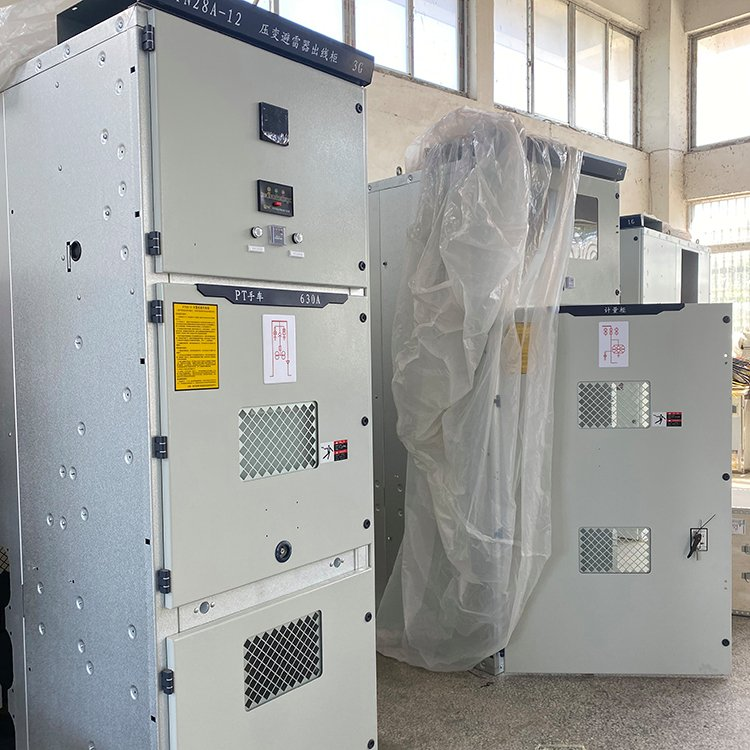
Compared with traditional open-air insulated equipment, the biggest feature of GIS is its compactness and enclosure. In traditional equipment, components such as circuit breakers, isolating switches, and busbars are exposed to air and rely on air insulation and a large safety distance to ensure operation. And GIS seals all these high-voltage conductive components in a metal shell filled with insulating gas (usually sulfur hexafluoride SF ₆). This design brought about a revolutionary change: it condensed a massive open substation into a small, highly integrated modular device.
The Core Structure and Composition of GIS
A complete GIS is a highly integrated system, consisting of the following main components:
1. Metal enclosed shell: usually made of aluminum or steel, reliably grounded to ensure the safety of operators and protect internal components from external environmental factors such as dust, humidity, salt spray, and small animals.
2. High voltage conductive components: including busbars, circuit breaker contacts, isolation/grounding switch contacts, etc., all sealed inside the casing.
3. Core primary equipment :
Circuit breaker: The heart of GIS, responsible for cutting off fault current and normal load current.
Isolation switch and grounding switch: Used to isolate circuits and ensure maintenance safety.
Voltage Transformer and Current Transformer: Used for measurement and relay protection.
Lightning arrester: protects equipment from lightning and operational overvoltage.
Connecting busbar and incoming/outgoing conduit: achieving internal electrical connection and docking with external cables and overhead lines.
4. Insulation medium :
SF gas: currently the most commonly used insulation and arc extinguishing medium. It has excellent insulation strength (about three times that of air under the same pressure) and strong arc extinguishing ability, which greatly reduces the size of the equipment.
Environmentally friendly alternative gases: In response to the strong greenhouse effect of SF, the industry is actively developing and using environmentally friendly mixed gases.
5. Operating mechanism and monitoring system: Highly mechatronic spring, hydraulic, or electric operating mechanisms, as well as integrated intelligent monitoring devices, can achieve local and remote control, status monitoring, and fault diagnosis.
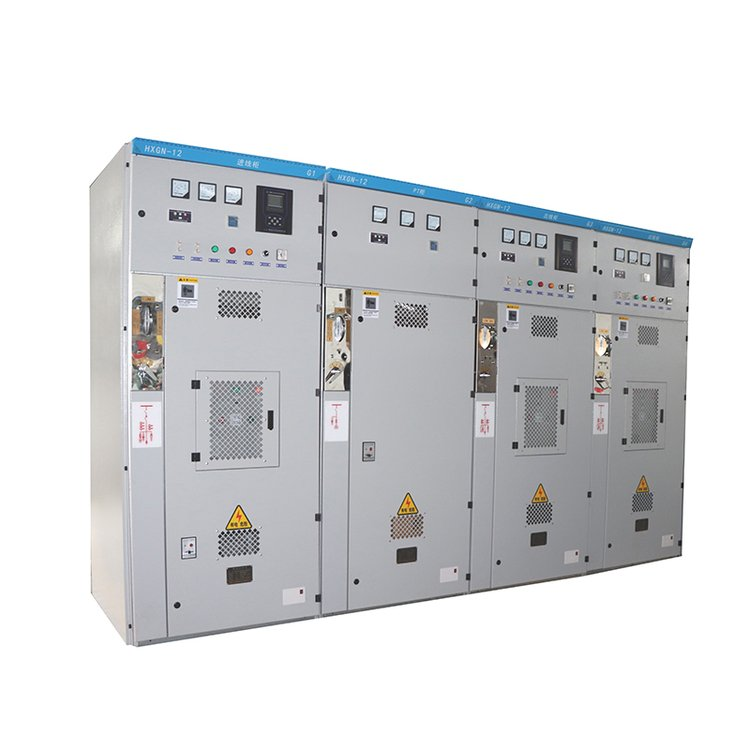
The significant advantages of GIS: why has it become the darling of modern power grids?
The widespread application of GIS stems from its unparalleled technological and economic advantages:
Extremely compact, significantly saving space: This is the most prominent advantage of GIS. Its land area is usually only 10% -30% of the AIS of the same voltage level, which is of decisive significance for scenarios such as urban centers, underground substations, and mountainous hydropower stations, where land resources are extremely valuable.
Ultra high reliability and minimal environmental impact: The fully enclosed structure ensures that it is completely unaffected by harsh weather and environmental pollution, such as humidity, ice, and snow, and chemical corrosion, greatly improving power supply reliability, especially suitable for harsh environments such as coastal areas and industrial zones.
Excellent safety and maintenance convenience: All live parts are shielded by a metal shell, effectively preventing personnel from electric shock and basically eliminating the risk of short circuits caused by external objects. The daily maintenance workload is small, and the maintenance cycle is long. Modular design also makes device installation and expansion more convenient.
Excellent electromagnetic compatibility and low noise: The metal casing is a good electromagnetic shielding body, which can significantly reduce electromagnetic interference to the outside world. At the same time, the operating noise is much lower than that of open devices, which meets urban environmental protection requirements.
Quick installation and shortened construction period: Most of the main components have been assembled and debugged in the factory and transported to the site in modular form, with fast installation and debugging speed, which can significantly shorten the construction period of the project.
Challenges and considerations of GIS
Of course, the progressiveness of GIS coexists with high requirements:
The initial investment cost is relatively high: its manufacturing cost is significantly higher than that of traditional AIS.
Complex fault maintenance: Once an internal fault occurs, the fault location and maintenance process are more complex than open equipment, and the time to restore power may be longer.
Strict requirements for SF gas management: A refined gas recovery, filling, detection, and leak monitoring process is required to comply with environmental regulations.
The design and manufacturing process requirements are extremely high: the requirements for internal cleanliness, sealing, and insulation coordination are extremely demanding.
Application Fields and Future Prospects of GIS
GIS has been widely applied in:
Hub substations for high-voltage and ultra-high voltage transmission networks (110kV to 1100kV).
Load center substations, underground and indoor substations in the urban power supply network.
High voltage distribution systems for large hydropower and nuclear power plants.
Special environments: such as offshore platforms, desert areas, high-altitude areas, etc.
Looking ahead to the future, GIS technology is developing in the following directions:
1. Intelligence and Digitalization: Deep integration of sensors, the Internet of Things, and artificial intelligence to achieve real-time state perception, life prediction, and intelligent operation and maintenance.
2. Environmental Protection: Accelerate the promotion and use of low-carbon or fluorine-free, environmentally friendly insulation gases to address the challenges of climate change.
3. Further miniaturization and high reliability: Pursuing the next generation of products that are more compact, economical, and reliable through new materials, designs, and processes.
Conclusion
Gas-insulated metal-enclosed switchgear (GIS) is not only a significant leap in switchgear technology, but also an inevitable product that meets the requirements of modern power systems for reliability, compactness, environmental friendliness, and intelligence. It has successfully solved the spatial contradiction between urban development and power expansion with its characteristics of “precision, reliability, and safety, and significantly improved the overall operation level of the power grid. With the continuous evolution of technology, GIS will continue to play an indispensable core role in building a stronger, smarter, and greener power grid in the future.
AI-assisted content is for reference only; please verify carefully.


