


What is the difference between a load break switch and a vacuum circuit breaker?
In power distribution systems, load switches and vacuum circuit breakers are two common and critical control devices. Although they may look similar, they differ fundamentally in their design purpose, protection capabilities, and application scenarios.
Incorrect selection can lead to equipment damage, system failures, and even safety accidents. This article will delve into the differences between the two to help you make informed technology choices.
Load Break Switch VS Vacuum Circuit Breaker
What Is The Difference Between A Load Break Switch And A Vacuum Circuit Breaker? To understand the difference between load switches and vacuum circuit breakers, the key lies in grasping their inherent logical chain: definition determines the goal, the goal determines the core capability, the core capability determines the specific design, and is ultimately reflected in various aspects such as function, lifespan, and cost.
Definition
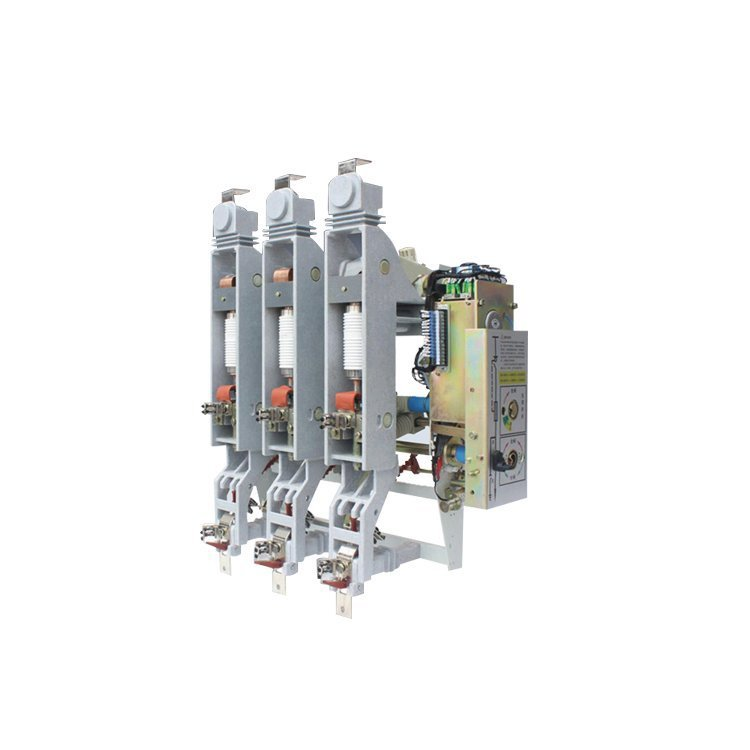
Load break switch: A switching device capable of connecting and disconnecting circuits at rated current and carrying short-circuit current for a specified time. It is primarily designed for operation, not for interrupting fault current.
Vacuum circuit breaker: A protective device that utilizes vacuum as an arc-extinguishing and insulating medium, capable of connecting, carrying, and disconnecting current under normal and fault (especially short-circuit) conditions.
Core Competencies And Design Objectives
Load switch: Its core functions are operation and isolation. Like a reliable switch, it is designed to frequently connect and disconnect normal load currents (such as transformers, capacitor banks, and motors), providing a clear circuit disconnection point to ensure maintenance safety.
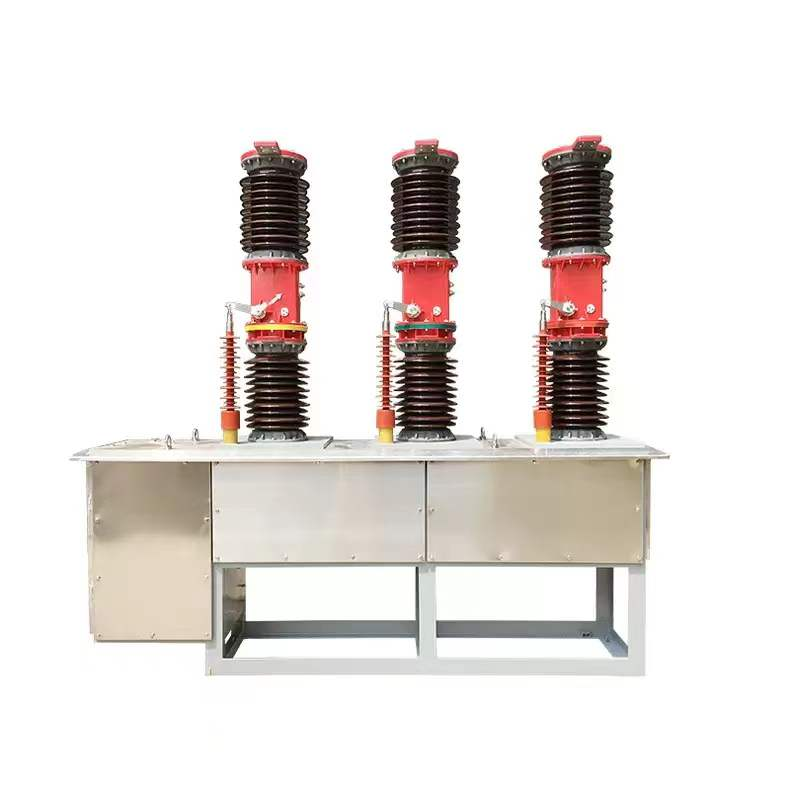
Vacuum circuit breaker: Its core functions are protection and control. Like a “smart bodyguard” for the circuit, its primary task is to automatically, quickly, and reliably interrupt abnormal currents such as short-circuit faults, protecting downstream equipment and lines from damage.
ARC Extinguishing Ability And Principle
This is the most fundamental technical difference.
Load switches: Limited arc-extinguishing capacity. They typically use compressed air, gas-generating, or simple vacuum interrupters, which can only extinguish arcs generated by normal load currents. When faced with short-circuit currents of several thousand amperes, the arc cannot be reliably extinguished, potentially causing the switch to burn out or explode.
Vacuum circuit breakers: Possess powerful arc-extinguishing capabilities. Within a high-vacuum interrupter, the metal vapor generated by the arc rapidly diffuses and extinguishes when the current crosses zero, reliably interrupting short-circuit currents of tens or even hundreds of kiloamperes.
Structural Complexity
Load switches: Relatively simple in structure, typically consisting of a switch body, a simple arc-extinguishing device, an operating mechanism, and an isolating contact. They are small in size and light in weight.
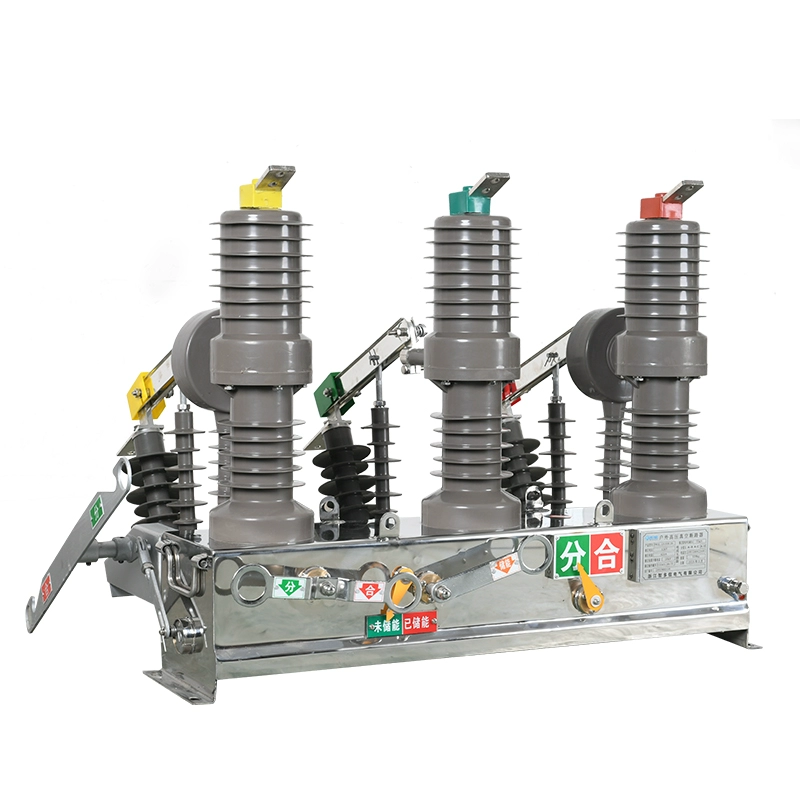 Vacuum circuit breakers: Complex in structure, containing a high-performance vacuum interrupter, a precision spring-operated mechanism or permanent magnet mechanism, a complex trip unit (intelligent protection unit), and interlocking devices. They are generally larger and heavier.
Protection Function
Load switches: Typically lack automatic protection functions. They need to be used in combination with fuses (such as high-voltage current-limiting fuses) to form a “load switch-fuse combination appliance,” with the fuses providing short-circuit protection. They may only have simple overload tripping functionality on their own.
Vacuum circuit breakers: Come with complete built-in protection functions. Through integrated or external microelectronic trip units, they can achieve precise overload long-time delay, short-circuit short-time delay, and instantaneous short-circuit three-stage protection, as well as ground fault protection, and can be intelligently controlled via remote communication.
Electrical Lifespan And Operation
Load switches: Long mechanical life, suitable for frequent operation (e.g., several times a day), but have very weak or no ability to interrupt short-circuit current.
Vacuum circuit breakers: Limited electrical life (number of times rated short-circuit current can be interrupted), typically a few dozen times, but fully meets the needs of protected equipment. The number of operations is usually lower than that of load switches, but modern vacuum circuit breakers also have a relatively high mechanical life.
Cost And Economy
Load switches (combined electrical appliances): Initial investment costs are significantly lower than vacuum circuit breakers, making them a common choice for cost-sensitive projects.
Vacuum circuit breakers: While initial costs are higher, they offer advantages such as selective protection, reusability, high automation, and reduced outage range. From a lifecycle and system reliability perspective, their long-term benefits may be superior.
How To Make The Right Choice?
The key to selection lies in clearly defining application requirements:
Scenarios for selecting load switches (combined electrical appliances):
→ Strict cost control requirements.
→ Protection and control of the circuit end, such as distribution transformers (e.g., 10kV/400V transformers), relying on fuses for short-circuit protection.
→ Capacitor compensation devices requiring frequent switching.
→ As a significant isolation point in the system.
Scenarios for selecting vacuum circuit breakers:
→ Requires selective protection, coordinating with upstream and downstream switches to minimize the scope of power outages due to faults.
→ Critical locations such as power input terminals and busbar connections.
→ Systems with high short-circuit current levels.
→ Intelligent distribution networks requiring remote automatic control, monitoring, and communication.
→ High requirements for power supply continuity, where single-phase fuse failure leading to phase loss operation is unacceptable.
Common Misunderstandings And Clarifications
Misconception 1: “A switch can prevent short circuits.”
Clarification: Only circuit breakers (or combined electrical appliances with fuses) can safely interrupt short circuits. A simple load switch may cause serious accidents during a short circuit.
Misconception 2: “The more expensive, the better; just use a circuit breaker.”
Clarification: In classic applications such as transformer protection, the “load switch + fuse” combination protection is fast, economical, and remains an internationally accepted and effective solution. Selection should be based on a comprehensive technical and economic comparison.
Misconception 3: “It’s impossible to distinguish them by appearance.”
Clarification: Circuit breakers are usually larger, with complex mechanism boxes and protection devices; while load switches have a more compact structure. The most crucial factor is to check the nameplate parameters (such as the rated short-circuit breaking current Icu) and the operating mechanism markings.
FAQ
Can Load Switches Replace Vacuum Circuit Breakers To Save Costs?
Absolutely not! This is a dangerous practice. Load switches cannot interrupt short-circuit fault currents. If installed in locations requiring short-circuit protection, a short circuit could cause the switch to explode, leading to even greater accidents and losses.
How To Quickly Distinguish From Appearance
Examine the mechanism: Circuit breakers typically have complex, large spring-loaded or permanent magnet operating mechanism boxes, and are equipped with “closed” and “open” indicators; load switches have simpler mechanisms.
Examine the nameplate: Look for the rated short-circuit breaking current (Icu) parameter. If this value is zero or only a few thousand amperes, and it is labeled “load switch,” then it is a load switch; for vacuum circuit breakers, this value is usually tens of thousands of amperes.
Examine the accessories: If a high-voltage current-limiting fuse (three large ceramic tubes) is installed nearby, it is very likely a load switch cabinet.
What Key Parameters Should Be Considered When Selecting Equipment?
Common parameters: Rated voltage, rated current.
Core parameters of load break switches: Rated short-time withstand current (Icw, its ability to carry short-circuit current), active load breaking current.
Core parameters of vacuum circuit breakers: Rated short-circuit breaking current (Icu), rated short-circuit making current, type and setting range of the protection trip unit.
Both require attention to: Mechanical life, Electrical life, and Protection Class (IP code).
Conclusion
Load switches are the “operators,” while vacuum circuit breakers are the “guardians.” The former emphasizes economy and ease of operation, while the latter prioritizes safety and system protection. A correct understanding and distinction between the two is fundamental to ensuring the safe, reliable, and economical operation of the power system. In design and renovation projects, a comprehensive assessment must be conducted based on the system structure, protection requirements, and budget, and professional electrical engineers should be consulted when necessary.
Ensuring power system safety begins with a precise understanding and correct selection of each piece of equipment. Let professional selection be the first line of defense for the stable operation of your system. Immediately review your power distribution plan and use precise equipment matching to build an unbreakable power safety barrier.


