


Electrical Switchgear Components: What You Need to Know
Understanding the individual components that make up switchgear is essential for anyone involved in electrical systems, whether you’re an engineer, technician, or simply looking to understand the infrastructure that powers our world. This blog post will delve into the essential electrical switchgear components, explaining their functions and importance.
Electrical Switchgear Components
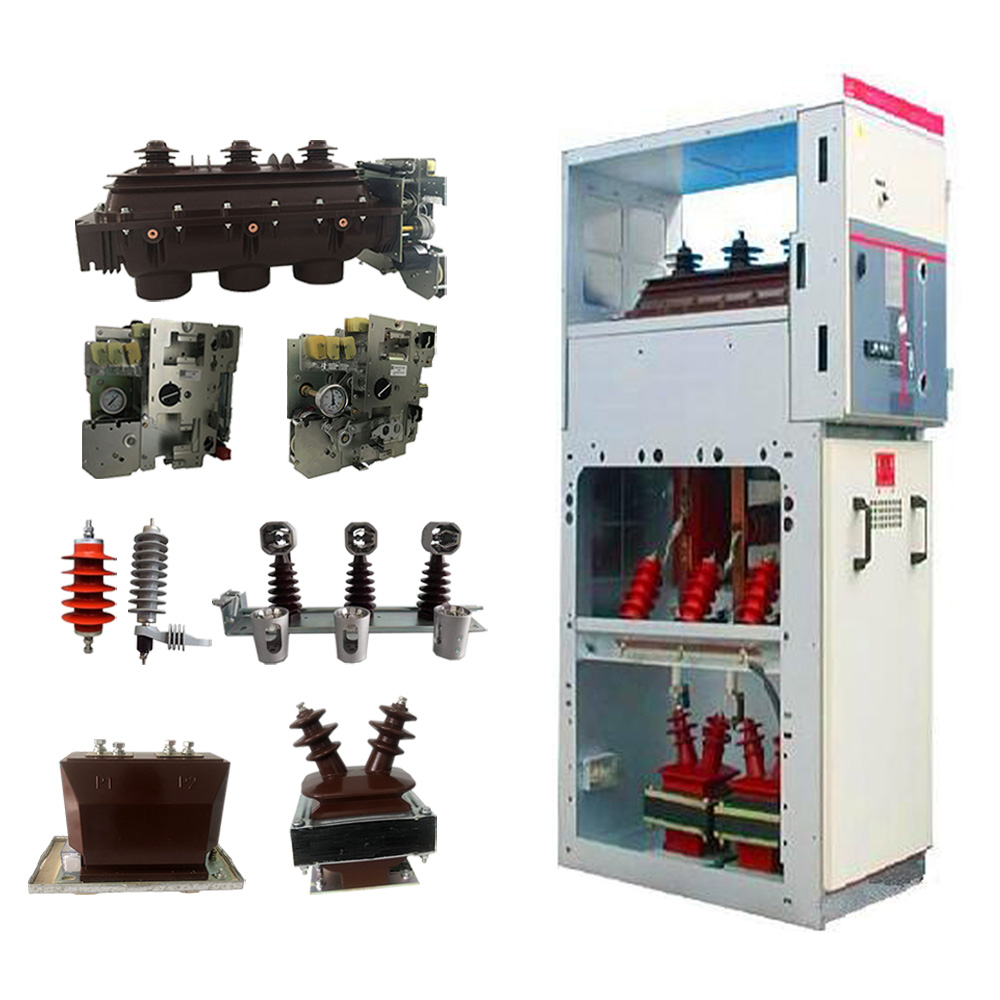
Components Of Switchgear?Electrical switchgear parts include circuit breakers, disconnectors/isolators, fuses, relays, switches, busbars, instrument transformers, bushings, control panels, lightning arresters, capacitors and reactors, enclosures.Below is a detailed introduction to help buyers understand.
Circuit Breakers
The most important component of electrical switchgear components is the circuit breaker. Their primary function is to interrupt fault currents, protecting electrical equipment from damage due to overloads, short circuits, or ground faults. Unlike fuses, circuit breakers can be reset after tripping, making them reusable. They come in various circuit breakers types, including oil, air, vacuum, and SF6 (sulfur hexafluoride) circuit breakers, each suited for different voltage levels and interrupting capacities.
Disconnectors/Isolators
Disconnectors, also known as isolators, are mechanical switching devices that provide a visible means of isolation for a circuit. Unlike circuit breakers, they are not designed to interrupt fault currents or even normal load currents. Their purpose is to safely isolate a section of the electrical system for maintenance or repair, ensuring that no current can flow through the isolated part. They must only be operated when the circuit is de-energized.
Fuses
Fuses are overcurrent protective devices that operate by melting a metallic link when an excessive current flows through it. This breaks the circuit and protects downstream equipment. Fuses are typically single-use devices and need to be replaced after they operate. While circuit breakers are more common in high-power applications, fuses are still widely used in lower-voltage systems and for specific protection requirements due to their simplicity and fast operation.
Relays
Relays are sensing devices that detect abnormal conditions in an electrical system and initiate the operation of circuit breakers or other protective devices. They act as the “brain” of the protection system, monitoring parameters like current, voltage, frequency, and phase sequence. When a fault is detected, the relay sends a trip signal to the associated circuit breaker, causing it to open and isolate the faulty section. Modern switchgear often employs numerical or digital relays for enhanced accuracy and functionality.
Switches
The term switches in switchgear broadly refers to various devices used for making and breaking electrical connections. This can include simple on/off switches, changeover switches, or load break switches. Load break switches are capable of interrupting normal load currents, making them useful for routine switching operations in a distribution network. They are less robust than circuit breakers and are not designed for fault current interruption.
Busbars
Busbars are conductive bars or strips, typically made of copper or aluminum, that serve as common connection points for multiple circuits within the switchgear. They distribute electrical power from an incoming feeder to various outgoing feeders or branches. Busbars are critical for efficient power distribution and are designed to carry high currents without excessive heating.
Instrument Transformers
Instrument transformers are essential for measuring and monitoring electrical parameters within the switchgear. They step down high voltages and currents to safe, measurable levels for relays, meters, and other control devices.
- Current Transformers (CTs) are used to measure high AC currents.
- Potential Transformers (PTs), also known as Voltage Transformers (VTs), are used to measure high AC voltages.
Bushings
Bushings are insulated devices that allow a conductor to pass safely through a grounded barrier, such as the wall of a switchgear enclosure or a transformer tank. They provide electrical insulation between the conductor and the grounded structure, preventing flashovers, short circuits, and potential equipment damage. Bushings are critical in maintaining the reliability and safety of electrical systems, as they support the mechanical and electrical connection of high-voltage conductors while minimizing energy loss.
proper selection and maintenance of bushings are essential for extending the lifespan of switchgear and transformers, ensuring efficient operation, and reducing downtime.
Control Panels
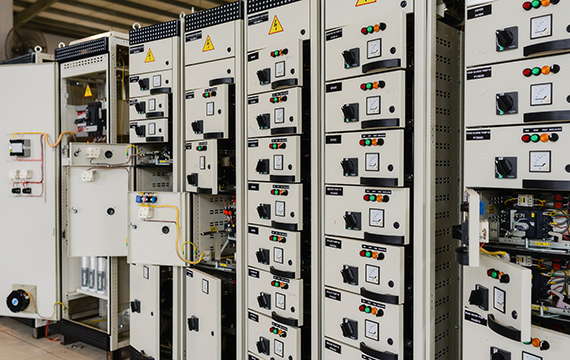
The control panel is the centralized interface for operating and monitoring the switchgear. It houses control switches, indicating lamps, metering devices, relays, and other control and protection equipment. Operators can use the control panel to open or close circuit breakers, monitor system status, and respond to alarms.
Lightning Arresters
Lightning arresters, also known as surge arresters, are protective devices designed to divert high-voltage surges, such as those caused by lightning strikes or switching operations, safely to the ground. They protect the switchgear and other connected equipment from damage due to transient overvoltages.
Capacitors and Reactors
While not always present in every switchgear assembly, capacitors and reactors play important roles in power quality and control.
- Capacitors are used for power factor correction, improving the efficiency of the electrical system by reducing reactive power.
- Reactors (or inductors) are used for current limiting, fault current reduction, or harmonic filtering.
Enclosures
The enclosure is the physical housing that protects all the internal switch gear components from environmental factors like dust, moisture, and extreme temperatures, as well as providing safety to personnel from live parts. Enclosures are designed to meet specific IP (Ingress Protection) ratings and NEMA standards, ensuring their suitability for various operating environments.
Conclusion
Electrical switchgear is a complex yet indispensable part of any modern electrical infrastructure. Each component, from the mighty circuit breaker to the humble bushing, plays a crucial role in ensuring the safe, reliable, and efficient operation of power systems. Understanding these parts is fundamental to appreciating the intricate engineering behind power distribution and protection.
At Byyou Electric, we specialize in manufacturing high-quality electrical switchgear parts and complete switchgear solutions designed to meet the rigorous demands of various industries. Our commitment to innovation and reliability ensures that your electrical systems are well-protected and perform optimally.
Electrical switchgear components include circuit breakers, isolators, fuses, relays, busbars, transformers, and enclosures. Contact Beiye Electric to find the perfect switchgear for your needs.


